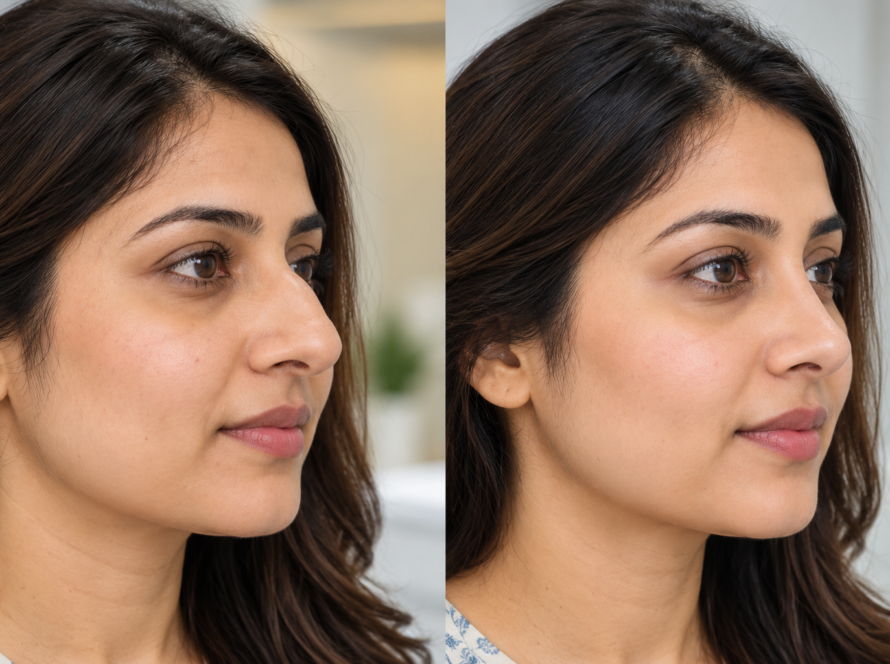
Can Only The Nose Tip Be Done?
Tip plasty alone works when the bridge is already straight and in proportion and the concern is limited to a bulbous, drooping or wide tip. If the tip is refined while a hump or wide bridge is left, the nose can look unbalanced, with a ‘polly beak’ or a bigger-looking bridge. Profile analysis decides this.
Tip plasty is a form of rhinoplasty that focuses on the lower part of the nose rather than reshaping the entire nasal framework. It may adjust the tip’s width, definition, rotation or projection. However, the nose is a connected structure, so a change at the tip can alter how the bridge and the whole profile appear.
The best procedure is not necessarily the smallest one. It is the operation that addresses the concern while maintaining a balanced relationship between the tip, bridge, nostrils and face.
What Does Tip Plasty Change and What Does It Leave?
Tip plasty primarily reshapes the cartilage that supports the nasal tip. Depending on anatomy and surgical goals, a surgeon may refine a rounded tip, adjust its projection, change its rotation or improve asymmetry.
It may help with:
- A bulbous or rounded nasal tip.
- A tip that appears too wide.
- A drooping tip, including selected cases where the tip drops during smiling.
- Tip asymmetry caused by cartilage shape or position.
- A tip that appears poorly defined despite a proportionate nasal bridge.
Tip-only surgery generally does not remove a dorsal hump, narrow a wide nasal bridge or correct every internal problem affecting breathing. If these concerns are important, a broader rhinoplasty plan may be more suitable.
The exact limits depend on your cartilage, skin thickness, previous surgery and nasal function. A consultation should distinguish the changes tip plasty can realistically make from changes that require work elsewhere on the nose.
Which Noses Suit Tip-Only Surgery?
Tip plasty is most likely to suit someone whose main concern is at the tip and whose bridge is already reasonably straight and proportionate. The surgeon should assess the nose from the front, side, base and angled views rather than deciding from one photograph.
A tip-only approach may be considered when:
- The bridge has no significant hump or unwanted width.
- The tip looks bulbous, wide, under-projected or drooping.
- The desired change can be achieved without substantial alteration of the bridge.
- Nasal breathing has been assessed and does not require additional structural correction.
- The patient’s expectations are realistic and the skin and cartilage can support the intended shape.
Thick skin can limit how sharply the underlying cartilage changes show through. Very thin skin may reveal small irregularities. These factors do not automatically rule out surgery, but they affect planning and the likely degree of definition.
A surgeon should also consider facial proportions. A tip that looks large in isolation may actually appear prominent because of the bridge, chin or overall profile. Changing the tip without assessing the rest of the face may not achieve the intended result.
When Does Changing Only the Tip Unbalance the Nose?
A tip-only operation can create a visual mismatch when the bridge remains the dominant feature. For example, refining the tip while leaving a pronounced hump may make the bridge look more prominent by comparison. A broad bridge can also remain visually heavy if only the tip is narrowed.
The decision should account for:
- Bridge shape: Is it straight, or is a hump or depression present?
- Bridge width: Does the upper and middle third fit the desired tip shape?
- Tip projection: Does the tip extend too far, or does it sit too close to the face?
- Tip rotation: Is the tip drooping, overly rotated upward or already well positioned?
- Skin thickness: Will the intended cartilage refinement be visible?
- Overall profile: Does the nose look balanced in relation to the forehead, lips and chin?
The term polly beak refers to a supratip fullness that creates a convex appearance above the tip. It is a recognised possible concern after rhinoplasty, but it is not simply the inevitable result of tip-only surgery. Surgical planning, healing and the underlying anatomy all matter.
When both the bridge and tip contribute to the concern, full rhinoplasty may allow the surgeon to plan these areas together. The aim is not to change every part of the nose, but to avoid treating one feature in a way that makes another feature look more prominent.
Tip Plasty vs Full Rhinoplasty: What Is the Difference?
| Feature | Tip plasty alone | Full rhinoplasty |
|---|---|---|
| Main treatment area | Nasal tip | Tip and other parts of the nasal framework as needed |
| Bulbous tip | May be suitable | May be included |
| Drooping tip | May be suitable in selected cases | May be included with bridge changes if needed |
| Dorsal hump | Usually left unchanged | Can be addressed |
| Wide bridge | Usually left unchanged | Can be narrowed when appropriate |
| Breathing concerns | Not corrected unless specifically addressed in the plan | Functional correction may be combined when indicated |
| Surgical scope | More limited | Broader and tailored to multiple concerns |
| Recovery | Swelling and healing still occur; duration varies | Depends on the techniques used and the extent of surgery |
Tip plasty is not automatically a minor procedure simply because it treats a smaller area. It still involves surgery, anaesthesia planning, healing and the possibility of complications. Likewise, full rhinoplasty does not always mean every nasal structure is changed.
The choice should follow the actual anatomy and treatment goals, not the name or perceived size of the operation.
Is Tip Plasty Done Open or Closed?
Tip plasty can be performed using an open or closed approach, depending on the surgeon’s assessment and the changes required.
In an open approach, a small incision is made across the columella, the strip of tissue between the nostrils, along with incisions inside the nose. This allows the surgeon to lift the skin and directly view the underlying cartilage. It may be useful when detailed reshaping or structural support is needed.
In a closed approach, incisions are made inside the nostrils. The surgeon works through these openings without an external columellar incision. This may be appropriate for selected cases, depending on the anatomy and the planned changes.
Neither approach is best for everyone. The surgeon should explain why a technique is suitable for your case, what visibility and access it provides, and whether additional support or bridge work may be required. The phrase “tip plasty closed technique” does not guarantee a smaller recovery or a better result in every patient.
How Does Tip-Only Recovery Compare With Full Rhinoplasty?
Recovery varies with the surgical technique, the amount of cartilage reshaping, individual healing and whether bridge work is performed. Tip-only surgery can still cause substantial swelling at the tip, and the final shape may take months to settle.
| Recovery stage | What you may experience |
|---|---|
| First few days | Swelling, congestion, tenderness and mild bruising may occur |
| First one to two weeks | Early swelling and bruising usually improve; follow the surgeon’s wound-care instructions |
| Following weeks | The nose gradually settles, but the tip may remain firm or swollen |
| Several months | Definition and contour continue to change as swelling reduces |
| Longer-term follow-up | The surgeon assesses healing, symmetry, breathing and the evolving result |
These are general stages rather than a personal recovery timetable. Your surgeon should give instructions about sleeping position, exercise, nose blowing, glasses, wound care and return to work.
Contact the surgical team for increasing pain, fever, heavy bleeding, spreading redness or other symptoms they identify as concerning. Severe breathing difficulty or uncontrolled bleeding requires urgent medical assessment.
Is Tip Plasty Cheaper Than Full Rhinoplasty?
Tip plasty may cost less than a more extensive rhinoplasty when the operation is genuinely more limited. However, cost depends on the surgeon, facility, anaesthesia, complexity, whether structural grafting is needed and whether the procedure includes functional correction.
Do not choose a tip-only procedure solely because the quoted price is lower. If the bridge also needs correction to achieve a balanced result, treating only the tip may leave the main concern unresolved and could lead to further surgery.
Ask for an itemised estimate that explains the procedure planned, anaesthesia and facility charges, follow-up visits and what happens if additional treatment becomes necessary. A consultation should establish the scope before you compare prices.
Decision Checklist: Tip Plasty Alone or Full Rhinoplasty?
Use this checklist to prepare for your consultation. It cannot replace a physical examination, but it helps identify which questions to discuss.
| Question | If yes | If no |
|---|---|---|
| Is the bridge already straight? | Tip-only surgery may be worth discussing | Ask whether bridge correction is needed |
| Is there a visible hump? | Discuss whether leaving it would affect balance | Assess other bridge concerns |
| Is the bridge width in proportion? | Tip-only may be considered if other factors fit | Discuss bridge and tip proportions together |
| Is the main concern tip rotation or shape? | Tip plasty may address the primary concern | Clarify which feature creates the unwanted appearance |
| Is the skin thick? | Discuss realistic limits on tip definition | Ask how skin characteristics affect the planned result |
| Is there a breathing problem? | Functional assessment is important before deciding | Confirm that breathing has still been assessed |
Take photographs from the front, side and angled views to discuss what bothers you. A simulation may help communicate goals, but it cannot guarantee the final surgical result. The plan should remain based on examination, realistic expectations and an explanation of risks.
Tip Plasty Vadodara: What Should You Ask at Consultation?
If you are considering tip plasty vadodara, ask the surgeon to explain whether the bridge is already in proportion and whether tip-only surgery would leave a hump or width concern unaddressed.
Useful questions include:
- What changes can tip plasty realistically achieve in my nose?
- Would leaving the bridge unchanged make the tip look out of proportion?
- Which approach—open or closed—is appropriate, and why?
- How will skin thickness affect definition?
- What are the risks, recovery expectations and possible need for revision?
- How will breathing and structural support be assessed?
You can read more about tip plasty surgery and nose tip correction surgery before your appointment. If a bulbous tip is your main concern, the guide to bulbous nose correction may also help you prepare questions. For additional background, review the guide to reducing the nose tip.
These resources provide general information; they do not determine which operation is right for you. A qualified surgeon must examine your nose and discuss your goals before recommending a procedure.
Frequently Asked Questions
Tip plasty may cost less when it involves a more limited operation, but the price depends on complexity, anaesthesia, facility fees and whether additional structural work is needed. Compare itemised estimates and make sure the proposed operation addresses your concern rather than choosing based on price alone.
Initial swelling often improves over the first few weeks, but the tip can remain firm or swollen for several months. The time needed for the final contour to settle varies with skin thickness, surgical technique and individual healing. Your surgeon can advise what is expected for your case.
Non-surgical treatments may create limited, temporary changes in selected cases, but they cannot reliably reproduce surgical cartilage reshaping or correct every cause of a drooping tip. Injectable treatments have their own risks, including rare but serious vascular complications. Seek assessment from a qualified clinician before considering any procedure.
Nasal packing is not required in every tip plasty. Whether packing, internal splints or other supports are used depends on the surgical technique, bleeding risk and any additional work performed. Ask your surgeon what will be placed, how long it will remain and how it may affect breathing during recovery.
Tip plasty may improve a drooping tip in selected patients, but movement during smiling can involve muscles and supporting structures as well as cartilage. The surgeon should assess the nose at rest and during facial movement to determine the cause and discuss the safest, most suitable treatment.
Tip plasty changes the nasal cartilage and can produce long-lasting structural changes, but the nose continues to age and healing can alter its appearance over time. Swelling may take months to settle, and perfect symmetry or a specific result cannot be guaranteed. Revision surgery may occasionally be needed.
Conclusion
Tip plasty alone can be a good option when the main concern is a bulbous, wide or drooping tip and the bridge is already proportionate. If a hump or wide bridge contributes to the overall appearance, treating the tip alone may leave the nose looking unbalanced. A detailed profile assessment, discussion of open versus closed techniques and realistic recovery planning help determine whether tip-only surgery or full rhinoplasty is the more appropriate choice.