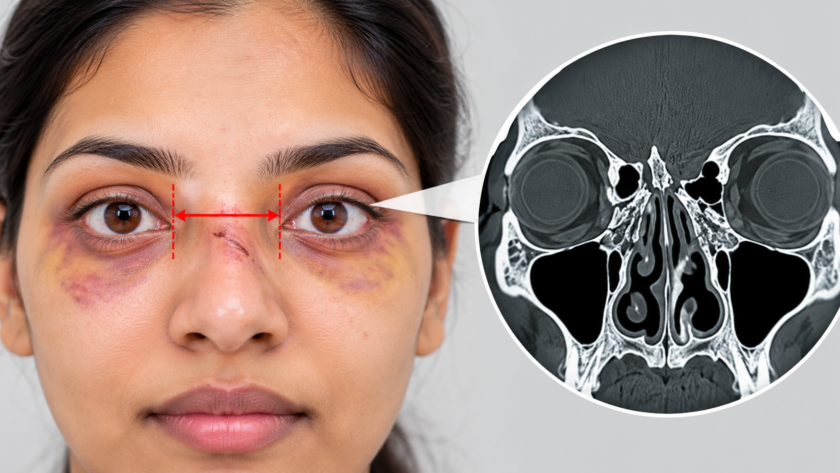
Wide set eyes after nose injury can signal a serious facial fracture. After an accident, the inner corners of the eyes may look farther apart. This change may mean that the bones between the nose and eye sockets have broken.
Doctors call this injury a nasoethmoid fracture. They also use the name naso-orbito-ethmoid, or NOE…
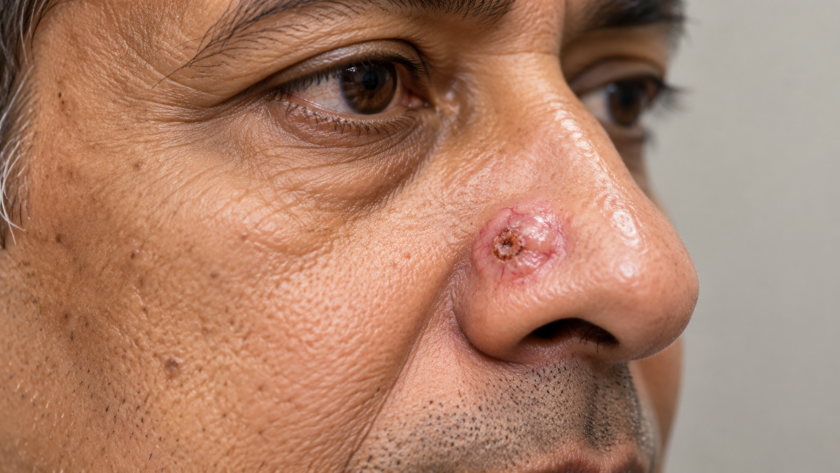
A small sore on your nose may seem harmless. However, a wound that repeatedly bleeds, crusts or refuses to heal deserves medical attention. Sometimes, these changes indicate basal cell carcinoma (BCC), the most common type of skin cancer.
Basal cell carcinoma on nose treatment usually involves removing the cancer while preserving as much healthy tissue…
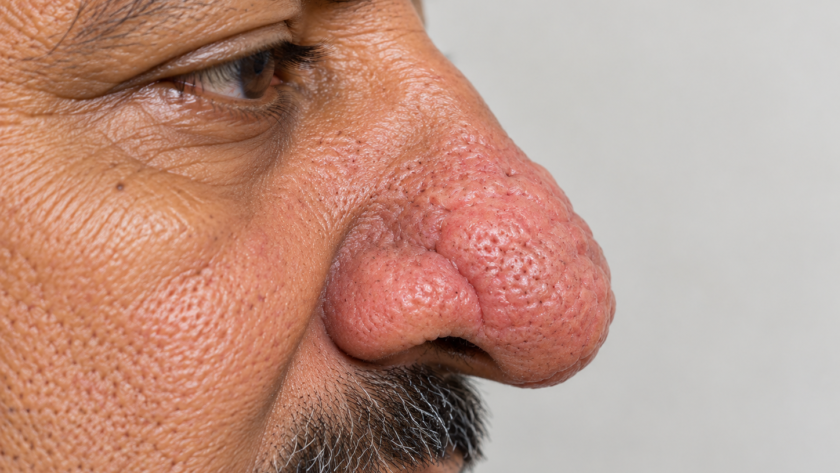
Rhinophyma is a thickening of the nose skin and oil glands that develops in some people with long-standing rosacea. It can make the nose appear larger, redder and more uneven. Medicines may help control early inflammatory changes, but established rhinophyma often needs a procedure to remove excess tissue and reshape the nose. A surgeon may…
Revision rhinoplasty is needed by some patients when their first nose surgery leaves a persistent cosmetic concern, structural problem or breathing difficulty. There is no single revision rate that applies to everyone, because outcomes depend on nasal anatomy, healing, the original procedure and individual expectations. A specialist assessment helps determine whether another operation is necessary.…
Rhinoplasty in Mumbai and Surat is the same operation, so the real differences are the surgeon's rhinoplasty training and volume, what the quote includes, and how easily you can attend follow-ups. Mumbai quotes are often higher due to facility costs. For Gujarat residents, easy access to splint removal and 3, 6 and 12 month reviews…
When will you see your rhinoplasty final results?
Rhinoplasty final results develop gradually as swelling settles and the nasal tissues heal. Many patients notice substantial changes within the first three months, but subtle swelling can continue for 12 months or longer. The nasal tip often takes the longest to refine, especially after extensive surgery, revision…
How long do swelling and bruising last after rhinoplasty?
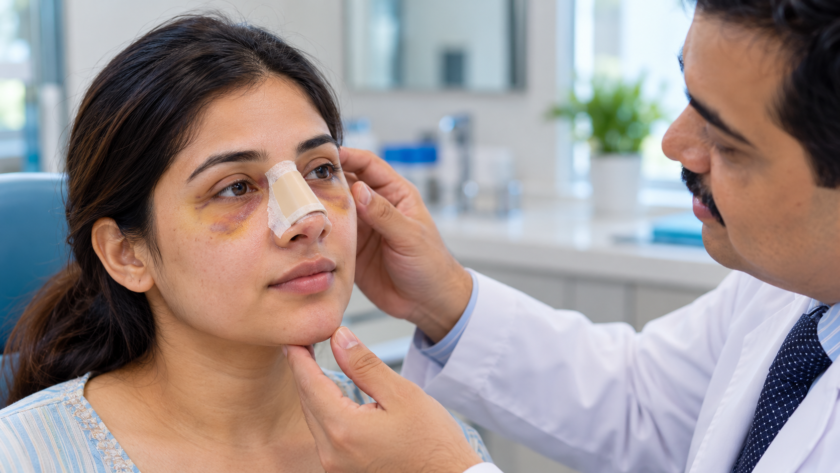
Swelling after rhinoplasty is usually most noticeable during the first few days and gradually improves over the following weeks. Bruising around the eyes often fades within one to two weeks, although some swelling can remain for several months. The nasal tip may take a year or…
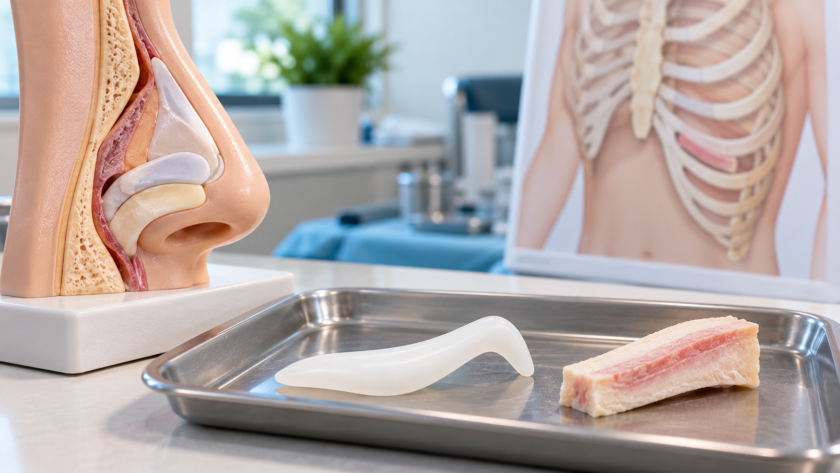
A silicone implant can raise a low nose bridge with a relatively straightforward operation and no cartilage-harvesting scar. However, it carries long-term risks such as infection, shifting, visible edges and extrusion. Rib cartilage requires an additional procedure and leaves a small chest scar, but it uses the patient's own tissue. The better option depends on…
Will rhinoplasty leave a visible scar?
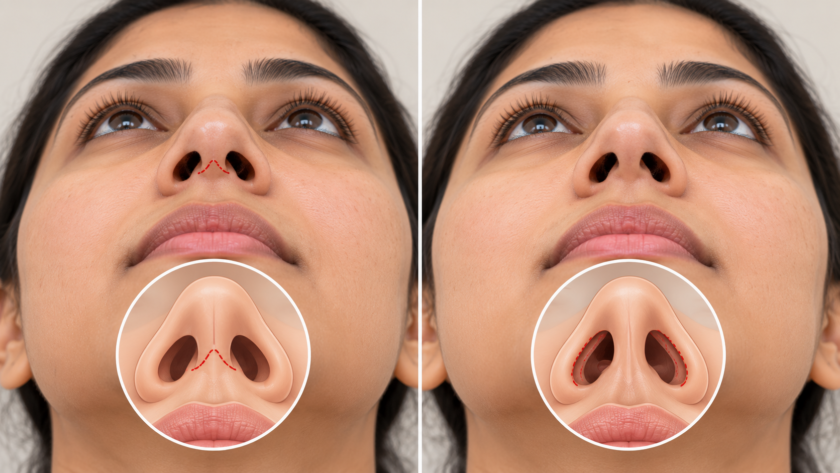
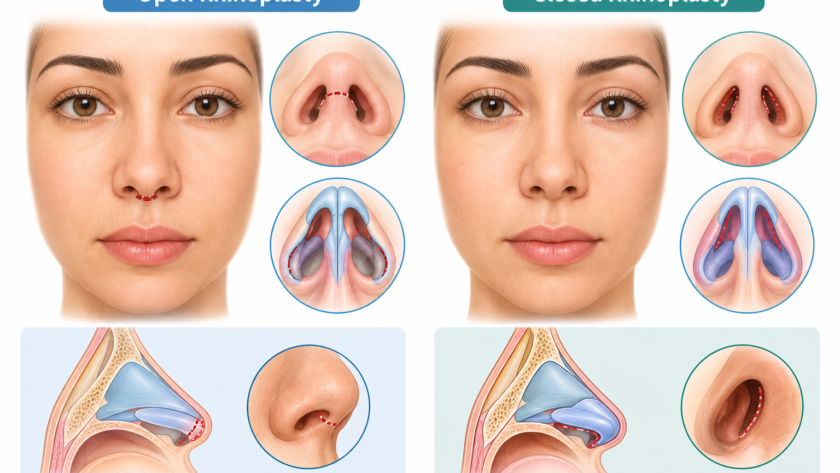
Rhinoplasty can leave a scar, but whether it is noticeable depends on the surgical technique, incision placement, skin characteristics and healing. Open rhinoplasty usually leaves a small incision across the strip of skin between the nostrils, while closed rhinoplasty uses incisions inside the nose. Many scars become less noticeable…
Introduction
Open and closed rhinoplasty are two surgical approaches used to reshape the nose. Open rhinoplasty involves a small incision across the columella, the strip of tissue between the nostrils, as well as incisions inside the nose. Closed rhinoplasty uses incisions inside the nostrils, leaving no external columellar incision. Both techniques can reshape nasal structures,…
Introduction
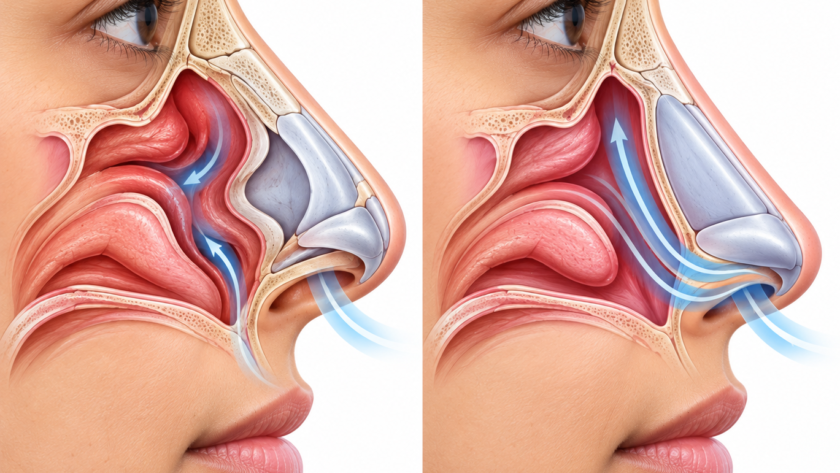
Septorhinoplasty combines surgery to improve nasal breathing with surgery to change the external shape of the nose when both are appropriate. It may address a deviated septum alongside selected structural or cosmetic concerns. The right approach depends on the cause of nasal obstruction, the condition of the nasal framework and the patient's goals. Not…
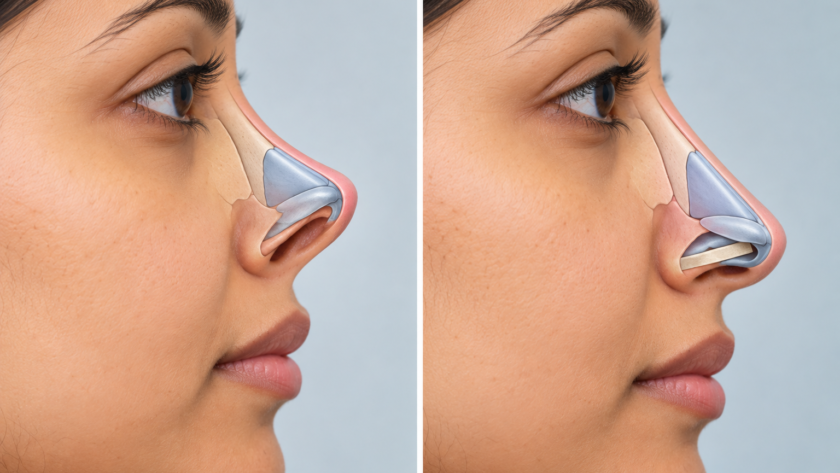
A short or upturned nose can sometimes be lengthened with cartilage grafts that support the nasal tip in a lower and more forward position. Septal cartilage is often considered first when enough suitable cartilage is available; ear cartilage may help with selected, smaller support needs, while rib cartilage can provide a larger and stronger graft…