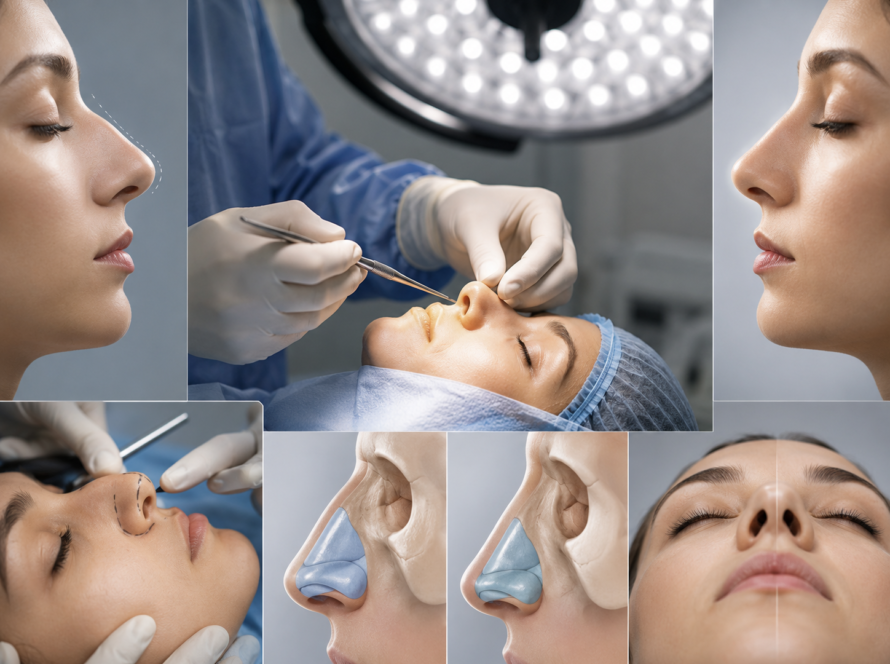
Revision rhinoplasty is needed by some patients when their first nose surgery leaves a persistent cosmetic concern, structural problem or breathing difficulty. There is no single revision rate that applies to everyone, because outcomes depend on nasal anatomy, healing, the original procedure and individual expectations. A specialist assessment helps determine whether another operation is necessary.
What Are the Chances of Needing Revision Rhinoplasty?
Not every patient needs revision rhinoplasty after an initial nose surgery. Many patients achieve satisfactory results without another operation, while some may consider further treatment because of an uneven contour, persistent asymmetry, breathing difficulty or an outcome that differs from their expectations.
Published revision rates vary across studies because surgeons treat different patient groups and use different definitions of revision. A person’s individual likelihood cannot be predicted accurately from a general percentage alone.
A concern during early recovery also does not automatically mean that another operation will be required. Swelling and tissue healing can temporarily affect the nose’s appearance.
Why Might Someone Need a Second Rhinoplasty?
A second rhinoplasty may be considered for several reasons:
- Persistent asymmetry: The nose remains uneven after healing.
- Contour irregularities: A bump, depression or uneven area remains visible.
- Nasal tip concerns: The tip looks too rounded, pinched, drooping or insufficiently defined.
- Structural problems: Reduced support or scar tissue changes the shape of the nose.
- Breathing difficulties: Nasal airflow remains restricted or becomes worse after surgery.
- Unmet expectations: The healed appearance differs from the agreed treatment goals.
The reason must be identified before deciding on another procedure. Sometimes the concern is related to normal healing rather than a permanent structural problem.
For more information, read the clinic’s guide to revision rhinoplasty and corrective nose surgery.
When Is a Rhinoplasty Touch Up Necessary?
A rhinoplasty touch up may be discussed when a specific, persistent concern remains after the nose has healed sufficiently. However, not every small irregularity requires surgery.
The surgeon should assess whether the concern is significant, whether it can be improved safely and whether the expected benefit justifies the risks of another procedure.
Minor concerns may not need surgical correction. Revision surgery can be more complex than the original operation because scar tissue, altered cartilage and changes to the nasal framework can limit the available options.
How Long Should You Wait Before Revision Rhinoplasty?
For most elective revision procedures, surgeons generally recommend waiting around 12 months after the original surgery. This allows swelling to reduce and tissues to mature, making the final shape easier to evaluate.
The appropriate timing depends on the original procedure and the problem being assessed. A new breathing problem, suspected infection or another significant complication should be reviewed promptly rather than ignored until a year has passed.
During recovery, attend scheduled follow-up appointments and discuss persistent concerns with your surgeon before making decisions based on photographs or temporary swelling.
Is Revision Rhinoplasty More Complicated Than First-Time Surgery?
Yes, revision rhinoplasty is often more technically challenging. The first operation may have altered the bone, cartilage, skin and internal support of the nose. Scar tissue can also make it harder to separate and reshape tissues safely.
Depending on the problem, the surgeon may need to preserve existing structures, reposition cartilage or use a cartilage graft to restore support. The choice of technique depends on the individual nasal anatomy and surgical history.
Patients considering a second rhinoplasty should bring previous surgical records and photographs, if available, to help the surgeon understand what was changed during the first procedure.
Can Revision Rhinoplasty Improve Breathing?
Revision rhinoplasty may improve breathing when a correctable structural problem is responsible for restricted airflow. Possible causes include nasal valve narrowing, septal problems or weakened internal nasal support.
However, not every breathing problem can be corrected with revision surgery, and improvement cannot be guaranteed. A thorough assessment of both the external shape and internal nasal structures is important before treatment is planned.
You can also explore the clinic’s information about rhinoplasty surgery and nasal reshaping.
How Can You Reduce the Risk of Needing Revision Rhinoplasty?
No approach can guarantee that revision surgery will never be needed. However, careful planning and appropriate aftercare can help support a satisfactory outcome.
Before surgery, discuss your goals, medical history, breathing concerns, possible complications and realistic expectations with a qualified surgeon. Choose a treatment plan based on your anatomy rather than an idealised nose shape.
After surgery, follow your surgeon’s instructions, protect the nose from accidental impact and attend recommended follow-up visits. Contact your care team if you notice new breathing difficulties, increasing pain, signs of infection or unexpected changes.
Frequently Asked Questions
Revision rates vary between studies, surgeons and patient groups. There is no single percentage that accurately predicts an individual’s chance of needing another operation. Your surgeon can discuss the factors relevant to your case.
No. Swelling can cause temporary unevenness during recovery. A surgeon should assess the nose after adequate healing to determine whether the concern is persistent and whether further treatment is appropriate.
Many elective revisions are considered around 12 months after the first operation. The appropriate timing depends on healing and the problem involved. New or worsening symptoms should be assessed promptly.
Not necessarily. The risks depend on the structures being changed, previous surgery and the proposed technique. Even a limited correction requires careful assessment and discussion of possible complications.
It may help when a correctable structural problem is causing restricted airflow. An examination is needed to identify the cause and determine whether surgery is likely to help.
Conclusion
Revision rhinoplasty may be appropriate when a persistent cosmetic, structural or functional problem remains after the first nose surgery. However, a second procedure is not automatically necessary for every irregularity or concern.
Allowing adequate healing time, attending follow-up appointments and obtaining a detailed specialist assessment can help determine whether further surgery is appropriate. The goal should be a realistic improvement in nasal appearance or function while maintaining structural support and breathing.