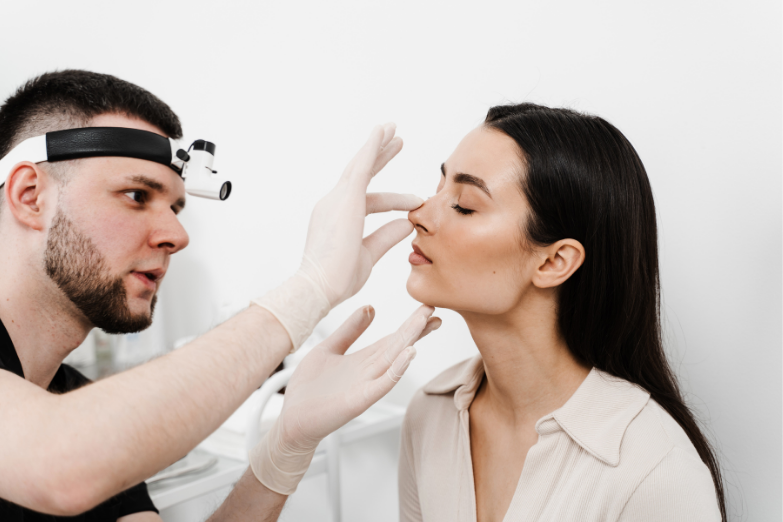
When will you see your rhinoplasty final results?
Rhinoplasty final results develop gradually as swelling settles and the nasal tissues heal. Many patients notice substantial changes within the first three months, but subtle swelling can continue for 12 months or longer. The nasal tip often takes the longest to refine, especially after extensive surgery, revision rhinoplasty or procedures involving thicker skin.
Rhinoplasty results timeline: What changes month by month?
Your nose may look different at each stage of recovery. Early swelling can make the bridge appear wider and the tip look rounded, even when the underlying surgical changes are progressing as planned.
| Recovery stage | What you may notice | What to expect |
|---|---|---|
| Week 1 | Swelling, bruising and nasal congestion | The nose is still in the early healing phase |
| Weeks 2–4 | Bruising usually fades and visible swelling decreases | The initial shape becomes easier to see |
| Months 2–3 | The nose often looks more refined | Some swelling, especially at the tip, may remain |
| Months 4–6 | Gradual improvement in definition | Small changes in contour may continue |
| Months 6–12 | Continued settling of the nasal tissues | The result becomes easier to evaluate |
| Around 12 months or longer | Many patients have a more stable appearance | Thick skin, extensive tip work or revision surgery may require additional time |
This timeline is a general guide rather than a promise. The procedure performed, your anatomy, skin thickness and individual healing response all affect when the final shape becomes apparent.
Why does the nose look different during early recovery?
Rhinoplasty changes the underlying bone, cartilage or soft-tissue structures. The body responds to surgery with inflammation and fluid accumulation, which temporarily affects the external shape.
During early recovery, you may notice:
- A wider-looking nasal bridge
- A rounded or puffy nasal tip
- Mild asymmetry caused by uneven swelling
- Changes in definition from one week to the next
- A nose that looks different in photographs than it does in person
These changes do not automatically mean the surgery has failed. Swelling may settle unevenly, so one side can appear more defined than the other for a period.
Avoid judging your result from daily photographs or trying to correct the shape by pressing or massaging the nose. Follow your surgeon’s instructions and raise persistent concerns at your follow-up visits.
Why can nose swelling months after rhinoplasty continue?
Nose swelling months after rhinoplasty can occur because the nasal tissues need time to remodel after surgery. Although the most noticeable swelling usually improves earlier, subtle fluid retention and changes in the soft tissues can continue for many months.
The nasal tip may be particularly slow to settle because it contains skin, soft tissue and supporting cartilage. The thickness and elasticity of the skin can influence how quickly the underlying structure becomes visible.
Several factors can affect the recovery period:
Skin thickness: Thicker skin may take longer to show fine tip definition.
Extent of surgery: Extensive changes to the nasal framework may involve a longer healing period.
Open or closed rhinoplasty: The surgical approach alone does not determine the outcome. The extent of tissue manipulation and the individual procedure matter.
Revision rhinoplasty: Previously operated tissues may have scar tissue and altered blood supply, which can affect healing.
Individual healing: General health, smoking or nicotine use, medications and other factors may influence recovery.
If the nose is gradually becoming less swollen, this may be consistent with normal healing. Sudden worsening, increasing pain, redness, fever or discharge should not be assumed to be ordinary swelling.
Does the nasal tip take longer to show its final shape?
Often, yes. The nasal tip can retain subtle swelling after the bridge and upper portion of the nose appear more defined.
Tip refinement may take a year or longer, particularly when surgery involved substantial cartilage reshaping, structural grafts or revision work. Thick skin can also make fine details less visible until swelling has settled.
It is important to distinguish between the expected gradual healing process and a concern that needs examination. Persistent asymmetry, a new change in shape or symptoms that are worsening should be discussed with your surgeon.
Do not use pressure, taping or massage techniques unless your surgeon has specifically recommended them for your situation.
How can you support healing after rhinoplasty?
You cannot force the final shape to appear faster, but you can reduce avoidable risks during recovery.
Follow your surgeon’s instructions
Attend scheduled follow-up appointments and follow advice about cleaning, dressings, medicines and activity restrictions. Instructions may differ depending on the operation performed.
Protect your nose from injury
Avoid contact sports, activities with a high risk of impact and unnecessary pressure on the nasal bridge. Be careful when changing clothes, washing your face and handling glasses.
Return to exercise gradually
Strenuous exercise and heavy lifting may increase bleeding or swelling during early recovery. Ask your surgeon when you can safely resume different activities rather than returning to your usual routine too quickly.
Avoid smoking and nicotine
Smoking and nicotine can impair healing. Discuss cessation support with your healthcare professional if needed.
Avoid unapproved treatments
Do not take additional medicines, supplements or use devices intended to reduce swelling without checking with your surgeon. Avoid forceful massage or attempts to reshape the nose yourself.
Keep realistic expectations
Photographs, lighting, facial expressions and camera angles can make the nose appear different. Use consistent photographs only if your surgeon recommends them for monitoring progress.
Can the final shape change after one year?
Some changes may continue after the first year, particularly in patients who underwent complex or revision surgery. However, the amount of ongoing change varies, and a specific timeline cannot be guaranteed.
Ageing, skin changes, scar maturation and the underlying nasal structure may influence appearance over time. A result that has become stable is not expected to change dramatically without a reason, but individual outcomes differ.
If you remain concerned about the shape after the expected healing period, arrange a review with your surgeon. Revision surgery should not be considered solely because the nose looks swollen during early recovery. Any decision about further treatment requires an assessment of healing, anatomy, functional symptoms and realistic options.
When should you contact your surgeon?
Gradual improvement is generally expected, but certain symptoms require prompt attention.
Contact your surgical team if you experience:
- Swelling that suddenly increases after improving
- Increasing redness, warmth or pain
- Fever or concerning discharge
- Persistent or heavy bleeding
- A new change in shape after an accidental impact
- Nasal blockage that is worsening or concerning
Seek emergency care for difficulty breathing, sudden vision changes, severe eye pain or heavy uncontrolled bleeding.
Do not wait for the next routine appointment if symptoms are severe. Your surgeon can assess whether the change is part of healing or requires treatment.
Understanding the recovery process can help you set realistic expectations after surgery. Read our guide to rhinoplasty recovery week by week to learn about the stages of healing, and explore nose bridge surgery to understand how changes to the nasal bridge may affect the surgical plan. If you are considering a particular surgical approach, discuss the expected recovery, limitations and possible need for revision with your surgeon before making a decision.
Frequently asked questions
Many patients see substantial improvement within the first three months, but the nose continues to settle for 12 months or longer. The nasal tip often takes the longest to refine. The timing depends on skin thickness, the extent of surgery, previous operations and individual healing.
Residual swelling can remain at six months, particularly around the nasal tip. Thick skin, extensive cartilage work and revision surgery may prolong the process. If swelling is gradually improving, it may be part of normal healing. Sudden worsening, pain, redness or discharge should be assessed.
The nasal tip may take a year or longer to show its settled appearance, although the timeline differs between patients. Swelling often reduces progressively, and subtle changes can continue after the first few months. Your surgeon can assess whether your progress is consistent with the procedure performed.
Yes. Swelling may settle at different rates on each side, temporarily making the nose look asymmetrical. This does not necessarily mean the final result will be uneven. Avoid pressing or massaging the nose to correct the appearance, and discuss persistent or worsening asymmetry with your surgeon.
Expected swelling generally trends toward improvement over time. Sudden worsening, increasing pain, redness, fever, discharge or significant bleeding may indicate a problem and should be assessed promptly. Difficulty breathing or sudden vision changes requires emergency care.
Three months is often too early to judge the final cosmetic result because swelling may still affect the shape. Discuss your concerns with your surgeon and allow the recommended healing period unless a complication requires earlier treatment. Revision decisions should follow a clinical assessment after the tissues have sufficiently settled.
Thicker skin can make fine nasal definition take longer to appear because the soft-tissue envelope may conceal some of the underlying structure. It does not automatically mean the result will be poor. Surgical planning, anatomy, healing and realistic expectations all matter.
Final advice
Rhinoplasty results take time to develop. The early shape can be affected by swelling, and the nasal tip may continue to refine for a year or longer. Protect your nose, follow post-operative instructions, attend follow-up appointments and seek medical advice if swelling suddenly worsens or concerning symptoms develop.