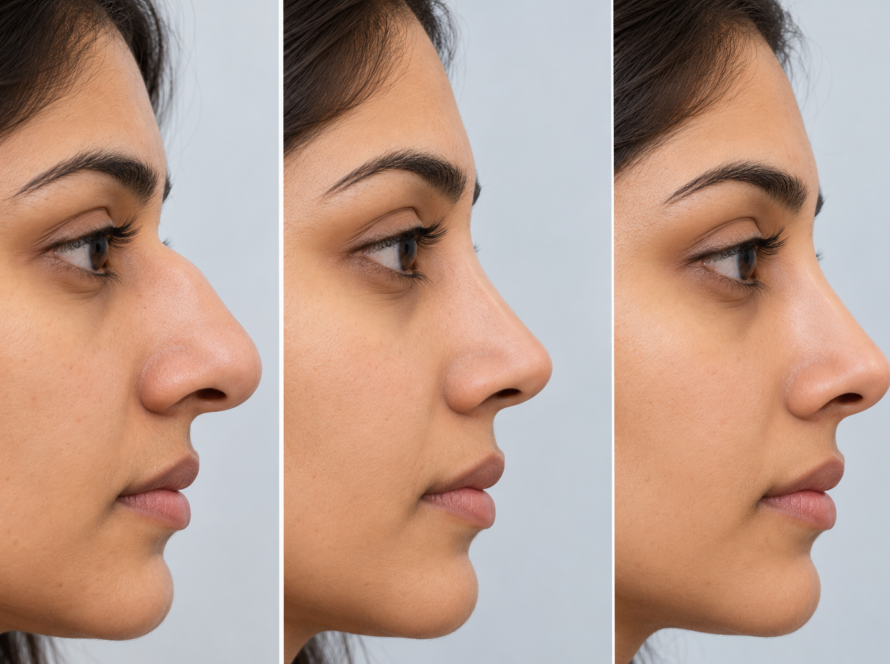
Yes, rhinoplasty can reduce the size of the nose while preserving natural-looking facial proportions. The surgeon may refine the nasal bridge, tip, nostrils or overall width, depending on the anatomy and the patient’s goals. A natural result does not mean making the nose as small as possible; it means choosing changes that suit the face while maintaining breathing function and structural support.
Can rhinoplasty make your nose smaller without looking unnatural?
Yes. A carefully planned rhinoplasty can make the nose smaller or more refined without creating an artificial appearance. The key is to consider the nose in relation to the forehead, cheeks, lips, chin and overall facial structure.
The surgeon assesses the nasal bones, cartilage, skin thickness, tip shape and internal airway before recommending changes. Some patients may benefit from reducing a prominent bridge, while others may need tip refinement or adjustment of wide nostrils. Not every patient needs all these changes.
A nose that is made too small can look disproportionate and may lose important structural support. Excessive reduction can also contribute to breathing difficulties, visible irregularities or the need for revision surgery. The goal should be a balanced result that suits your face, not a copy of someone else’s nose.
What parts of the nose can be reduced?
Rhinoplasty can address different features, depending on the underlying anatomy.
Nasal bridge
If the bridge has a prominent hump or appears too wide, the surgeon may reshape the underlying bone and cartilage. The amount of reduction depends on the nasal structure and the need to maintain a stable bridge.
Nasal tip
A bulbous, broad or drooping tip may be refined by reshaping and repositioning cartilage. Tip surgery requires careful planning because the tip affects both the appearance of the nose and the support of the nasal airway.
Nose width
The overall width of the nose may be adjusted in selected patients. The surgeon considers the width of the bridge, the base of the nose and the relationship between the nose and other facial features.
Nostrils
Alar base reduction may be appropriate when the nostrils or the base of the nose are particularly wide. This can involve small incisions near the nostril creases. Scars and changes in nostril shape are possible, so the procedure should be recommended only when suitable.
Not everyone needs reduction in every area. A detailed examination helps determine which changes are likely to produce a balanced result.
How does a surgeon plan a natural-looking smaller nose?
Natural-looking rhinoplasty starts with a clear understanding of the patient’s concerns and a clinical assessment of nasal anatomy.
The surgeon may examine the nose from the front, side and base, and assess facial proportions and breathing. Photographs can help explain possible changes, but they cannot guarantee the final result.
A personalised plan should consider:
- Facial balance: The nose should suit the patient’s other facial features.
- Skin thickness: Thicker skin may limit how sharply the nasal tip can appear defined.
- Cartilage and bone: The underlying structure affects how much reduction is feasible.
- Breathing function: The airway and structural support must be protected.
- Healing: Swelling, scar formation and tissue changes affect the final appearance.
- Patient expectations: The desired changes should be realistic and medically appropriate.
A surgeon should explain what can be changed, what should be preserved and which risks apply to the proposed procedure.
Can making the nose too small cause problems?
Yes. Over-reduction can compromise the support of the nose and may lead to an unnatural appearance or functional problems. The nose needs enough structural strength to maintain its shape and support airflow.
Potential complications of rhinoplasty include bleeding, infection, persistent swelling, asymmetry, contour irregularities, changes in sensation, breathing difficulties and dissatisfaction with the result. Some patients may require revision surgery, although additional surgery is not always possible or advisable.
The risk depends on the patient’s anatomy, the planned changes, healing and the surgical technique. A smaller nose is not necessarily a better result if the proportions are unbalanced or breathing is affected.
Ask the surgeon how the proposed reduction will preserve structural support and what options are available if the result differs from expectations.
Is surgical nose reduction better than non-surgical nose reshaping?
The appropriate option depends on the feature you want to change.
Surgical rhinoplasty can reduce nasal bone or cartilage and address certain structural concerns. It requires recovery and carries surgical risks, but it can make changes that injectable treatments cannot.
Non-surgical rhinoplasty uses injectable filler to alter the appearance of selected contours. Filler may camouflage a small depression or make a bridge look straighter, but it cannot actually make the nose smaller. In some cases, it adds volume and makes the nose appear larger. Nasal filler also carries rare but serious risks, including vascular blockage, skin injury and vision loss.
If your main goal is to reduce the size or width of the nose, a surgical consultation is generally more relevant than filler. A qualified clinician should explain the benefits, limitations and risks of each option before treatment.
What should you ask before nose reduction surgery?
Before choosing rhinoplasty, ask the surgeon:
- Which parts of my nose can realistically be reduced?
- How will the changes suit my facial proportions?
- How will breathing and structural support be protected?
- What risks are specific to my anatomy?
- How long might swelling take to settle?
- What scars or contour changes could occur?
- What happens if I am unhappy with the result?
- Is revision surgery ever needed, and what are its limitations?
A good consultation should include an examination, discussion of medical history, realistic expectations and an explanation of alternatives. Avoid making a decision based only on digitally edited photographs or a promise of a particular nose shape.
For readers exploring nose reshaping, our guide to natural-looking rhinoplasty explains how a surgeon plans changes that complement your facial proportions. You can also learn more about nose reduction rhinoplasty if your goal is to reduce the appearance of a prominent nose, or read about non-surgical nose correction to understand what fillers can and cannot change. The right option depends on your nasal structure, breathing, and desired outcome.
Frequently asked questions
Rhinoplasty can reduce some aspects of nasal width in suitable patients. The appropriate technique depends on whether the width comes from the nasal bones, cartilage, tip or nostril base. The surgeon should explain which changes are possible and how the plan will preserve natural proportions and breathing function.
A natural-looking result is the aim of careful rhinoplasty planning, but no surgeon can guarantee an exact appearance. Facial proportions, skin thickness, healing and the underlying nasal structure all influence the outcome. Discuss your goals and review relevant examples while understanding that each patient’s result is different.
A bulbous tip may be refined by reshaping and repositioning the supporting cartilage. Skin thickness and the existing structure influence how much definition can be achieved. The surgeon should explain the likely improvement and the limits of tip refinement without promising a particular shape.
It can. Rhinoplasty may improve, maintain or worsen breathing depending on the anatomy and surgical plan. Excessive reduction or damage to supporting structures can narrow parts of the airway. A proper assessment should consider both appearance and function before surgery.
No. Filler adds volume and may camouflage selected irregularities, but it does not remove bone or cartilage or truly reduce nasal size. It can make certain areas appear more prominent, and injections in the nose carry rare but serious vascular risks. Seek advice from a qualified medical professional before considering treatment.
Initial swelling often improves over the first several weeks, but the nose can continue changing as tissues heal. Tip swelling may take many months to settle, and the final result may take a year or longer to assess in some patients. Your surgeon should provide an individual recovery timeline.
Final guidance
The best nose reduction result is not necessarily the smallest nose. It is a nose that fits the face, maintains structural support and allows comfortable breathing. A consultation with a qualified, appropriately trained surgeon can help you understand the changes that are realistic for your anatomy, the potential risks and whether surgery is suitable for your goals.