Introduction
Preservation rhinoplasty lowers a nasal hump by pushing the intact bridge down rather than shaving it off, keeping the natural dorsal lines. It suits straight, moderate humps. Structural hump removal, where bone and cartilage are removed and rebuilt, suits large, crooked or asymmetric bridges and most revisions. Hump recurrence is a known trade-off with preservation techniques.
A nose bump can be caused by the shape of the nasal bones, cartilage or both. The best operation depends on the size and position of the hump, how straight the bridge is, the condition of the nasal septum, skin thickness, breathing and whether the nose has been operated on before. Preservation and structural rhinoplasty are different approaches, not a simple choice between a modern and an outdated operation.
How Does Preservation Rhinoplasty Differ From Shaving the Hump?
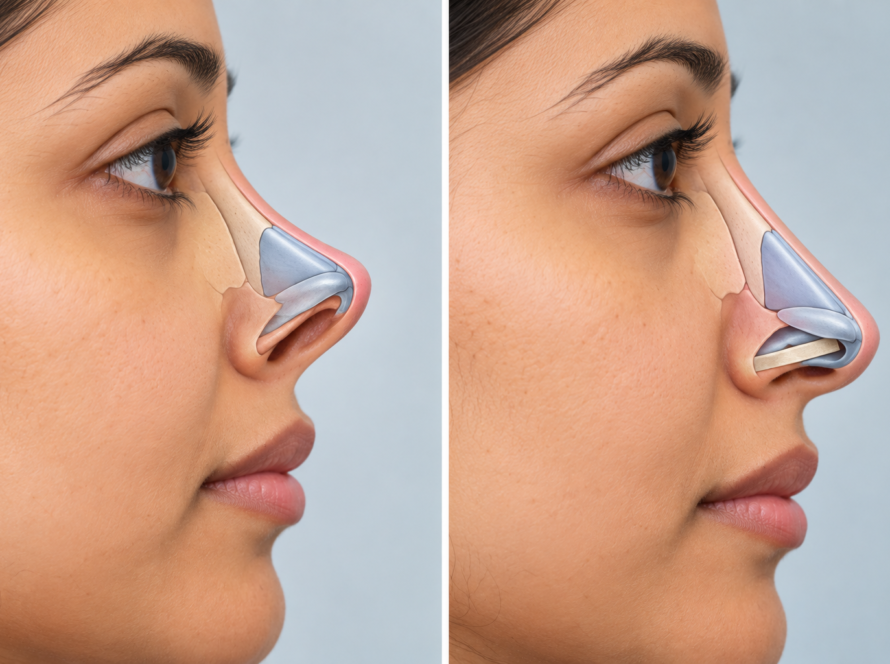
In conventional structural hump reduction, the surgeon removes selected portions of bone and cartilage to lower the bridge. The remaining framework is then assessed and reshaped or supported as needed. Depending on the anatomy, the operation may involve controlled bone cuts, cartilage grafts or other techniques to maintain a stable bridge and protect nasal function.
Preservation rhinoplasty takes a different route. In dorsal preservation, the bony-cartilaginous bridge is maintained as a more continuous unit while the supporting framework underneath is adjusted so the bridge can be lowered. The exact method may involve a push-down or let-down technique.
Preservation does not mean that nothing is changed. The supporting structures still need carefully planned adjustments to achieve the intended profile. Nor does it guarantee a perfect or permanent result.
The main distinction is the way the surgeon reduces the bridge:
- Preservation rhinoplasty: Lowers the profile while maintaining more of the natural dorsal framework.
- Structural hump removal: Removes the prominent bone and cartilage and reshapes or rebuilds the bridge where necessary.
- Hybrid rhinoplasty: Combines preservation principles with targeted structural correction when neither approach alone is ideal.
Which Nose Bumps Suit Preservation Rhinoplasty?
Preservation may suit a person with a moderate hump, a reasonably straight bridge and anatomy that allows the profile to be lowered without extensive reconstruction. It may be considered when the natural dorsal lines are attractive and the goal is to reduce bridge height while retaining much of the existing contour.
The surgeon must still check the septum, nasal bones, cartilage support and airway. A nose can look relatively straight from one angle but have important deviations when viewed from the front or underneath. The planned reduction must also suit the patient’s facial proportions.
Preservation may be less suitable when the hump is very large, the bridge is significantly crooked or asymmetric, or previous surgery has altered the framework. These features do not automatically rule it out in every case, but they can make a structural or hybrid approach more appropriate.
The aim is not to preserve every part of the original nose at any cost. It is to choose the approach that can deliver a balanced contour and stable support.
When Is Structural Hump Removal the Better Choice?
Structural correction may be preferred when the nose requires substantial reshaping rather than a straightforward reduction in bridge height. Examples include a large hump, marked deviation, significant asymmetry, traumatic changes or complex revision cases.
Removing a hump changes the relationship between the nasal bones and cartilage. After removal, the surgeon must assess whether the middle vault and other supporting structures remain stable. Additional reshaping or support may be required to avoid an irregular bridge or functional problems.
Revision surgery needs particular care. Scar tissue, missing cartilage, altered anatomy and changes from the previous operation can make a preservation-only approach difficult. A structural or hybrid operation may provide greater control when the surgeon needs to rebuild support or correct substantial deviation.
This does not mean structural surgery is always best for a large hump or that preservation is never possible in revision cases. The choice depends on the anatomy, the extent of the required correction and the surgeon’s assessment.
Dorsal Preservation vs Structural Rhinoplasty: What Is the Difference?
| Factor | Preservation rhinoplasty | Structural hump removal |
|---|---|---|
| Hump size | Often considered for a moderate, suitable hump | Often considered for large or complex humps |
| Crookedness | Best suited to selected noses with limited deviation | Often useful when substantial straightening is needed |
| Skin | Skin thickness affects definition and swelling | Skin thickness also affects definition and swelling |
| Dorsal lines | Aims to preserve more of the native bridge lines | Lines are created by reshaping and, if needed, rebuilding |
| Recurrence risk | Residual or recurrent hump is a recognised risk | Residual or recurrent irregularity can also occur |
| Revision cases | Possible in carefully selected cases | May be preferred when significant rebuilding is required |
| Swelling | Recovery varies with the specific technique and anatomy | Recovery varies with the extent of reshaping and healing |
A 2025 systematic review and meta-analysis comparing dorsal preservation and dorsal reduction techniques found fewer dorsal irregularities with preservation in the included studies, but a higher rate of residual or recurrent hump. It did not find significant differences in several other outcomes, including revision surgery. These findings help explain the trade-offs, but they cannot predict an individual patient’s result. Read the comparative systematic review.
What Are the Recurrence and Revision Risks of Each?
Hump recurrence after rhinoplasty means that some prominence remains or becomes noticeable again after surgery. With preservation techniques, the underlying framework and cartilage forces may contribute to residual or recurrent convexity during healing. Surgical planning, technique and patient selection all matter.
A 2022 meta-analysis of dorsal preservation studies reported a pooled hump recurrence rate of about 4.18% and a revision rate of about 3.48%. These are pooled findings from the studies included in that review, not guaranteed rates for every surgeon, technique or patient. Read the clinical outcomes review.
Structural hump removal can also lead to residual bumps, unevenness, asymmetry or other changes during healing. If too much support is removed, reconstruction may be needed. That is why the surgeon needs to plan not only how much of the hump to reduce, but also how to maintain the bridge and breathing.
A visible bump during early recovery does not necessarily mean that the hump has permanently returned. Swelling can make the bridge look uneven or more prominent for a time. The surgeon should assess the nose over the appropriate healing period before deciding whether a persistent issue needs further treatment.
How Does Preservation Rhinoplasty Recovery Compare?
Preservation rhinoplasty recovery depends on the exact technique, the extent of bone and cartilage adjustment, whether septal surgery is also performed and the patient’s healing response. Some preservation approaches may reduce disruption to selected tissues, but they should not be promised to cause less swelling, less bruising or faster recovery in every patient.
In the first week, swelling, bruising, tenderness and nasal congestion are common possibilities. A splint may be used, and patients should follow the surgeon’s instructions for cleaning, medication, sleeping position and activity. Do not blow the nose or resume strenuous exercise unless the surgical team says it is appropriate.
During the following weeks, bruising generally improves, but swelling may remain. Subtle changes in bridge definition can continue for months as the tissues settle. The final result should not be judged from the appearance during the earliest recovery stage.
For either technique, follow-up visits matter. Contact the surgical team promptly if you develop symptoms that concern you, such as worsening pain, significant bleeding, fever or new breathing difficulty.
The key point is that recovery is not determined by the technique’s name alone. Ask what the planned operation involves and what recovery milestones are realistic for your anatomy.
Who Is a Poor Candidate for Preservation Rhinoplasty?
Preservation may not be appropriate when the nasal bridge is severely crooked, the framework is substantially asymmetric, trauma has caused a complex deformity, or previous surgery has left inadequate support. In these situations, a structural or hybrid approach may offer better control over alignment and reconstruction.
Skin thickness also affects planning. Thick skin can make small contour changes less visible and may prolong the time needed for swelling to settle. Thin skin may reveal minor irregularities more readily. Neither skin type automatically determines the operation; the full anatomy and expected result must be considered.
A patient may also need further assessment if there are breathing symptoms, a significant septal deviation, a history of nasal trauma or unrealistic expectations about the degree of change possible. The surgeon should discuss both cosmetic goals and nasal function before recommending a technique.
A poor candidate for one technique may still be suitable for another. The purpose of consultation is to determine which approach, if any, is likely to provide a safe and realistic outcome.
Hump Removal Rhinoplasty Gujarat: What Should You Ask?
During consultation, ask the surgeon to explain why preservation, structural hump removal or a hybrid approach fits your nose. Ask how the bridge will be lowered, how support will be maintained and whether the proposed changes are expected to improve, preserve or potentially affect breathing.
Useful questions include:
- Is my hump moderate, and is my bridge straight enough for preservation?
- Would lowering the bridge alone achieve the profile I want?
- If bone or cartilage is removed, how will the remaining framework be supported?
- What is my risk of a residual or recurrent hump?
- How will skin thickness affect definition and swelling?
- If I have had previous surgery, what makes this technique suitable?
- What could lead to a revision, and when would the result be assessed?
For more information, read our guide to how a nose bump is fixed. You can also explore nose hump treatment and the Gujarati guide to naak bump fix. For more about bridge anatomy, see nasal dorsum correction.
Frequently Asked Questions
Preservation rhinoplasty aims to maintain more of the native bridge anatomy and dorsal lines, which may suit selected patients seeking a subtle profile change. However, a natural result depends on anatomy, planning, surgical skill and healing. Structural hump removal can also look natural when the bridge is reshaped and supported appropriately.
Yes. Residual or recurrent hump is a recognised risk after preservation rhinoplasty. Changes in the framework during healing and forces acting on cartilage can contribute. Published studies report different rates because techniques and follow-up vary. Your surgeon should explain the risk for your anatomy and how they plan to reduce it.
Sometimes, but revision surgery can be more complex because scar tissue, altered anatomy or missing cartilage may affect support. A structural or hybrid technique may be more suitable when substantial rebuilding is needed. The decision requires assessment of the existing framework, breathing and the reason for the previous operation.
Not necessarily. Some preservation approaches may reduce disruption to selected tissues, but swelling varies with the operation, individual healing and any additional corrections. Both techniques can involve bruising, congestion and prolonged swelling. Follow the surgeon’s recovery instructions and avoid judging the final bridge shape during early healing.
Selected noses with mild deviation may be candidates, but a substantially crooked or asymmetric bridge often needs more extensive correction. Structural or hybrid surgery may provide better control over alignment and support. The surgeon should assess the nasal bones, septum, airway and facial proportions before recommending a technique.
Neither technique is selected by skin type or ethnicity alone. Thick skin can make fine contour changes less visible and may prolong swelling, so expectations should be realistic. The surgeon should assess skin thickness alongside the hump, bridge shape, cartilage support, septum and breathing before choosing preservation, structural or hybrid rhinoplasty.
Medical Review and Safety Note
Medical reviewer: Dr. Ashutosh Shah, Physician – include this attribution only after the named reviewer has reviewed and approved the final article.
This article is for educational purposes and does not replace a consultation with a qualified rhinoplasty surgeon. Each nose has different anatomy, and no technique guarantees a specific cosmetic result or eliminates the possibility of revision.
References
- Shim SR, Kim JY, Lee SM, Lee KI. Preservation Rhinoplasty Versus Structural Rhinoplasty in Dorsal Hump Reduction: A Systematic Review and Meta-Analysis of Randomized Controlled Studies. Facial Plastic Surgery & Aesthetic Medicine, 2025. PubMed.
- Dorsal preservation versus dorsal reduction rhinoplasty techniques for aesthetic and functional outcomes: a systematic review and meta-analysis. Journal of Plastic, Reconstructive & Aesthetic Surgery, 2025. PubMed.
- Tham T, Bhuiya S, Wong A, et al. Clinical Outcomes in Dorsal Preservation Rhinoplasty: A Meta-Analysis. Facial Plastic Surgery & Aesthetic Medicine, 2022. PubMed.
- State of the Evidence for Preservation Rhinoplasty: A Systematic Review. Full text on PubMed Central.