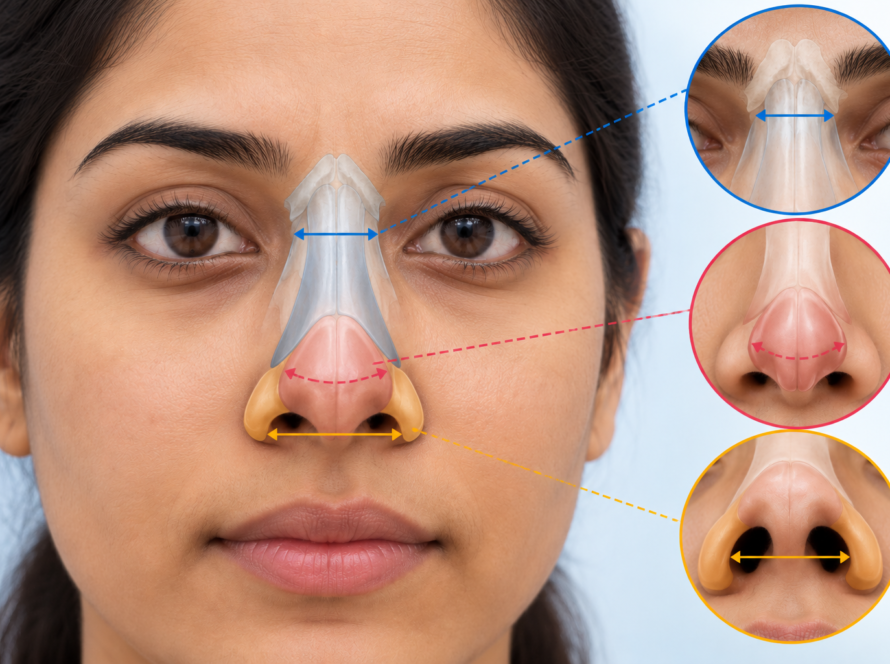
Non-surgical rhinoplasty, also called liquid rhinoplasty, uses injectable filler to change selected nasal contours. It may camouflage a small dip or create the appearance of a straighter bridge.
However, not every nose is suitable for filler.
People who have undergone previous nose surgery, have very thin nasal skin or want a smaller nose may face greater risks or disappointing results.
More importantly, nasal filler can accidentally block a blood vessel. This may cause skin damage or, rarely, permanent vision loss.
Understanding non surgical rhinoplasty risks is essential before deciding whether an injection is appropriate.
This guide explains who should avoid nose filler, why certain nasal shapes are unsuitable and which alternatives may offer a better solution.
What Can Non-Surgical Rhinoplasty Realistically Change?
Non-surgical rhinoplasty adds volume. It does not remove bone, cartilage or skin.
In carefully selected patients, filler may:
- Camouflage a small depression along the bridge.
- Make a minor contour irregularity less noticeable.
- Create the appearance of a smoother nasal profile.
- Adjust the apparent projection of selected areas.
However, these changes are limited and temporary.
Filler cannot reliably narrow a wide nose, remove a large hump, straighten significantly crooked bones or correct breathing problems.
It may actually make the nose appear larger because additional material is being placed beneath the skin.
Read more about what nose filler can change.
Who Should Not Get a Non-Surgical Nose Job?
A specialist may advise against filler when the risks outweigh the expected improvement.
1. People Who Have Had Previous Rhinoplasty
Previous nasal surgery can change blood-vessel pathways and create scar tissue.
As a result, filler placement may become less predictable.
Liquid rhinoplasty after surgery requires particular caution because altered circulation and scarring may increase the risk of tissue injury.
For many patients, avoiding further filler and considering surgical reassessment may be more appropriate.
2. People With Very Thin Nasal Skin
Thin skin can make filler irregularities easier to see.
Even a small amount of product may create visible lumps, unevenness or an unnatural contour.
Additionally, tissue with limited tolerance for pressure may be more vulnerable to complications.
3. People Who Want a Smaller Nose
Filler adds volume.
Therefore, it cannot genuinely reduce nasal width, remove a prominent hump or make a large nose physically smaller.
Patients seeking reduction are often better served by discussing surgical rhinoplasty.
4. People With a Large Hump or Crooked Nasal Bones
A small hump can sometimes be visually camouflaged by adding filler around it.
However, a large hump may require so much additional volume that the nose looks bigger.
Likewise, filler cannot straighten crooked nasal bones or correct significant structural deviation.
5. People Requesting Nasal Tip Filler
The nasal tip is a particularly sensitive treatment area because of its vascular anatomy.
Tip filler may create limited contour changes, but it cannot reliably correct weak cartilage support.
When the expected improvement is small and the potential consequences are serious, avoiding filler may be the safer choice.
6. People Considering Permanent Fillers
Permanent or non-reversible fillers are particularly concerning in the nose.
Unlike hyaluronic acid filler, they cannot be readily dissolved with hyaluronidase.
Delayed inflammation, nodules and vascular complications may be difficult to manage.
For elective nasal reshaping, permanent fillers should generally be avoided.
The “Should Not” Checklist: When Nose Filler Is Unsuitable
| Situation | Why it adds risk or disappoints | Better alternative |
|---|---|---|
| Previous rhinoplasty | Scar tissue and altered blood vessels may increase vascular risk | Specialist assessment; revision rhinoplasty when appropriate |
| Very thin nasal skin | Filler may become visible or irregular | Careful surgical assessment or no treatment |
| Wide nose with reduction goals | Filler adds volume rather than narrowing the nose | Surgical rhinoplasty |
| Large nasal hump | Camouflaging it may make the nose look bigger | Hump-reduction surgery |
| Crooked nasal bones | Filler cannot straighten the underlying bones | Structural rhinoplasty |
| Drooping tip from weak cartilage | Filler cannot restore reliable structural support | Tip surgery |
| Permanent filler request | Product cannot be easily dissolved; complications may persist | Avoid permanent nasal filler |
| Teenager with ongoing nasal growth | Anatomy, maturity and expectations may still be changing | Defer elective treatment and seek specialist advice |
These are reasons for caution or exclusion, not a substitute for individual medical assessment.
Why Is Nose Filler Riskier After Previous Surgery?
The nasal blood supply includes small vessels connected to circulation around the eyes.
During rhinoplasty, tissue dissection and healing may alter some of these pathways.
Scar tissue can also change how filler spreads through the tissue.
Consequently, injecting filler into a previously operated nose may be less predictable.
Published medical guidance specifically recommends extra caution in areas affected by previous facial surgery or scarring.
A patient who has already undergone rhinoplasty should not assume that filler is a harmless way to correct a remaining irregularity.
Instead, a surgeon should assess the existing structure, skin condition and treatment history.
Learn more about revision rhinoplasty.
Which Nose Shapes May Look Bigger With Filler?
A common misunderstanding is that filler can make any nose look smaller.
In reality, filler works by adding material.
A Wide Nose
Filler does not remove width from the nasal bones or cartilage.
Additional volume may make the nose appear wider from some angles.
A Large Hump
Filler placed above or below a hump may create a straighter-looking profile.
However, the overall nasal volume increases.
For a large hump, this may produce an undesirable result.
A Bulky Nasal Tip
Adding filler to an already broad tip may increase fullness.
If the goal is a smaller, more defined tip, surgery may be more appropriate.
This is an important difference when comparing non surgical rhinoplasty vs surgery: filler camouflages selected contours, while surgery can reshape or reduce underlying structures.
What Is the Nose Filler Blindness Risk?
The most serious non surgical rhinoplasty risks involve blood-vessel blockage.
If filler enters an artery, it may obstruct circulation to the skin or travel through connected vessels towards the eye.
Possible consequences include:
- Skin ischaemia.
- Skin necrosis.
- Permanent scarring.
- Partial or complete vision loss.
- Rare neurological complications, including stroke.
Blindness is rare, but it is a recognised complication.
Published reviews identify the nose as one of the highest-risk facial regions for filler-associated vision loss.
Importantly, even experienced injectors cannot eliminate this risk completely.
Therefore, the potential benefit must justify the risk, particularly when the desired change is small.
Warning Signs of a Vascular Filler Complication
A vascular complication requires immediate medical attention.
Warning signs include:
- Sudden or severe pain during or after injection.
- White, pale, grey or dusky skin.
- Mottled or net-like skin discolouration.
- Skin that becomes unusually cold.
- Sudden blurred vision or loss of vision.
- Double vision, eyelid drooping or severe headache.
- Weakness, speech changes or other stroke-like symptoms.
However, not every vascular blockage causes severe pain.
Any sudden visual symptom after nasal filler is a medical emergency.
Emergency Response: What Should Happen?
If vascular occlusion is suspected, the treating clinician should immediately stop injecting and activate an emergency response.
For suspected skin vascular occlusion caused by hyaluronic acid filler, trained clinicians may promptly administer hyaluronidase according to established protocols.
If vision changes or neurological symptoms occur, the patient requires immediate emergency hospital transfer and urgent ophthalmological assessment.
Same-day review is not enough if it delays emergency treatment.
Hyaluronidase may help certain skin complications, but it does not guarantee recovery of vision.
Patients should never attempt to manage these symptoms at home.
Read more about nose filler side effects and dissolving.
Nose Filler Vadodara: Who Should Consider Alternatives?
Patients researching nose filler vadodara should first determine whether filler can achieve their actual goal.
A consultation should include an assessment of:
- Previous rhinoplasty or nasal injury.
- Skin thickness and scar tissue.
- Nasal bone and cartilage shape.
- Desired reduction versus augmentation.
- Breathing concerns.
- Previous filler type and treatment history.
- Personal medical risks and expectations.
A responsible clinician may recommend against filler when the expected improvement is small or the anatomy creates additional concerns.
Choosing not to inject can be the appropriate medical decision.
What Are the Alternatives to Non-Surgical Rhinoplasty?
Surgical Rhinoplasty
Surgery can reduce a hump, narrow selected structures, correct significant asymmetry and reshape cartilage.
It involves anaesthesia, recovery and surgical risks, but it can address problems filler cannot.
Revision Rhinoplasty
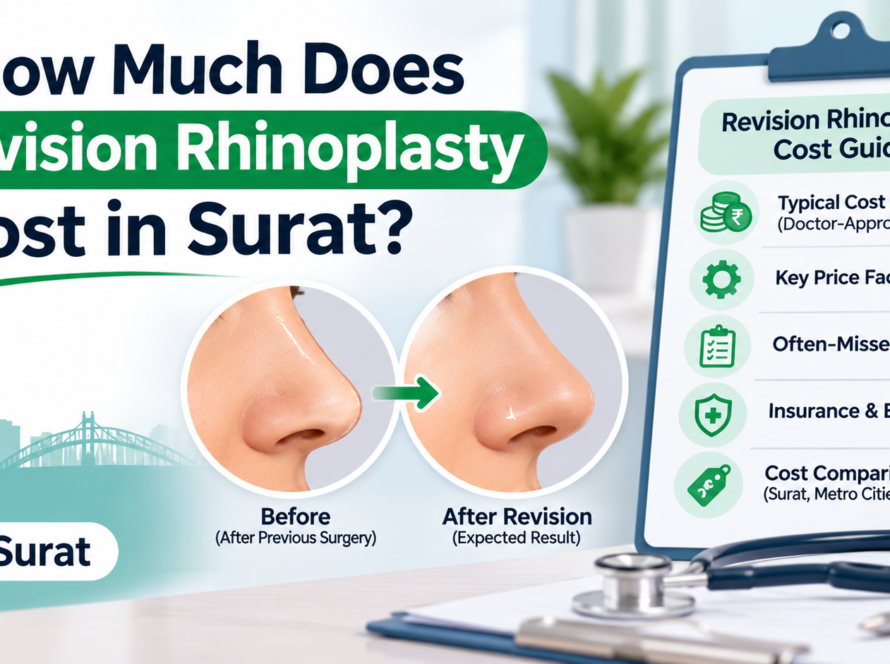
For patients who have already undergone surgery, revision rhinoplasty may address selected structural or cosmetic concerns.
However, revision procedures can be complex and require specialist assessment.
No Procedure or Continued Observation
Sometimes the safest option is to avoid further intervention.
This may be especially appropriate when a minor irregularity does not justify the risks of another treatment.
For patients exploring injectable options, the clinic’s non-surgical rhinoplasty page explains the treatment approach. Suitability still requires an individual consultation.
Frequently Asked Questions
Previous rhinoplasty can alter blood vessels and create scar tissue, increasing treatment complexity and potentially vascular risk. Many patients are better advised to avoid filler and obtain a specialist assessment.
Not physically. Filler adds volume and may only create the illusion of a smoother or more balanced profile. It cannot remove a hump or narrow nasal bones.
Blindness is uncommon but serious. Published studies report cases after nasal filler, although the precise individual risk is difficult to establish. Patients should not interpret rarity as an absence of risk.
Filler may camouflage a minor contour difference, but it cannot straighten crooked nasal bones or correct a significant structural deviation. Surgery may be more suitable.
Permanent and non-reversible fillers are particularly unsuitable because complications can be difficult to correct. Even reversible hyaluronic acid fillers carry vascular risks and are not automatically safe.
Elective nasal filler is generally best deferred in teenagers, especially while nasal growth and facial development are continuing. Specialist assessment, maturity and informed consent are essential.
People with previous nasal surgery, very thin skin, significant structural deformities, reduction goals or requests for permanent filler may be unsuitable. The final decision depends on individual anatomy and medical history.
It may be technically possible in selected circumstances, but previous surgery can increase uncertainty and risk. A specialist should evaluate the nose before any additional procedure.
Filler cannot reduce nasal size. It may disguise a small irregularity, but it can also make an already large nose appear more prominent.
If you are considering nose filler vadodara, consult a qualified rhinoplasty specialist who can assess your anatomy, previous procedures and treatment goals. The clinician should explain both the potential benefits and the reasons filler may be inappropriate.
Conclusion
Non-surgical rhinoplasty is not suitable for every nose.
People with previous nasal surgery, thin skin, large humps, crooked bones or goals involving nasal reduction may receive little benefit or face additional risk.
Most importantly, nasal filler carries a rare but serious risk of vascular occlusion, skin injury and permanent vision loss.
Understanding non surgical rhinoplasty risks helps patients make informed decisions rather than choosing a procedure based only on convenience.
For some patients, surgery provides a more appropriate structural solution. For others, avoiding further treatment may be safest.