Rhinoplasty in Ghod Dod Road Surat is a nose-reshaping treatment option for people who want to improve nasal appearance, correct structural concerns or address selected breathing problems. The procedure may involve changes to nasal bone and cartilage. Patients from Ghod Dod Road can seek specialist consultation in Surat to discuss suitability, recovery, risks and individual treatment costs.
What Is Rhinoplasty and How Does It Work?
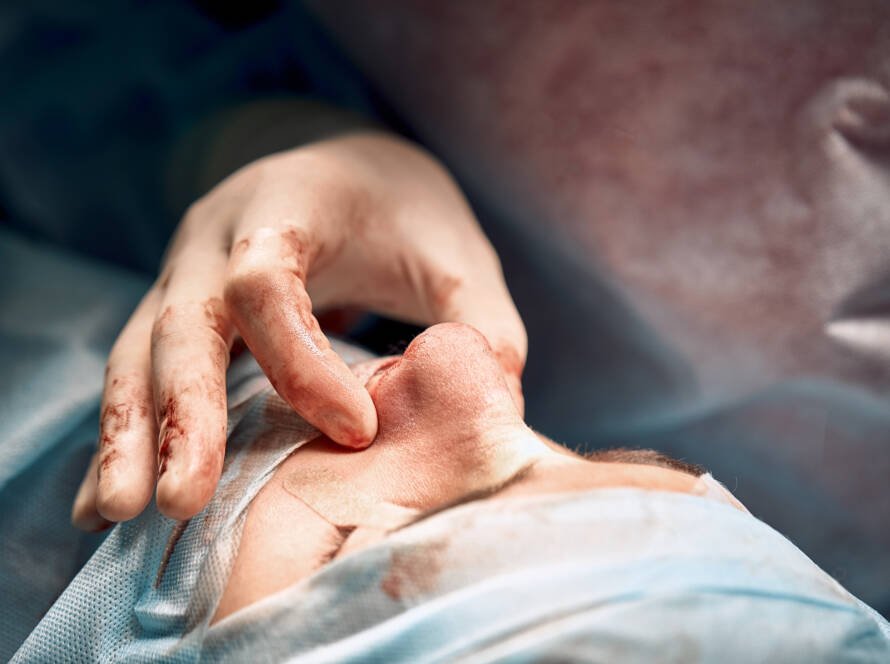
Rhinoplasty, commonly called a nose job, is a surgical procedure that changes the shape or structure of the nose. It can improve facial proportions, correct selected nasal deformities and sometimes improve breathing when structural problems contribute to obstruction.
The surgeon may reshape the nasal bridge, refine the tip, adjust the nostrils or correct nasal asymmetry.
However, every nose has a different structure. Therefore, the surgeon must examine your skin, bone, cartilage and breathing function before recommending treatment.
For a detailed overview, read What Is Rhinoplasty and How Does It Reshape Your Nose?.
Who Is a Good Candidate for Rhinoplasty?
Rhinoplasty may suit adults who have clear concerns about nasal shape or function and realistic expectations about surgery.
Common reasons for seeking treatment include:
- A prominent bump on the nasal bridge.
- A broad or uneven nasal tip.
- A crooked or asymmetrical nose.
- A nose that appears out of proportion with the face.
- Structural changes following an injury.
- Selected breathing problems caused by nasal anatomy.
- Dissatisfaction with the result of an earlier nose operation.
However, not every concern requires surgery. For example, some breathing problems result from allergies or other conditions that need different treatment.
A suitable candidate should also have good general health and understand the possible limitations of surgery.
You can review the Rhinoplasty Candidate Guide before booking a consultation.
What Types of Rhinoplasty Are Available?
Different procedures address different concerns.
Open Rhinoplasty
During open rhinoplasty, the surgeon makes a small incision across the columella, the tissue between the nostrils. This approach gives the surgeon direct access to the nasal framework.
It may suit complex reshaping, significant tip changes or structural reconstruction.
For more information, read Open Rhinoplasty: Benefits, Procedure and Recovery.
Closed Rhinoplasty
With closed rhinoplasty, the surgeon places the incisions inside the nostrils.
This method avoids an external columellar incision. However, it may not suit every structural concern.
The surgeon chooses between open and closed approaches based on your anatomy and treatment goals.
Tip Rhinoplasty
Tip rhinoplasty focuses on the shape, projection or position of the nasal tip.
For example, it may address a broad, drooping or uneven tip.
Septorhinoplasty
Septorhinoplasty combines nasal reshaping with correction of selected internal structural problems that affect breathing.
It may be suitable when a patient has both cosmetic concerns and a deviated septum contributing to nasal blockage.
Read Septorhinoplasty: Fixing Breathing and Shape Together for additional information.
Revision Rhinoplasty
Revision rhinoplasty addresses concerns after previous nasal surgery.
Because the surgeon may encounter scar tissue or altered cartilage, revision procedures can require more complex planning.
How Is Rhinoplasty Performed Step by Step?
The exact operation depends on your nose and the planned changes.
Step 1: Initial Consultation
First, the surgeon discusses your concerns, medical history and treatment goals.
They also examine your nasal structure, facial proportions and breathing.
Step 2: Surgical Planning
Next, the surgeon explains which parts of the nose may need correction.
The plan may involve the bridge, tip, nostrils or internal support structures.
Step 3: Anaesthesia
The surgical team selects an appropriate anaesthesia plan based on the procedure and your medical needs.
Step 4: Nose Reshaping
During surgery, the surgeon carefully adjusts the required bone or cartilage.
Some patients need tissue removal or repositioning. Others require cartilage grafts to improve support.
Step 5: Closure and Support
After reshaping the nose, the surgeon closes the incisions and may apply an external splint.
Internal supports or dressings may also be necessary in selected cases.
Step 6: Recovery and Follow-Up
Finally, the surgical team provides instructions about medicines, wound care, activity restrictions and follow-up appointments.
For a fuller explanation of treatment options, visit the Rhinoplasty Surgery in Surat service page.
How Long Does Rhinoplasty Recovery Take?
Most patients notice swelling, congestion and some discomfort during the early recovery period.
Although many people return to desk-based work within one to two weeks, the nose continues healing for several months.
The following table gives a general recovery outline.
| Recovery period | What patients may experience | General advice |
|---|---|---|
| First 48 hours | Swelling, congestion and mild discomfort | Rest and keep the head elevated as advised |
| Days 3-7 | Swelling and bruising may continue | Protect the nose and attend scheduled reviews |
| Week 2 | Bruising often improves; many resume light work | Avoid pressure or injury to the nose |
| Weeks 3-6 | Visible swelling gradually decreases | Increase activity only with medical clearance |
| Months 2-6 | Nose shape continues to refine | Follow the surgeon’s aftercare instructions |
| Months 6-12 or longer | Subtle swelling continues to settle | Attend follow-up visits when recommended |
These timelines vary. Complex surgery, thick skin or revision procedures may require longer healing.
For a more detailed schedule, see Rhinoplasty Recovery Week by Week: What Is Normal and What Is Not.
What Should You Avoid After Rhinoplasty?
Proper aftercare helps protect the healing nasal structures.
Your surgeon may advise you to:
- Avoid blowing your nose until cleared.
- Sleep with your head elevated during early recovery.
- Avoid heavy lifting and strenuous exercise initially.
- Protect the nose from accidental bumps.
- Avoid placing pressure from glasses on the nasal bridge until permitted.
- Take medicines only as directed.
- Avoid smoking and nicotine exposure.
- Attend scheduled follow-up visits.
Do not remove a nasal splint or dressing yourself unless your surgical team instructs you to do so.
Contact your surgeon promptly if you develop fever, increasing redness, unusual discharge or worsening pain.
Seek urgent medical attention for severe bleeding, serious breathing difficulty or new visual symptoms.
How Much Does Rhinoplasty Cost in Ghod Dod Road, Surat?
The cost of rhinoplasty in Ghod Dod Road Surat depends on the complexity of surgery, the technique used and the medical services required.
There is no single reliable price for every patient.
For example, a first-time procedure involving limited reshaping may differ in cost from revision surgery requiring additional cartilage grafts.
Other expenses may include anaesthesia, operating-room charges, investigations, medicines and follow-up care.
What Factors Affect the Cost?
| Cost factor | Why it matters |
|---|---|
| Type of rhinoplasty | Primary, revision and reconstructive cases require different plans |
| Surgical complexity | More extensive correction may take additional time |
| Open or closed technique | The chosen method affects the surgical approach |
| Cartilage grafts | Additional graft work may increase complexity |
| Breathing correction | Combined functional surgery may change the treatment plan |
| Anaesthesia | Charges depend on the recommended arrangement |
| Hospital or day-care facility | Facility and stay costs vary |
| Follow-up care | Packages may include different services |
An exact quotation requires a medical examination.
For further information, read How Much Does Rhinoplasty Cost in Surat: Key Factors and Rhinoplasty Cost: What Actually Drives the Price.
Is Rhinoplasty Painful?
Rhinoplasty usually involves anaesthesia during surgery, so patients should not feel operative pain under an effective anaesthetic.
After surgery, patients may experience tenderness, nasal pressure, swelling or congestion.
However, discomfort varies according to the procedure and individual healing.
The surgical team can recommend suitable pain relief and explain which symptoms need medical review.
For more information, read How Much Pain Can You Expect After Nose Surgery?.
What Are the Risks and Limitations of Rhinoplasty?
Like other operations, rhinoplasty carries risks.
Possible complications include:
- Bleeding or infection.
- Anaesthesia-related complications.
- Persistent swelling.
- Changes in nasal sensation.
- Scarring.
- Nasal asymmetry.
- Breathing difficulties.
- Unsatisfactory appearance.
- A possible need for revision surgery.
In addition, no surgeon can guarantee perfect symmetry or an exact final nose shape.
The result depends on nasal anatomy, skin characteristics, surgical planning and healing.
Therefore, patients should discuss realistic goals and possible complications before giving consent.
Can Rhinoplasty Improve Breathing?
Rhinoplasty can improve breathing in selected patients when structural nasal problems contribute to obstruction.
For example, a crooked nasal framework or weak nasal support may affect airflow.
However, allergies, sinus disease and other medical conditions can also cause nasal blockage.
The surgeon must identify the cause before recommending surgery.
Some patients may benefit from septoplasty or another functional procedure rather than cosmetic reshaping alone.
Is Non-Surgical Nose Correction an Alternative?
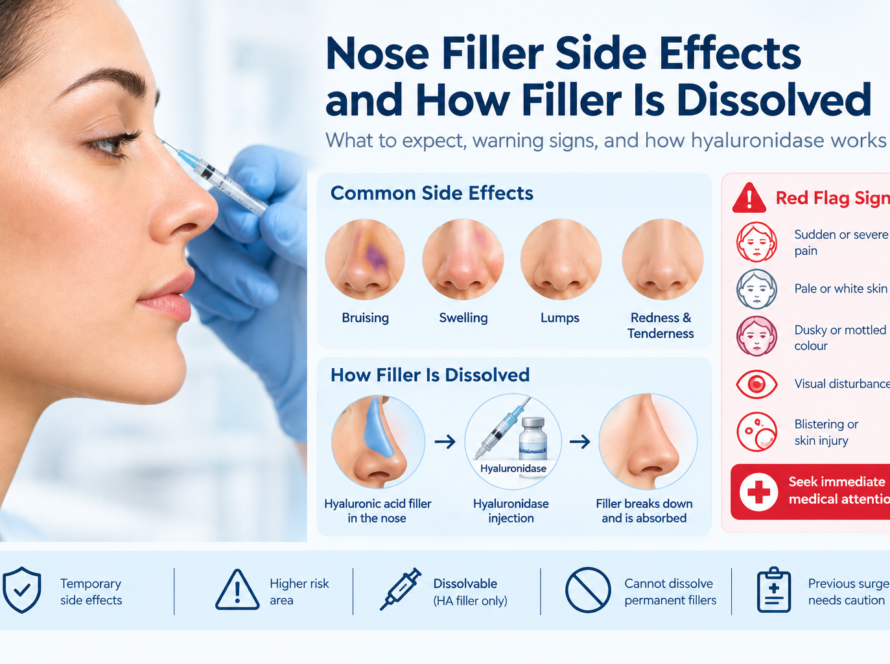
Non-surgical nose correction uses injectable fillers to change selected nasal contours temporarily.
It may help disguise certain minor irregularities. However, filler cannot remove a prominent bony hump, reduce the actual size of the nose or correct major structural problems.
Nasal filler also carries uncommon but serious vascular risks, including tissue injury and vision loss.
Therefore, patients should not assume that filler is a risk-free alternative to surgery.
Read Can Your Nose Be Reshaped Without Surgery? to understand the differences.
Rhinoplasty in Ghod Dod Road Surat: Where Can Patients Book a Consultation?
People searching for rhinoplasty in Ghod Dod Road Surat can arrange a consultation with Dr. Ashutosh Shah at Elegance Clinic’s established Surat centres.
The clinic lists consultation locations in Adajan and Vesu. It does not list a physical clinic on Ghod Dod Road.
Clinic Locations
Adajan Centre
203, Trinity Business Park, Opposite G3 Store, Madhuvan Circle, L.P. Savani Road, Adajan, Surat, Gujarat 395009.
Vesu Centre
320, Times Square, Canal Road, Bharthana, near G.D. Goenka International School, Vesu, Surat, Gujarat 395007.
Contact numbers: +91 8320500350 / +91 9624107602
Email: info@eleganceclinic.in
Patients should confirm their preferred centre and appointment time before visiting.
Who Is Dr. Ashutosh Shah?
Dr. Ashutosh Shah is a Plastic, Reconstructive and Cosmetic Surgeon with more than 22 years of surgical experience. He is the founder and director of Elegance Clinic in Surat.
His rhinoplasty practice includes nasal reshaping, tip correction, revision procedures and selected functional or reconstructive treatments.
During a consultation, he assesses nasal anatomy, facial balance, breathing concerns and realistic treatment goals before recommending a procedure.
You can read more about his qualifications and approach in Meet Dr. Ashutosh Shah, Rhinoplasty Surgeon in Surat.
How Should You Prepare for a Rhinoplasty Consultation?
A consultation gives you an opportunity to understand your treatment options before making a decision.
Prepare by bringing:
- Details of previous nose surgery or injuries.
- A list of medicines and supplements.
- Information about allergies or breathing problems.
- Relevant medical reports, if available.
- Questions about the expected outcome.
- Questions about recovery, risks and cost.
You should also explain which changes matter most to you.
For example, some patients want a smoother bridge, while others are concerned about nasal tip shape or breathing.
The surgeon can then explain what is realistic and whether surgery is suitable.
Frequently Asked Questions
Yes. Patients from Ghod Dod Road can arrange a rhinoplasty consultation at Elegance Clinic’s Adajan or Vesu centres in Surat. The surgeon assesses nasal shape, breathing concerns and treatment goals before recommending surgery. Confirm the consultation location when booking.
Many patients return to light daily activities or desk work within one to two weeks. However, swelling and healing continue for several months, and the nasal tip may take a year or longer to settle fully. Recovery depends on the procedure and individual healing.
Rhinoplasty cost depends on the surgical technique, complexity, anaesthesia, facility charges and whether additional structural correction is required. Revision procedures may cost more than simpler primary operations. The clinic can provide an individual quotation after examining your nose and discussing the treatment plan.
Conclusion
Choosing rhinoplasty in Ghod Dod Road Surat involves understanding the procedure, recovery, possible risks and treatment expenses.
A well-planned rhinoplasty aims to address suitable nasal concerns while preserving or improving function where appropriate.
Patients should focus on surgeon qualifications, realistic expectations, safe surgical facilities and clear postoperative guidance.
To discuss your concerns, contact Elegance Clinic and request a rhinoplasty consultation.