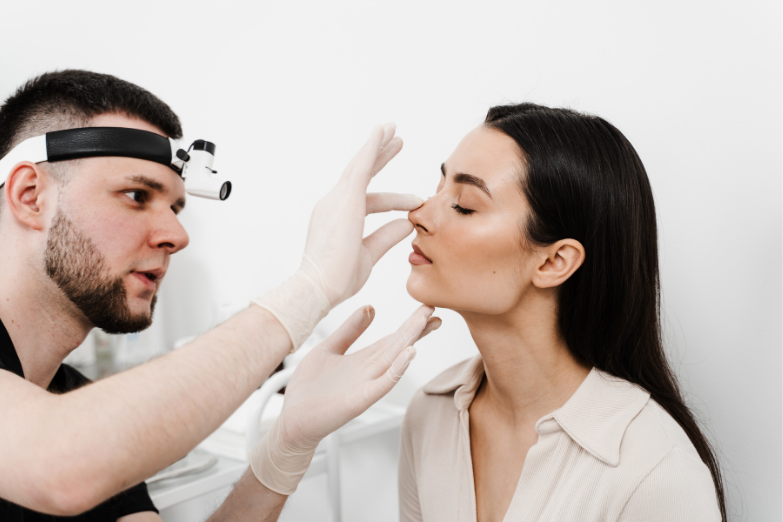
Septorhinoplasty combines correction of the nasal septum with reshaping of the external nose in a single operation, so a patient with both a blocked airway and a visibly deviated nose can have the functional and structural problems addressed under one anaesthetic rather than routinely planning two separate procedures.
A septorhinoplasty may be considered when breathing difficulty and an external nasal deformity occur together. At Elegance Clinic, Dr. Ashutosh Shah, with 22+ years of experience, assesses the septum, nasal valves, turbinates and external nose before deciding whether combined surgery is appropriate.
What is the difference between septoplasty, rhinoplasty and septorhinoplasty?
Although these procedures involve the nose, their purposes are different.
Septoplasty primarily corrects problems involving the nasal septum, particularly when deviation contributes to nasal obstruction.
Rhinoplasty reshapes the external structure of the nose. It may address the bridge, tip, width, projection, asymmetry or a visibly crooked nose.
Septorhinoplasty combines functional septal correction with external nasal reshaping. This can be useful when a patient has both a deviated septum and crooked nose or when internal and external structural problems contribute to breathing difficulty.
Read more about how a deviated nose is corrected.
How does a surgeon decide whether the blockage is septal, turbinate or valve related?
A blocked nose does not always result from the septum alone.
The surgeon assesses the internal nasal passages to identify whether obstruction comes from a deviated septum, enlarged turbinates, narrowing or weakness of the nasal valve, or a combination of factors.
The external nose is also examined because significant deviation can affect the internal airway.
Allergic or inflammatory conditions may contribute to congestion as well. Identifying the actual source of obstruction is important because septal surgery alone may not correct every type of breathing problem.
What is assessed before combining the two procedures?
Before planning septoplasty with rhinoplasty, the surgeon assesses both function and appearance.
The evaluation may include the external shape of the nose, septal position, nasal airway, valve support, turbinates, previous trauma and any previous nasal surgery.
The patient’s cosmetic concerns are discussed separately from the breathing problem so that both objectives are clearly understood.
Photographs and examination findings can then help the surgeon plan which structures need correction and whether a combined operation offers an appropriate approach.
Learn more about nose septum cosmetic surgery.
Septoplasty vs Rhinoplasty vs Septorhinoplasty
| Procedure | Purpose | Incision | What It Can Change | What It Cannot Change | Typical Downtime |
|---|---|---|---|---|---|
| Septoplasty | Improve airflow by correcting septal problems | Usually inside the nose | Deviated internal septum | Does not primarily reshape the external nose | Initial recovery commonly takes around 1–2 weeks |
| Rhinoplasty | Reshape the external nose | Depends on open or closed approach | Bridge, tip, projection, width and external shape | Does not automatically correct every internal breathing problem | Visible swelling and bruising commonly improve over several weeks |
| Septorhinoplasty | Address breathing and external shape together | Depends on the surgical plan | Septum plus selected external nasal structures | Cannot guarantee perfect symmetry or completely symptom-free breathing | Initial recovery is often measured in weeks, while swelling refines for months |
The exact recovery varies according to the extent of surgery and the structures treated.
Does combining them change recovery or theatre time?
Combining functional and cosmetic correction generally makes the procedure more extensive than a limited septoplasty alone and may increase operating time.
However, when both procedures are genuinely required, combining them can avoid having two separate operations and two separate recovery periods.
Early recovery may include nasal congestion, swelling, bruising and temporary discomfort. A splint may also be used depending on the procedure.
The external nose continues to settle long after the initial recovery period, so final refinement should not be judged too early.
For more information about surgical approaches, see open rhinoplasty explained.
When is a staged approach safer than a combined one?
Combining procedures is not automatically the right choice for every patient.
A staged approach may be considered when the nasal problem is particularly complex, previous surgery has significantly altered the anatomy, tissue quality requires careful planning or another medical issue makes a longer combined procedure less appropriate.
The decision also depends on what needs to be reconstructed and the patient’s overall health.
The objective is not simply to perform everything at once, but to choose an approach that provides an appropriate balance between function, appearance and surgical safety.
How is the functional result checked at follow-up?
Follow-up after functional rhinoplasty assesses more than the external appearance of the nose.
The surgeon asks how nasal breathing has changed and examines healing inside the nose. Septal position, swelling and the condition of the airway may be reviewed.
Early congestion does not necessarily indicate that surgery has failed because internal swelling can temporarily restrict airflow.
Breathing should therefore be assessed as healing progresses rather than judged only during the first few postoperative days.
Patients considering septal correction can also read about septoplasty surgery.
Conclusion
Septorhinoplasty combines functional septal correction with external nose reshaping when both problems need treatment. It can be particularly relevant for patients with a breathing problem with nose shape correction needs, but not every blocked or crooked nose requires a combined operation.
At Elegance Clinic, Dr. Ashutosh Shah evaluates the septum, turbinates, nasal valves, external shape and treatment goals to determine whether septoplasty, rhinoplasty or a combined septorhinoplasty is appropriate.
Frequently Asked Questions
Not always. Septorhinoplasty can improve structural causes of obstruction, but allergies, inflammation or other airway factors may still affect breathing. The underlying causes should be assessed before surgery.
It can be. Suitable septal cartilage may sometimes be used as graft material to support or reshape parts of the nose during septorhinoplasty, depending on the surgical plan.
Not necessarily. Septoplasty primarily addresses the internal septum. When external deviation or shape also needs correction, additional rhinoplasty techniques may be required to achieve the planned structural change.
Possibly. Allergic rhinitis does not automatically prevent surgery, but allergies can continue causing congestion afterward. They should be assessed and appropriately managed alongside any structural nasal obstruction.
Breathing may initially feel blocked because of postoperative swelling and congestion. Improvement generally becomes more noticeable as internal swelling settles, although the exact recovery timeline differs between patients.
It can be, depending on how much internal and external correction is required. Early recovery usually involves swelling and congestion, while complete internal healing and external nasal refinement continue gradually.