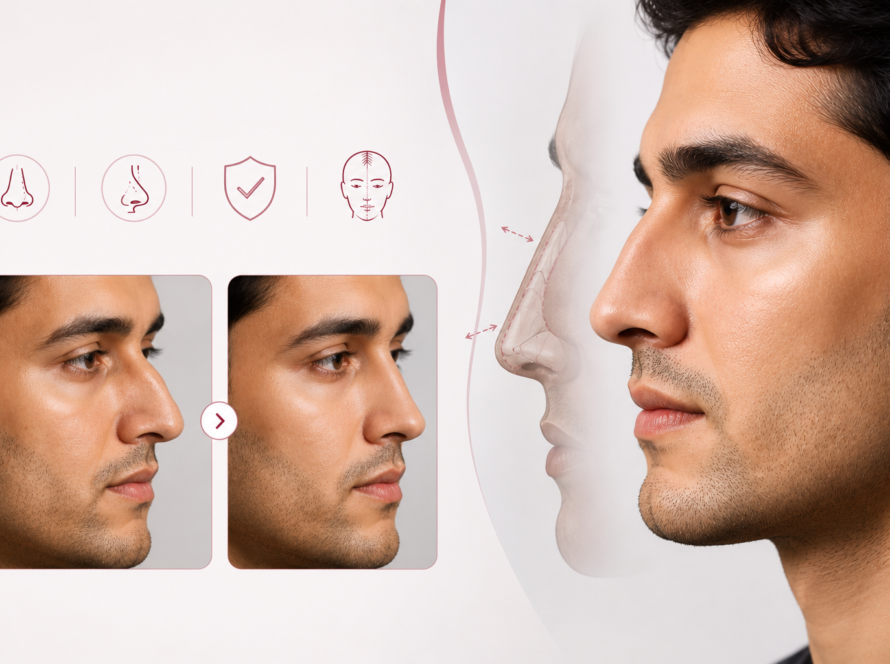
Aesthetic Nose Surgery Perspective: Dr. Ashutosh Shah
M.Ch., DNB (Plastic Surgery)
Plastic, Reconstructive & Cosmetic Surgeon
22+ Years of Surgical Experience
Founder & Director, Elegance Clinic
Reviewed: August 2026
Have you ever looked in the mirror or at a photograph and felt that your nose suddenly looks too big for your face?
A nose can appear large because of its actual width, length, projection, tip shape or bridge height. But sometimes the nose itself is not unusually large. The proportions of the chin, cheeks, forehead and other facial features can make it appear more prominent.
Your nose can look bigger than it really is when its shape or projection is out of balance with the rest of your facial features. Camera distance, viewing angle and facial proportions can also exaggerate its apparent size.
This is why deciding whether a nose needs correction should involve the entire face, not the nose alone.
Key Takeaways
- A prominent-looking nose is not always physically “too large.”
- Width, projection, length and tip shape all affect perceived size.
- A small or recessed chin can make the nose appear more prominent.
- Close-up photographs can exaggerate nasal size.
- Rhinoplasty can modify selected structural features.
- Surgery should aim for facial proportion rather than simply making the nose as small as possible.
- Breathing and nasal function should also be considered.
- The appropriate correction depends on individual anatomy.
What Makes a Nose Look Big?
A nose may look large because of a wide bridge, broad nostrils, prominent tip, excessive projection, increased length or an imbalance between the nose and surrounding facial features.
The nose occupies the centre of the face, so even relatively small structural differences can strongly influence overall appearance.
The concern should therefore be analysed according to which part appears prominent rather than simply describing the entire nose as “big.”
Which Parts of the Nose Can Make It Look Larger?
Different anatomical features can create different visual effects.
| Feature | How It Can Affect Appearance |
|---|---|
| Wide nasal bridge | Makes the centre of the nose appear broad |
| Broad nasal tip | Can make the lower nose look larger |
| Wide nostrils | Increases apparent width from the front |
| Strong projection | Makes the nose extend farther from the face |
| Long nasal structure | Can make the nose dominate the profile |
| Dorsal hump | Creates additional prominence from the side |
| Drooping tip | Can make the nose appear longer |
| Small/recessed chin | Can make a normal-sized nose look more prominent |
A proper facial assessment determines which factor is actually responsible.
Can Your Nose Look Big Even If It Is Normal in Size?
Yes.
Perceived nose size depends partly on facial proportion.
A nose that looks prominent on one face might look proportionate on another.
For example, a smaller or recessed chin can make the nose appear more projected from the side. Changes in cheek volume and other facial proportions can also affect how prominent the central nose appears.
This is why rhinoplasty planning should consider the entire facial profile.
Why Does My Nose Look Bigger in Photos?
Close-up photographs can distort facial proportions.
When a camera or smartphone is positioned close to the face, structures nearer the lens, particularly the nose, can appear disproportionately large compared with the ears and sides of the face.
Lens type, camera distance, angle and lighting can all change how the nose appears.
Therefore, one selfie should not be used to decide whether your nose is objectively too large.
Can a Wide Nose Make the Whole Nose Look Bigger?
Yes.
A broad nasal bridge, wide nasal bones, broad tip or wide nostril base can make the nose appear larger from the front.
But these are separate anatomical concerns.
For example, reducing nostril width will not necessarily correct a broad bridge, and changing the bridge will not automatically refine a broad tip.
Elegance Clinic’s rhinoplasty and nose reshaping services include different procedures depending on the part of the nose requiring correction.
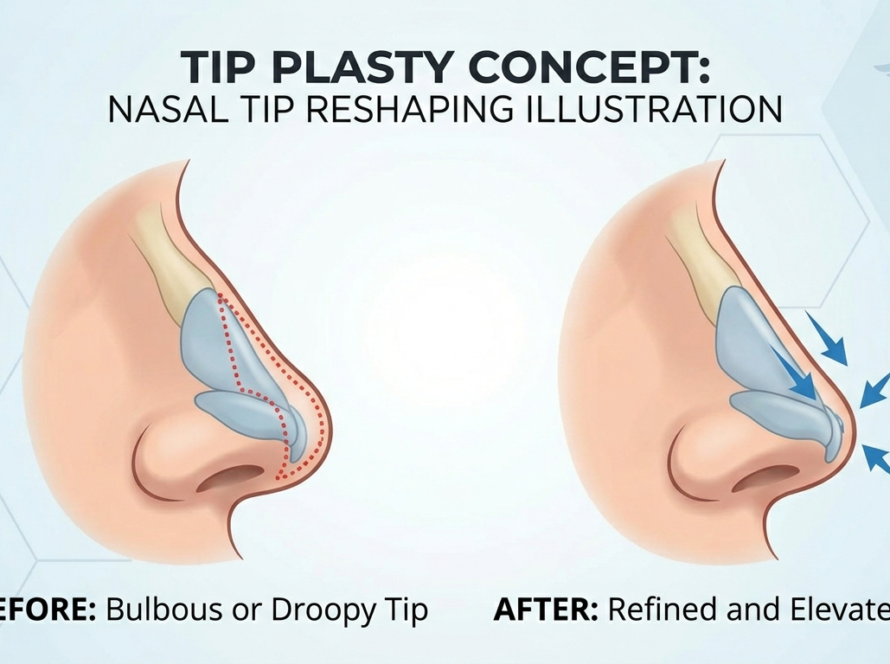
Can a Large Nose Tip Be Made Smaller?
Selected broad or prominent nasal tips can be refined surgically.
The tip is largely supported by cartilage, so treatment may involve carefully reshaping or repositioning cartilage rather than simply removing tissue.
The amount of change possible depends on:
- cartilage structure,
- skin thickness,
- tip support,
- existing projection,
- and overall nasal proportions.
Over-reducing the tip can create an unnatural appearance or compromise support, so smaller is not always better.
Can Wide Nostrils Make Your Nose Look Large?
They can.
The alar base forms the outer width of the nostrils.
When this area is disproportionately wide, alar reduction may be considered as part of a carefully planned rhinoplasty in selected patients.
However, nostril width varies naturally between people and ethnic groups.
Reduction should preserve normal breathing and avoid an over-narrow or operated appearance.
Can a Nose Hump Make the Nose Look Bigger?
Yes.
A prominent dorsal hump can increase the apparent size of the nose from the side.
Depending on anatomy, rhinoplasty may modify the nasal dorsum to create a smoother profile.
However, removing too much of the bridge can create an unnatural or overly scooped appearance.
The goal should be proportionate refinement rather than simply removing as much tissue as possible.
Does a Small Chin Make the Nose Look Bigger?
Yes. A relatively small or recessed chin can make the nose appear more prominent in profile even when the nose itself is not excessively large.
The nose and chin visually influence each other.
This is an important AEO question because patients sometimes request aggressive nose reduction when part of the perceived imbalance actually comes from overall facial proportions.
A full profile assessment helps determine where the imbalance originates.
Can Rhinoplasty Make a Large Nose Look Smaller?
Yes, rhinoplasty can reduce or reshape selected structural features that make a nose appear large, provided the proposed changes are anatomically appropriate and preserve nasal function.
Rhinoplasty can involve modification of bone, cartilage and soft tissue depending on the concern.
Possible goals may include:
- reducing excessive projection,
- refining the tip,
- narrowing selected areas,
- correcting a dorsal hump,
- modifying nostril width,
- or improving overall nasal proportion.
The exact operation differs from patient to patient.
Does Rhinoplasty Literally Make Every Part of the Nose Smaller?
No.
Modern rhinoplasty is not simply “nose reduction surgery.”
Sometimes creating better proportion requires reshaping or repositioning structures rather than removing them.
In some noses, maintaining or even adding structural support can produce a more balanced appearance.
A good surgical plan therefore asks:
What makes this nose look disproportionately large?
rather than:
How much of the nose can be removed?
Can You Make a Nose Smaller Without Surgery?
Nonsurgical procedures cannot physically reduce nasal bone or cartilage.
Injectable treatments can sometimes camouflage selected contour irregularities by adding volume around them, but adding filler does not make the actual nose smaller.
This distinction is important for anyone searching for a nonsurgical “nose reduction.”
A consultation should explain whether the goal involves true structural reduction or simply changing visual proportions.
Will a Smaller Nose Automatically Look Better?
No.
A nose should be assessed in relation to the person’s face.
Over-reduction can produce problems such as:
- an unnatural appearance,
- loss of structural support,
- pinched-looking features,
- disproportion with other facial structures,
- or breathing problems.
The objective of rhinoplasty should therefore be balance, not minimum size.
Can Rhinoplasty Affect Breathing?
It can.
The nose has both cosmetic and functional roles.
Any operation that changes nasal structures must consider the airway. In some patients, cosmetic and functional concerns can be addressed during the same surgical planning process.
Aesthetic improvement should never come at the expense of normal breathing.
Who May Consider Rhinoplasty for a Large-Looking Nose?
Someone may consider assessment when they are consistently concerned about features such as:
- excessive projection,
- a broad bridge,
- wide nostrils,
- a prominent hump,
- a broad or drooping tip,
- or overall nasal disproportion.
The concern should be persistent and personally meaningful rather than based only on temporary trends, filters or comments from other people.
What Happens During a Nose Assessment?
A rhinoplasty consultation should evaluate the nose from several angles.
The surgeon considers:
- bridge width and height,
- nasal length,
- tip shape,
- projection,
- nostril width,
- skin thickness,
- cartilage support,
- facial profile,
- breathing,
- and the patient’s expectations.
Elegance Clinic provides rhinoplasty assessment and nose surgery based on the specific anatomical concern rather than using one standard nose shape for every patient.
Can You Know Exactly How Your Nose Will Look After Surgery?
No surgeon can guarantee an exact postoperative appearance.
Surgical planning can help establish realistic goals, but healing, swelling, skin characteristics, scar tissue and individual anatomy influence the final result.
Rhinoplasty also takes time to settle, particularly around the nasal tip.
Realistic expectations are therefore an important part of treatment planning.
A Better Question Than “Is My Nose Too Big?”
Instead of asking only whether your nose is too large, ask:
Which feature is making my nose look prominent, and how does it relate to the rest of my face?
That question leads to more useful treatment planning.
Dr. Ashutosh Shah is a Plastic, Reconstructive and Cosmetic Surgeon with M.Ch. and DNB qualifications and more than 22 years of surgical experience. His practice includes rhinoplasty and other facial aesthetic procedures.
Patients can explore the broader approach and services at Elegance Clinic before considering treatment.
If your nose appears wide, long, highly projected or simply out of proportion with your other features, request an individual nose assessment to understand what is actually creating that appearance before deciding whether treatment is necessary.
Frequently Asked Questions
Width, projection, length, tip shape and facial proportions can all affect perceived nose size.
Yes. A smaller chin or other facial proportions can make the nose appear more prominent.
Close camera distance and lens perspective can exaggerate the centre of the face.
Selected structural features can be reduced or reshaped when appropriate.
No. Filler adds volume; it may camouflage contours but cannot physically reduce the nose.