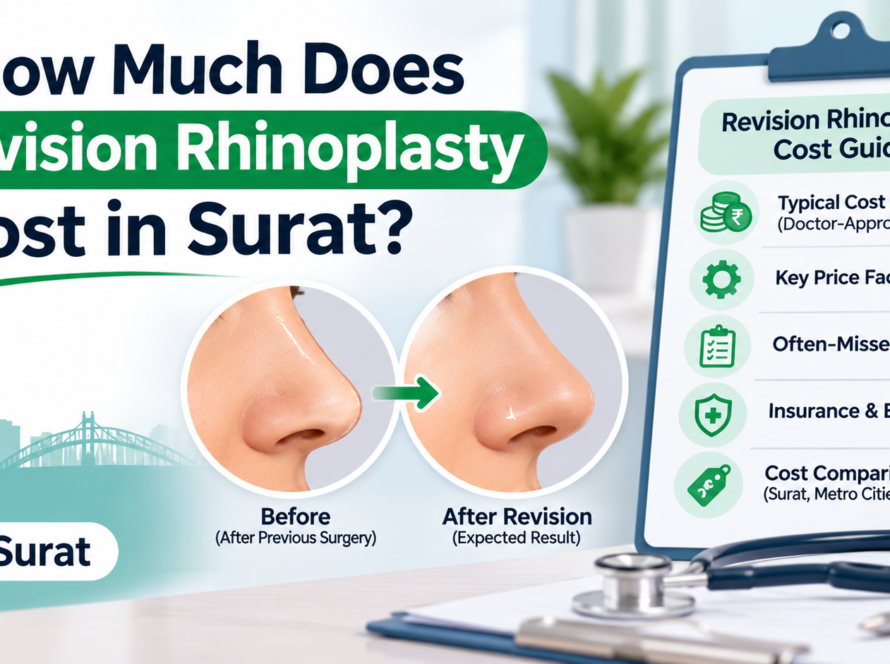
Planning revision rhinoplasty in Vapi often begins with one important question: what can be done when a previous nose surgery has not delivered the expected result?
Some patients remain concerned about the appearance of their nose. Others experience breathing difficulties, persistent asymmetry or changes that become noticeable after the initial swelling settles.
Revision rhinoplasty may address selected concerns, but it requires careful planning. The surgeon must assess the existing nasal structure, previous surgical changes, scar tissue and the patient’s expectations before recommending another operation.
For patients travelling from Vapi to Surat, the decision also involves practical arrangements. Consultation appointments, medical tests, recovery accommodation and follow-up visits all deserve attention.
This guide explains how revision rhinoplasty works, what recovery may involve and how to organise treatment without rushing the decision.
Quick Answer
Revision rhinoplasty is a secondary operation performed to address selected functional or cosmetic concerns after previous nose surgery. It may involve reshaping existing structures, correcting asymmetry or improving nasal support. Because the anatomy has already changed, the procedure can be more complex than primary rhinoplasty.
Patients should begin with a specialist assessment, discuss realistic outcomes and plan sufficient time for recovery and follow-up appointments.
What Is Revision Rhinoplasty and Who Is It For?
Revision rhinoplasty, also called secondary rhinoplasty, is surgery performed after an earlier rhinoplasty.
It does not always mean the first operation was unsuccessful. For example, some changes become more apparent as swelling resolves, while other concerns may develop during healing.
Common reasons patients consider revision surgery
A patient may seek another assessment because of:
- Persistent difficulty breathing through the nose.
- A crooked or uneven nasal appearance.
- Irregularities along the bridge or nasal tip.
- A pinched, collapsed or poorly supported nasal structure.
- Concerns about the shape following the first operation.
- Changes that remain after adequate healing.
However, not every concern requires another procedure. Sometimes swelling, scar maturation or realistic differences between the planned and actual result explain the appearance.
Therefore, the surgeon must determine whether further surgery is appropriate.
For a detailed introduction, explore revision rhinoplasty treatment.
When should you consider a consultation?
Patients can request an assessment whenever they have persistent concerns.
Nevertheless, surgeons commonly recommend allowing sufficient time after the original operation before undertaking elective revision surgery. Nasal swelling and scar tissue may continue changing for many months.
The appropriate waiting period depends on the original procedure, symptoms and examination findings.
How Is Revision Rhinoplasty Done Step by Step?
Unlike a first-time operation, revision surgery involves structures that may already have been reshaped or weakened.
As a result, the surgeon must create an individual plan rather than follow one standard technique.
Step 1: Initial consultation
First, the surgeon discusses your previous operation, current concerns and desired improvements.
Bring earlier surgical records, available photographs and information about any breathing problems.
The consultation should also cover medical conditions, medicines, smoking habits and previous healing difficulties.
Step 2: Nasal examination
Next, the surgeon evaluates the skin, nasal bridge, tip, internal support and airflow.
Photographs may help document the existing appearance and support treatment discussions.
In selected cases, additional examination or investigations may be necessary.
Step 3: Treatment planning
The surgeon then explains which changes may be achievable.
Some revisions involve relatively limited adjustments. Others require rebuilding support using cartilage grafts or correcting more extensive structural problems.
The need for grafting depends on the condition of the remaining nasal tissue.
Step 4: Anaesthesia and preparation
Before surgery, the clinical team reviews fitness for anaesthesia and provides preoperative instructions.
Revision rhinoplasty is commonly performed under general anaesthesia, although the final approach depends on the procedure and anaesthesia assessment.
Step 5: Surgical correction
During the operation, the surgeon accesses the required structures and makes the planned adjustments.
Depending on the case, these may include repositioning cartilage, improving support, correcting irregularities or addressing obstruction.
An open or closed approach may be considered according to the surgical requirements.
Learn more about the open rhinoplasty approach.
Step 6: Immediate recovery
After surgery, the clinical team monitors the patient and provides instructions about medicines, dressings, activity and warning signs.
A nasal splint or other support may be used when appropriate.
The surgeon then schedules follow-up appointments to assess healing.
Quick Facts About Revision Rhinoplasty
| Factor | What to Expect |
|---|---|
| Treatment duration | [Surgeon to add typical duration for the planned procedure] |
| Anaesthesia | Commonly general anaesthesia; confirm individual plan |
| Hospital stay | [Surgeon to confirm day-care or overnight-stay arrangements] |
| Back to work | Often around 1–2 weeks for desk-based work, depending on recovery |
| Initial recovery | Swelling, bruising, congestion and tenderness may occur |
| Follow-up visits | [Clinic to confirm the usual appointment schedule] |
| Visible improvement | Changes become clearer as swelling decreases |
| Final refinement | May continue for 12–18 months or longer in some cases |
These are general expectations, not guaranteed recovery times. Your surgeon’s instructions take priority.
Recovery: What Do the First Weeks Look Like?
Recovery after revision rhinoplasty varies because previous surgery can affect scar tissue, circulation and structural support.
Although patients often want to judge the result immediately, the nose changes gradually during healing.
The first few days
Swelling, congestion and bruising may be noticeable.
Patients may also experience mild discomfort or a feeling of pressure.
During this period, rest, prescribed medicines and careful protection of the nose are important.
Follow the surgeon’s instructions about sleeping position, cleaning and avoiding pressure on the operated area.
The first one to two weeks
Some visible swelling and bruising generally begin to improve.
If the surgeon uses a splint, the team will explain when it should be reviewed or removed.
Many patients can consider returning to non-strenuous work during this period, but recovery differs between individuals.
The following weeks
As healing progresses, daily activities may gradually become easier.
However, strenuous exercise, contact sports and activities that could injure the nose should remain restricted until the surgeon provides clearance.
Patients should also avoid assuming that early improvements represent the final result.
The following months
Residual swelling, particularly around the nasal tip, may take considerable time to resolve.
Consequently, the final appearance can continue developing long after the initial recovery period.
If breathing problems worsen or unusual symptoms appear, contact the surgical team rather than waiting for the next routine appointment.
Which Factors Change the Cost?
Revision rhinoplasty usually requires a personalised quotation because the complexity of the procedure varies.
Extent of correction
A limited adjustment may require a different surgical plan from extensive reconstruction.
Therefore, the amount of work involved influences the overall fee.
Cartilage grafting
Some patients need additional cartilage to improve support or restore missing structures.
The source and extent of grafting can affect operating time and treatment costs.
Anaesthesia and facility charges
The quotation may include anaesthesia, operating facilities, medicines and postoperative monitoring.
However, patients should confirm each item rather than assume that all charges are included.
Tests and follow-up care
Preoperative investigations, postoperative medicines and review appointments may contribute to the total expense.
A written estimate should clearly identify which services are included.
Complexity of previous surgery
Scar tissue, altered anatomy and the number of previous operations may influence the surgical approach.
[Surgeon to add the clinic’s verified typical price range and explain what the quotation includes.]
Avoid choosing a revision procedure solely because of a low advertised price. Surgical suitability, qualifications and realistic planning are more important.
How Patients from Vapi Plan Their Visit to Surat
Patients considering revision rhinoplasty in vapi can begin by organising their medical information before travelling.
Start with a consultation
Contact the clinic to ask whether an initial discussion can take place online.
A remote consultation may help explain your concerns and identify which documents or photographs to prepare.
However, an in-person examination is generally necessary before confirming the surgical plan.
Bring previous treatment records
If available, collect the operative summary from your first rhinoplasty, previous photographs, prescriptions and investigation reports.
These records may help the surgeon understand the earlier procedure.
Allow time for assessment and tests
Do not assume that surgery will happen immediately after the first appointment.
The surgeon may recommend additional investigations, further discussion or more healing time before proceeding.
Plan your recovery arrangements
Before confirming travel, ask how long you should remain near the clinic following surgery.
You may need someone to accompany you, especially after general anaesthesia.
Also, avoid arranging a demanding return journey before the surgeon confirms that travel is appropriate.
Organise follow-up appointments
Ask which visits require physical examination and whether selected later reviews can happen remotely.
Follow-up care remains important even when the early recovery appears uncomplicated.
For appointments, visit the contact page.
Risks and Limitations You Should Understand
Revision rhinoplasty is a significant surgical decision.
Potential risks include bleeding, infection, anaesthesia complications, persistent swelling, scarring, asymmetry, changes in sensation, breathing difficulties and dissatisfaction with the appearance.
In some cases, additional correction may be necessary.
Furthermore, scar tissue and limited remaining cartilage can restrict what the surgeon can safely achieve.
No surgeon can guarantee perfect symmetry or an exact match to a reference photograph.
For general information about nose surgery and recovery, see the NHS rhinoplasty guidance.
Questions to Ask Before You Decide
A productive consultation should help you understand the treatment rather than simply confirm an operation date.
Consider asking:
- What is causing my current cosmetic or breathing concern?
- Has my nose healed enough for another operation?
- What changes are realistically achievable?
- Will I need cartilage grafting?
- Which surgical approach is appropriate?
- What complications are more likely in my case?
- How much time should I reserve for recovery?
- What is included in the written quotation?
- What happens if the result differs from my expectations?
You can also review this general rhinoplasty guide before your appointment.
Frequently Asked Questions
Revision rhinoplasty may take several hours, depending on the complexity of the correction. Extensive reconstruction can take longer than a limited adjustment. The total appointment also includes preparation and postoperative monitoring.
The number of appointments depends on healing, the surgical technique and whether complications develop. Early visits may assess dressings, swelling and wound healing, while later reviews monitor the developing result.
An initial online discussion may be possible, depending on clinic arrangements. It can help patients share concerns and previous surgical records. However, a physical examination is usually needed before the surgeon confirms the treatment plan.
Travel depends on the extent of surgery, anaesthesia, early healing and the need for follow-up care. Patients considering revision rhinoplasty in vapi should confirm their return journey with the surgeon before making fixed bookings. Travelling too early may make postoperative assessment and complication management more difficult.
Initial changes become visible as swelling decreases, but final refinement takes longer. In revision cases, swelling and scar maturation may continue for 12–18 months or longer. The surgeon can explain what is realistic for your individual operation.
Conclusion
Revision rhinoplasty requires more than choosing a convenient surgery date. Patients need a detailed examination, realistic goals, an appropriate surgical plan and enough time for healing.
If you are travelling from Vapi, organise your consultation, medical records, recovery arrangements and follow-up appointments before committing to treatment.
To discuss your concerns, contact the rhinoplasty clinic and request an individual assessment.