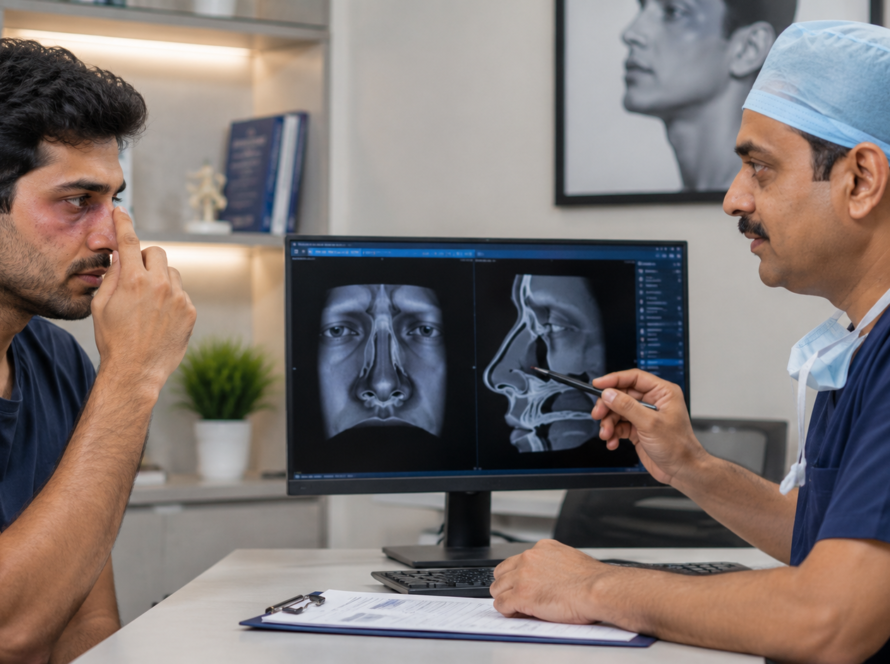
After nose surgery, follow-up appointments are an important part of recovery. They allow the surgical team to check healing, manage dressings, remove the splint or sutures when appropriate, and monitor changes in breathing and appearance.
For a straightforward rhinoplasty, the follow-up plan may include four to six visits, beginning within the first few days and continuing through the first year. The exact schedule can change depending on the type of nose surgery, healing and any concerns that develop.
How Many Follow-Up Visits Are Needed After Nose Surgery?
A typical follow-up schedule may look like this:
| Visit | Approximate timing | What is checked or done | Visit type |
|---|---|---|---|
| 1 | Day 1–2 | Dressing, swelling, bleeding and early healing | In person |
| 2 | Around day 7 | Splint and suture removal when appropriate | In person |
| 3 | Around 1 month | Healing, breathing and early changes | Usually in person |
| 4 | Around 3 months | Ongoing healing and nasal changes | In person or video if suitable |
| 5 | Around 6 months | Continued healing and result | In person or video if suitable |
| 6 | Around 12 months | Longer-term or final assessment | Usually in person |
This is a general framework rather than a fixed schedule for every patient. Your surgeon may arrange fewer or additional appointments depending on the procedure and your recovery.
Day 1–2: The Early Dressing Check
The first review is mainly about early recovery.
The team may check:
- The dressing or external support
- Swelling
- Bleeding or discharge
- The condition of the surgical area
- Your general recovery
- Any pain or medication concerns
This appointment is generally an in-person visit, because the surgical team needs to assess the operated area directly.
If you develop a concern before this appointment, contact the surgical team rather than waiting for the scheduled review.
For information about discomfort during recovery, see Pain after nose surgery.
Around Day 7: Splint and Suture Removal
The next important appointment is commonly around the first week.
Depending on the operation and the surgeon’s technique, the team may remove:
- The external nasal splint
- External sutures, when present
- Dressings or other temporary supports
Splint removal is generally a short clinical procedure. Some patients may experience pressure or mild discomfort, but the experience varies.
You should not remove the splint or sutures yourself unless specifically instructed to do so.
This visit normally requires an in-person examination.
One-Month Follow-Up
Around one month after surgery, the focus changes from immediate wound care to ongoing healing.
The surgeon may assess:
- Swelling
- Incision healing
- Nasal shape
- Breathing
- Internal healing where relevant
- Any persistent discomfort
- Early changes in the surgical result
The nose may still be swollen at this stage. Early appearance should therefore not automatically be treated as the final result.
If your surgery followed a nasal injury rather than cosmetic rhinoplasty, the follow-up pathway may be different. See Nose fracture surgery and recovery for more information.
Three-Month Review
At approximately three months, the nose has usually progressed further through the healing process.
The review may look at:
- Remaining swelling
- Nasal symmetry
- Breathing
- Scar healing
- Changes in the nasal tip
- Overall progress
Whether this appointment can be partly handled by video depends on what needs to be assessed.
A video appointment cannot replace a physical examination when the surgeon needs to examine the nose directly.
Six-Month Review
The six-month appointment provides another opportunity to assess ongoing healing.
The surgeon may compare your progress with the earlier examinations and determine whether the nose is continuing to change as expected.
Some swelling, particularly around the nasal tip, may persist longer than patients expect.
The exact timing of this review depends on the operation and individual healing.
Twelve-Month Review
A twelve-month review can be useful because rhinoplasty results continue to settle over time.
The surgeon may assess:
- Final or near-final nasal shape
- Symmetry
- Breathing
- Scar appearance
- Patient satisfaction
- Whether any further treatment needs to be discussed
Not every patient will require exactly twelve months of follow-up, but longer-term assessment can be useful after rhinoplasty.
Which Follow-Ups Can Be Done by Video?
Some follow-up discussions may be suitable for video consultation.
A video review may be useful for:
- Discussing general recovery
- Reviewing questions about medication
- Discussing reports or photographs
- Checking progress when no physical examination is required
However, some appointments need to be in person.
An in-person review is particularly important when the surgeon needs to assess:
- The surgical site
- Sutures
- Splints
- Internal nasal healing
- Bleeding
- Significant swelling
- Breathing problems
- Any new physical finding
The surgical team should decide whether a particular follow-up can safely be handled remotely.
What If You Cannot Come on the Scheduled Day?
If you cannot attend your scheduled appointment, contact the clinic as soon as possible.
Do not simply skip an early post-operative appointment, particularly when it involves dressing, splint or suture management.
The team can advise whether:
- The appointment can be moved
- Another date is appropriate
- A video review is sufficient
- An earlier examination is necessary
The correct replacement date depends on what the appointment was intended to check.
What If Bleeding or Fever Starts Between Visits?
Do not wait for the next routine appointment if you develop a concerning symptom.
Contact the surgical team promptly if you experience significant or persistent bleeding, fever, rapidly increasing swelling, worsening pain, unusual discharge or another sudden change.
If symptoms are severe or you cannot reach the surgical team, seek urgent medical assessment.
A routine follow-up schedule should never prevent someone from seeking care for an acute problem.
Planning Follow-Up Visits Around Nanpura and Central Surat
Patients travelling from Nanpura and central Surat should plan their appointments around the expected recovery schedule rather than assuming every review can be combined into one visit.
Before leaving the clinic, confirm:
- The date of the next appointment
- Whether it must be in person
- Whether splint or suture removal is planned
- What to do if you cannot attend
- Who to contact outside normal OPD hours
- Whether later reviews may be possible by video
For current appointment and clinic information, use Contact and clinic details.
Can You Drive Yourself to a Follow-Up?
Whether you can drive depends on your recovery, medication, vision, comfort and the timing of the appointment.
After surgery, it may be safer to arrange someone else to drive you, particularly during the early recovery period.
If you are taking medication that can cause drowsiness or affect alertness, do not drive unless you have been advised that it is safe.
Are Follow-Up Visits Charged Separately?
Follow-up charges depend on the clinic, procedure and package.
Do not assume that every post-operative visit is included in the original surgical fee.
Before surgery, ask for a written explanation of what the quoted cost covers, including:
- Early post-operative checks
- Dressing changes
- Splint removal
- Suture removal
- Later reviews
- Any additional procedures
This makes it easier to understand the financial side of follow-up care.
How Many Trips Should You Plan?
For a straightforward rhinoplasty, planning for approximately four to six follow-up visits is reasonable based on the general schedule in this guide.
The important appointments are usually:
Early check → splint/suture removal → one-month review → longer-term reviews.
Your actual number of visits may be different. Additional appointments may be required if healing is slower than expected or if a new concern develops.
When Is the Final Review?
There is no single final-review date that applies to every nose surgery patient.
For rhinoplasty, a longer-term assessment around 12 months may be useful because swelling and tissue changes can continue for many months.
The surgeon will determine when your follow-up can be concluded based on your healing and the procedure performed.
For patients considering a different type of nasal operation, see Open rhinoplasty explained for information about that surgical approach.
Final Takeaway
Follow-up after nose surgery is not just a routine appointment schedule. Each visit has a different purpose.
The first few days focus on early healing and dressings. Around the first week, the splint and sutures may be removed when appropriate. Later appointments monitor swelling, breathing, shape and longer-term healing.
Some later discussions may be suitable for video consultation, but physical examinations remain important when the nose needs to be assessed directly.
Most importantly, do not wait for the next scheduled appointment if significant bleeding, fever, rapidly increasing swelling, worsening pain or another concerning change develops.
Frequently Asked Questions
A straightforward rhinoplasty may involve around four to six follow-up visits, although the exact number depends on the procedure and recovery.
Splint removal can cause pressure or temporary discomfort, but the experience varies between patients. It should be performed by the surgical team.
Driving depends on your recovery, medication, alertness and comfort. During early recovery, arranging transport may be safer.
Contact the clinic as soon as possible. The team can advise whether the appointment should be rescheduled or whether another form of review is appropriate.
This depends on the clinic and surgical package. Ask for a written breakdown of what is included before surgery.
Use the post-operative contact instructions provided by your surgical team. If you develop a severe or urgent problem and cannot reach the team, seek urgent medical care.
A longer-term review may occur around 12 months after rhinoplasty, but the timing depends on the procedure and individual healing.