A bruised nose is swollen and tender but may keep its usual shape, while a broken nose can look crooked, bleed or make breathing difficult. Swelling can hide a fracture. A soft, dark swelling inside the nostril may indicate a septal haematoma, which needs same-day assessment and drainage to prevent damage to the nasal cartilage.
How Do You Tell a Bruised Nose from a Broken Nose?
A fall, sports collision or accidental blow can injure the skin, nasal bones or cartilage. The symptoms may overlap, so pain and swelling alone cannot confirm whether the nose is broken.
A bruised nose commonly causes tenderness, skin discolouration and swelling. The nose may retain its normal shape, and breathing may remain comfortable. Minor bruising generally improves gradually over several days.
A broken nose, also called a nasal fracture, may cause:
- A new bend, depression or change in the shape of the nose.
- Pain and tenderness over the nasal bones.
- Nosebleeding following the impact.
- Difficulty breathing through one or both nostrils.
- A crackling sensation or sound.
- Bruising around the eyes.
These signs are not definitive. A fracture can occur without an obvious deformity, particularly when swelling is substantial. Conversely, a severe bruise does not automatically mean that a bone is broken.
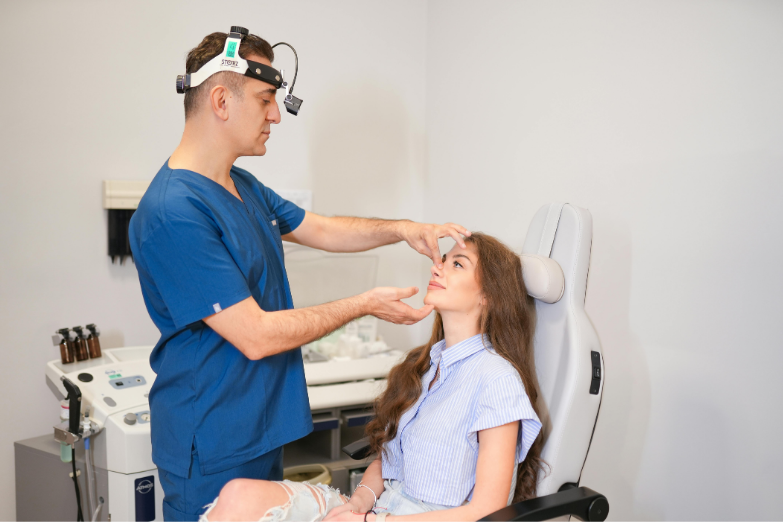
A clinician can examine the outside of the nose, assess airflow and inspect the nasal septum to identify complications.
What Is a Septal Haematoma and Why Is It Urgent?
The nasal septum is the wall that separates the two nostrils. It contains cartilage that depends on its surrounding tissue for a healthy blood supply.
Following an impact, blood can collect between the septal cartilage and its covering. This collection is called a septal haematoma.
It is an important complication because the accumulated blood can interrupt the cartilage’s blood supply. If treatment is delayed, the cartilage may become damaged, resulting in infection, a septal perforation or a permanent change in the shape of the nose. <Cite refs={[“turn519266search1″,”turn519266search9”]}/>
Warning signs include:
- Soft, swollen or dark red-purple tissue on the wall inside a nostril.
- Increasing nasal blockage after an injury.
- Painful swelling inside the nose.
- Persistent obstruction even when the outside of the nose looks relatively straight.
A septal haematoma cannot be reliably ruled out by examining the outside of the nose. A trained clinician needs to inspect the inside of the nostrils.
A suspected septal haematoma needs emergency assessment on the same day. If confirmed, it generally requires prompt drainage by a trained clinician. Do not squeeze, puncture or attempt to drain the swelling yourself.
Nose Fracture Treatment Kamrej: When Should You Seek Help?
When considering nose fracture treatment kamrej, the first priority is identifying whether the injury is a simple bruise, a possible fracture or a more serious injury that needs immediate care.
Seek emergency assessment today if you notice:
- A soft, dark or purple swelling inside the nose.
- Clear, watery fluid leaking from the nose after a head injury.
- Vision changes, double vision or significant eye pain.
- A nosebleed that will not stop.
- Severe headache, repeated vomiting, confusion or loss of consciousness.
- Significant breathing difficulty or a serious facial injury.
These symptoms should not be managed by waiting for swelling to settle. Clear fluid following head trauma may indicate a serious injury and requires emergency evaluation.
A nose that has become crooked or remains persistently blocked also needs prompt medical assessment. If a fracture is suspected, a clinician can determine whether specialist review and realignment may be necessary.
Nose Injury Triage: Bruise, Possible Fracture or Emergency?
Use the following table to understand which symptoms may need medical attention. It is a guide to urgency, not a way to diagnose a fracture at home.
| Sign | Bruise may be more likely | Possible fracture | Emergency assessment today |
|---|---|---|---|
| Pain and tenderness | Mild to moderate | Often more pronounced | Severe or rapidly worsening pain |
| Nose shape | No obvious new change | New bend or depression | Deformity with a significant facial injury |
| Nosebleed | May occur briefly | May occur | Heavy or persistent bleeding |
| Breathing | Normal or temporarily uncomfortable | Persistent blockage possible | Severe obstruction or suspected septal haematoma |
| Inside the nostril | No unusual swelling | Septal injury possible | Soft, dark or purple septal swelling |
| Watery discharge | Not typical | Requires assessment | Clear fluid after head trauma |
| Eyes and head | No concerning symptoms | Bruising may occur | Vision changes or signs of serious head injury |
Do not wait until day 3–5 if an emergency warning sign is present. The follow-up examination is intended to reassess a stable injury after swelling starts to settle. It is not a reason to postpone urgent care.
Why Is the Nose Checked Again on Day 3 to 5?
Swelling can develop quickly after a nasal injury and obscure the underlying shape of the nasal bones. During the first examination, a clinician may not be able to determine the extent of a fracture accurately.
For a stable injury without emergency warning signs, reassessment around day 3–5 can help identify a deformity once some swelling has subsided. Clinical guidance supports reassessing suspected fractures as the swelling improves. <Cite refs={[“turn519266search2″,”turn519266search5”]}/>
During the follow-up examination, the clinician may check:
- Whether the nose is becoming straighter as swelling decreases.
- Whether one or both nostrils remain blocked.
- Whether pain, bruising and swelling are improving.
- Whether a septal injury or another complication is present.
- Whether specialist treatment or fracture reduction is required.
If the nose has a new deformity, arrange prompt specialist assessment rather than waiting for the bones to heal naturally.
When realignment is appropriate, it is commonly performed after swelling has decreased and before the bones become firmly set. For adults, treatment is often considered within approximately 10–14 days, although timing depends on the injury and specialist guidance. Children may need earlier assessment because their bones can heal more quickly.
What First Aid Helps in the First 48 Hours?
For a minor nasal injury without emergency symptoms, simple first aid can help reduce swelling and discomfort.
1. Apply a cold pack. Wrap an ice pack in a clean cloth and hold it gently against the nose for up to 10–15 minutes at a time. Never place ice directly on the skin or press firmly on the injured area.
2. Keep your head elevated. Rest with your head raised, including when sleeping, to help reduce swelling.
3. Manage a nosebleed correctly. Sit upright, lean forward and pinch the soft part of the nose continuously for 10–15 minutes. Breathe through your mouth rather than tilting your head backwards.
4. Use suitable pain relief. Paracetamol may help if it is safe for you. Follow the product instructions and ask a clinician or pharmacist if you are unsure which medicine is appropriate.
5. Avoid further injury. Do not play contact sports, press on the nose or attempt to straighten it yourself.
6. Avoid forceful nose blowing. Do not pick inside the nostrils. Ask a clinician when it is safe to resume normal nasal care if a fracture is suspected.
These measures do not replace medical examination when a fracture or internal injury is possible. Seek urgent care if bleeding persists, breathing becomes severely impaired or any emergency warning sign develops.
When Does a Nose Injury Need a Scan?
Most isolated nasal fractures are diagnosed through a medical history and physical examination. Routine X-rays are generally unnecessary for a straightforward suspected nasal fracture because they often do not change treatment. <Cite refs={[“turn519266search1″,”turn519266search11”]}/>
A clinician may recommend CT imaging if there is concern about a more complex facial fracture, an eye socket injury or an associated head injury. The decision depends on the mechanism of injury, examination findings and other symptoms.
Imaging must not delay emergency treatment for a suspected septal haematoma or a serious head injury.
A normal-looking nose does not rule out every internal injury. If you experience clear watery discharge after head trauma, vision changes, confusion or other serious symptoms, seek emergency assessment rather than waiting for an outpatient scan.
Can a Broken Nose Heal on Its Own?
Many uncomplicated nasal fractures heal without surgery. However, a fracture that changes the nose’s shape or causes persistent breathing problems may require specialist treatment.
The decision depends on the position of the bones, the condition of the septum, airflow and the extent of the injury. A displaced fracture may be treated with closed reduction, a procedure that realigns the nasal bones without making a large external incision.
More complex injuries may require a different treatment plan. Do not push a crooked nose back into position yourself.
For more information, read the guide to nose fracture surgery and recovery.
Which Doctor Should Examine a Suspected Broken Nose?
An emergency clinician can assess immediate risks, including bleeding, septal haematoma and associated head or facial injuries. An ear, nose and throat (ENT) specialist or an appropriately qualified plastic surgeon can assess a suspected fracture, deformity and breathing problems and advise whether further treatment is necessary.
Seek emergency care first if you have a suspected septal haematoma, uncontrolled bleeding, clear fluid after head trauma or visual changes. Do not delay urgent assessment while deciding which specialist to contact.
For more information, read ENT or plastic surgeon for a broken nose.
If the injury followed a significant accident, the clinician should also consider whether other facial structures have been damaged. Complex facial fractures require a different assessment from an isolated nasal bruise.
You can also read the clinic’s guide to nasal bone fracture surgery and the article on treatment after a broken nose from an accident.
Frequently Asked Questions
Yes, many uncomplicated nasal fractures heal without surgery. However, a fracture that causes a new deformity or persistent breathing difficulty needs medical assessment because realignment may be appropriate. For nose fracture treatment kamrej, seek prompt clinical assessment. A suspected septal haematoma, uncontrolled bleeding or serious head-injury symptoms require emergency care.
Usually, an isolated nasal fracture can be assessed through a clinical examination, and a routine X-ray is often unnecessary. CT imaging may be considered if a more complex facial or head injury is suspected. The choice of imaging depends on the examination, associated symptoms and whether the result will change treatment.
Yes, a cold pack wrapped in a clean cloth can be applied for up to 10–15 minutes at a time to help reduce swelling and discomfort. Never place ice directly on the skin or press firmly on the nose. Ice is first aid, not a substitute for medical assessment if the nose is deformed or breathing is impaired.
Swelling, blood clots, a fracture or a deviated septum can cause one-sided blockage. A septal haematoma is an important complication to exclude, especially if blockage develops or worsens after an injury. Seek same-day assessment if you notice soft or purple septal swelling or significant worsening obstruction.
A child needs urgent assessment if there is suspected septal haematoma, persistent bleeding, significant breathing difficulty, vision changes, clear fluid after head trauma or symptoms of a head injury. A new deformity or ongoing blockage also needs medical review. Children with suspected fractures should be assessed promptly because treatment timing can differ from that for adults.
A simple bruise usually does not permanently change the shape of the nasal bones. However, swelling can hide a fracture, and an untreated displaced fracture or cartilage injury may cause lasting deformity or breathing problems. Have a suspected fracture reassessed as swelling decreases, and seek urgent care for emergency warning signs.
Key Takeaway
A bruised nose and a broken nose can look similar during the first few days after an injury. A new deformity, persistent blockage or significant nosebleed needs medical assessment. A suspected septal haematoma, clear watery discharge after head trauma or vision changes requires emergency attention. For stable injuries, reassessment around day 3–5 can help reveal a fracture once swelling begins to settle.