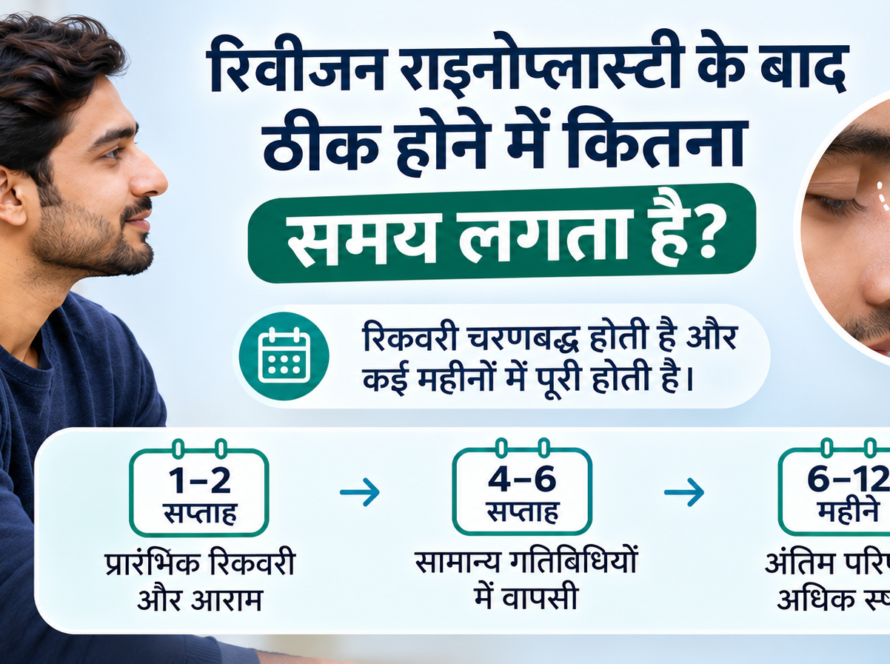
Revision rhinoplasty recovery time is different for every patient. Unlike a first-time nose operation, revision surgery involves tissues that have already undergone changes. As a result, swelling, scar tissue and healing may require additional patience.
During the first few days, patients usually focus on rest, managing discomfort and protecting the nose. Over the following weeks, many gradually return to everyday activities. However, the final appearance can take much longer to develop.
Understanding the recovery stages helps patients plan work, travel, exercise and follow-up appointments without placing unnecessary pressure on the healing nose.
Quick Answer: How long does revision rhinoplasty recovery take?
Many patients need approximately one to two weeks before returning to non-strenuous work, although the timing varies. Early swelling and bruising often improve during this period. More demanding activities usually require additional restrictions, while residual swelling and nasal refinement can continue for 12-18 months or longer in some cases.
What Happens in the First Week?
The first week is usually the most noticeable stage of recovery. Patients may experience nasal congestion, swelling, bruising and mild to moderate discomfort.
Because revision surgery can involve scar tissue and structural reconstruction, the surgeon may recommend additional precautions based on the procedure.
Days 1-3: Rest and protection
Immediately after surgery, the clinical team monitors recovery from anaesthesia and provides instructions about medicines, dressings and activity.
During the first few days:
- Rest with your head elevated as advised.
- Take prescribed medicines according to instructions.
- Avoid touching or pressing the nose.
- Do not blow your nose unless your surgeon allows it.
- Avoid bending, lifting heavy objects and strenuous activity.
- Keep dressings and splints protected.
Some blood-tinged drainage may occur early after surgery. However, heavy or persistent bleeding needs prompt medical advice.
Days 4-7: Early improvement
Swelling and bruising may begin to settle, although the nose can still feel blocked or tender.
Some patients notice that bruising changes colour before disappearing.
If a splint is present, the surgeon will explain when it should be reviewed or removed.
Do not remove dressings or nasal supports yourself unless instructed.
At this stage, the appearance of the nose does not represent the final result.
Week-by-Week Revision Rhinoplasty Recovery Table
The following table provides general guidance. It should remain an editable table in the blog rather than an uploaded image.
| Week | What to Expect | Allowed | Avoid |
|---|---|---|---|
| Days 1-3 | Swelling, congestion, tenderness and possible bruising | Rest, gentle indoor walking, prescribed aftercare | Nose blowing, heavy lifting, bending and strenuous activity |
| Days 4-7 | Bruising and swelling may gradually improve | Light daily activities and scheduled follow-up | Pressure on the nose, vigorous exercise and unapproved splint removal |
| Week 2 | Visible bruising often improves; swelling remains | Possible return to desk work if cleared | Contact sports, heavy exercise and activities that risk nasal injury |
| Weeks 3-4 | Gradual improvement in comfort and routine | Increasing light activity with surgeon approval | Heavy workouts or impact activities without clearance |
| Weeks 5-6 | Many patients feel more comfortable with daily routines | Gradual return to additional activities if approved | Contact sports and direct nasal pressure until cleared |
| Months 2-3 | Residual swelling continues to settle | Most routine activities as advised | Judging the final appearance too early |
| Months 6-12 | Nasal definition may become clearer | Normal routines and scheduled reviews | Ignoring persistent symptoms or new changes |
| Months 12-18+ | Final refinement may continue, especially after complex revision | Long-term assessment with the surgeon | Assuming every patient heals at the same rate |
These timelines are general estimates. The complexity of surgery and your surgeon’s instructions determine your actual recovery plan.
When Can You Return to Work and Driving?
Returning to work depends on the type of job, the extent of surgery and how comfortably you are recovering.
Returning to desk-based work
Many patients consider returning to office or computer-based work after approximately one to two weeks.
However, persistent swelling, fatigue or discomfort may make additional rest necessary.
People whose work involves lifting, bending or physical exertion often require a longer break.
[Surgeon to add the clinic’s usual recommended leave period.]
When is driving safe?
You should not drive while affected by anaesthesia, sedating pain medication, dizziness or impaired concentration.
In addition, you must be able to turn your head comfortably and respond safely to road conditions.
Ask your surgeon when driving is appropriate for your individual recovery.
Planning travel after surgery
Long journeys immediately after surgery may be uncomfortable and can interfere with early follow-up care.
Therefore, confirm your travel plans before booking a return journey.
Patients should also ask whether postoperative reviews require an in-person examination.
When Is Exercise Safe Again?
Exercise increases heart rate and blood pressure. During early recovery, strenuous activity may worsen swelling or increase the risk of bleeding.
Consequently, returning to exercise should be gradual.
Light walking
Gentle walking is often encouraged during recovery because it supports circulation without placing significant strain on the nose.
However, avoid activities that cause breathlessness, pressure or discomfort.
Gym workouts
Weight training, running, high-intensity exercise and strenuous yoga may need to wait several weeks.
The exact timing depends on the procedure and the surgeon’s assessment.
Contact sports
Sports involving possible facial impact require particular caution.
Even when the nose looks healed externally, internal structures may still be recovering.
Do not resume contact sports until your surgeon confirms that it is safe.
What Swelling, Pain or Numbness Is Normal?
Patients often worry when their nose looks uneven or feels unfamiliar during the first weeks.
Many early changes are part of the healing process, but symptoms should gradually improve rather than become progressively worse.
Swelling
Swelling is expected after revision rhinoplasty.
It may be more noticeable around the nasal tip, particularly when the procedure involves extensive reshaping or cartilage grafting.
Additionally, swelling can fluctuate during recovery.
One side may appear more swollen than the other temporarily. Nevertheless, persistent or increasing asymmetry should be discussed during follow-up.
Pain and tenderness
Mild to moderate discomfort may occur during the early days.
Prescribed pain relief usually helps patients manage symptoms.
Severe, worsening or unusual pain requires medical assessment.
Numbness and altered sensation
Temporary numbness or reduced sensitivity around the nasal tip or nearby skin may occur.
Sensation often improves gradually, although the recovery period varies.
If numbness becomes worse or appears with concerning skin changes, contact the surgical team.
Nasal congestion
A blocked sensation may result from internal swelling and healing.
Follow the surgeon’s instructions about cleaning, saline products and nasal care.
Avoid inserting objects into the nose or using unapproved sprays.
Which Signs Mean You Should Call the Clinic?
Some symptoms need prompt attention rather than waiting for a scheduled appointment.
Contact your surgical team if you experience:
- Increasing redness, warmth or swelling.
- Fever or unusual discharge.
- Pain that becomes worse instead of improving.
- Persistent bleeding.
- Sudden changes in nasal appearance.
- New or worsening breathing difficulty.
- Problems with dressings, splints or wound healing.
Seek urgent medical care for severe bleeding, significant breathing difficulty, chest pain, fainting or other serious symptoms.
Early assessment helps identify complications and prevents delays in appropriate treatment.
Revision Rhinoplasty in Anand: Planning Recovery and Follow-Ups
Patients considering revision rhinoplasty in anand should plan postoperative care before confirming a treatment date.
Start by asking how long you may need to remain near the surgical facility after the operation.
You should also confirm the expected timing of early reviews, splint assessment and later follow-up appointments.
If you live away from the clinic, discuss which appointments must take place in person and whether selected later reviews can be arranged remotely.
It is sensible to keep some flexibility in travel plans because unexpected swelling or healing concerns may require another examination.
For personalised scheduling, use the clinic’s contact page.
How Can You Support Better Healing?
Good aftercare cannot guarantee a particular result, but it can help reduce avoidable complications.
Follow the prescribed care plan
Use medicines only as instructed and attend scheduled reviews.
Do not change dressings, remove splints or start additional nasal treatments without approval.
Protect the nose
Avoid accidental impact, excessive pressure and activities that could disturb healing tissues.
If you wear spectacles, ask the surgeon when they can rest on the nasal bridge again.
Read the clinic’s guide to wearing glasses after rhinoplasty.
Avoid smoking and nicotine
Nicotine can impair blood circulation and wound healing.
Therefore, follow the surgeon’s advice about avoiding smoking, vaping and other nicotine products before and after surgery.
Maintain realistic expectations
Revision rhinoplasty recovery is not a straight line.
Some days may bring noticeable improvement, while residual swelling can make the nose look different at other times.
For this reason, avoid judging the outcome from early photographs alone.
You can learn more about revision rhinoplasty and review the clinic’s information about rhinoplasty before-and-after results.
For additional general patient information, consult the NHS guidance on rhinoplasty.
Frequently Asked Questions
Many patients plan approximately one to two weeks away from desk-based work. However, complex revision procedures or physically demanding jobs may require more time. Your surgeon should confirm when returning to work is appropriate.
Patients are often advised to sleep with their head elevated during early recovery and avoid pressure on the nose. Returning to a usual sleeping position depends on swelling, comfort and the surgeon’s instructions. Ask before sleeping face-down or placing pressure on the operated area.
Light walking may be possible early, but strenuous workouts and weight training usually require a longer break. The surgeon will consider swelling, bleeding risk and structural healing before clearing you for exercise.
Temporary numbness around the nasal tip or nearby skin can occur after surgery. It may improve gradually as tissues heal. Patients considering revision rhinoplasty in anand should discuss persistent numbness or unexpected changes in sensation during their follow-up appointments.
The nose changes gradually as swelling resolves. Although early improvements may be visible within weeks, final refinement can take 12-18 months or longer after complex revision surgery. The exact timeline depends on tissue healing and the procedure performed.
Conclusion
Understanding revision rhinoplasty recovery time helps patients prepare for each stage of healing.
The first week usually involves rest, swelling control and careful nasal protection. During the following weeks, patients may gradually return to work and routine activities. However, strenuous exercise and contact sports require specific clearance.
Most importantly, the final appearance takes time to develop. Regular follow-up appointments and realistic expectations are essential.
If you are considering revision surgery, contact the clinic to discuss your concerns, treatment options and recovery plan.