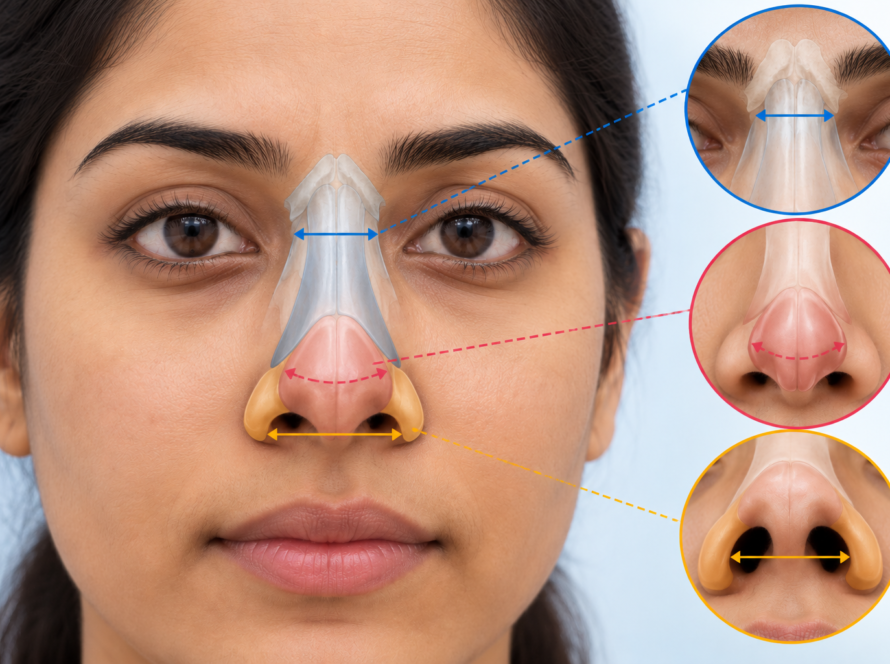
Non-surgical rhinoplasty may be suitable for adults who want subtle improvements in specific nasal contour concerns, have realistic expectations and are medically suitable for injectable treatment. However, not everyone is an appropriate candidate. Nasal anatomy, medical history, age, medications and treatment goals all need to be assessed by a qualified doctor before making a decision.
A consultation helps determine whether fillers can address the concern safely or whether another treatment would be more appropriate.
For treatment details in Surat, see non-surgical rhinoplasty in Surat. It is also worth reading who should not have non-surgical rhinoplasty.
1. Who Usually Benefits Most from Non-Surgical Rhinoplasty?
Non-surgical rhinoplasty uses injectable dermal fillers to add volume to selected areas of the nose. It may improve certain contour irregularities without traditional surgery.
People who may benefit include:
- Adults looking for subtle changes in nasal appearance.
- People with minor depressions or unevenness along the nasal bridge.
- Individuals who want to improve selected contour irregularities.
- People who understand that the treatment provides temporary results.
- Patients with realistic expectations about what fillers can achieve.
The procedure works by adding volume rather than removing tissue. Therefore, it cannot make a nose smaller or correct every structural concern.
What nasal concerns can fillers address?
Depending on individual anatomy, fillers may help improve:
- Small depressions along the nasal bridge.
- Certain minor contour irregularities.
- Selected areas of mild asymmetry.
- A flatter-looking nasal profile.
A doctor must assess the nasal structure before recommending treatment.
2. Who Should Wait or Avoid It for Now?
Some people may need additional medical assessment or an alternative treatment before considering non-surgical rhinoplasty.
People with certain medical conditions
Patients with uncontrolled diabetes, uncontrolled high blood pressure, active infections or certain bleeding disorders should discuss their condition with the doctor before treatment.
These conditions do not automatically mean that every patient is unsuitable. However, their current health status, medications and potential treatment risks must be evaluated.
People with unrealistic expectations
Fillers cannot remove a nasal hump, reduce the overall size of the nose or correct significant structural deformities. Patients expecting these changes may be better suited to a surgical consultation.
People with previous nasal procedures
Previous rhinoplasty, nasal trauma or other procedures may change the anatomy and blood supply of the nose. A detailed assessment is particularly important before considering injections.
People with allergies or previous filler complications
A history of serious allergic reactions, previous filler complications or reactions to specific filler ingredients should be disclosed during consultation.
People with active skin or nasal infections
Treatment may need to be postponed until an infection or inflammation has resolved.
3. How Do Age, Weight and Health Conditions Matter?
Age and eligibility
There is no single age rule that applies to every filler product and every country. The appropriate minimum age depends on the product, applicable regulations and clinical assessment.
The doctor should confirm that the patient is legally eligible and physically and emotionally prepared for an elective cosmetic treatment. Treatment should not be considered for minors without appropriate medical and legal evaluation.
Weight changes
Major weight changes do not necessarily affect nasal filler results in the same way as procedures involving body fat. However, changes in facial appearance may influence how a patient feels about overall facial balance.
Patients planning significant weight changes should discuss their expectations with the doctor before proceeding.
Diabetes and blood pressure
Patients with diabetes or high blood pressure should provide accurate medical information, including current medication and recent control status.
The doctor may recommend postponing elective treatment if a medical condition is not adequately controlled.
Smoking
Smoking can affect general tissue health and healing. Patients should disclose their smoking habits and ask the doctor whether they need to stop smoking before treatment and for how long.
Pregnancy and future pregnancy plans
Elective cosmetic filler treatment is generally best postponed during pregnancy because safety information is limited. Patients who are pregnant, breastfeeding or planning pregnancy should discuss the timing with their doctor.
Future pregnancy does not automatically mean that previous filler results will be affected, but individual circumstances should be discussed.
4. What Tests and Assessments Are Done Before Treatment?
Not every patient requires the same tests before non-surgical rhinoplasty. The doctor first evaluates medical history, nasal anatomy and treatment suitability.
A pre-treatment assessment may include:
- Medical history: Previous procedures, allergies, medical conditions and current medication.
- Nasal examination: Assessment of the nasal bridge, tip, skin and surrounding facial structures.
- Treatment expectations: Discussion of the patient’s desired changes and what fillers can realistically achieve.
- Medication review: Evaluation of medicines or supplements that may increase bruising or bleeding.
- Skin assessment: Checking for active infection, irritation or inflammation.
- Photographic assessment: Photographs may help document the initial nasal appearance and treatment plan.
Blood tests or other investigations are not automatically required for everyone. The doctor will decide whether additional tests are necessary based on individual circumstances.
5. Is Non-Surgical Rhinoplasty in Vesu Surat Right for You?
Patients considering non-surgical rhinoplasty in vesu surat should begin with a consultation rather than deciding their suitability through an online checklist.
During the consultation, the doctor evaluates the nasal structure, medical history, skin condition and desired outcome. This helps determine whether filler treatment is appropriate or whether another option would be safer and more effective.
Patients should also understand that the nose is a high-risk area for filler injections because of its blood vessel anatomy. Accidental injection into a blood vessel can cause serious complications, including tissue damage and vision loss. Treatment should only be considered with a suitably qualified and experienced medical professional who can recognise and manage complications.
6. Non-Surgical Rhinoplasty Self-Check List
Use this checklist to prepare for your consultation. It is not a medical diagnosis or a guarantee of eligibility.
| Self-check question | Yes / No | Discuss with doctor |
|---|---|---|
| Am I an adult who meets the applicable age requirements? | Yes / No | Age eligibility |
| Do I want subtle nasal contour improvement? | Yes / No | Treatment goals |
| Do I understand that fillers add volume? | Yes / No | Treatment limitations |
| Do I have realistic expectations? | Yes / No | Expected outcome |
| Have I shared my medical history? | Yes / No | Medical suitability |
| Have I disclosed my medications and allergies? | Yes / No | Possible risks |
| Have I disclosed previous nasal procedures? | Yes / No | Nasal anatomy |
| Do I understand the possible complications? | Yes / No | Safety and emergency care |
How to use your answers:
- If most answers are Yes, you can discuss whether the treatment may be suitable during a consultation.
- If you answer No to medical-history, allergy or safety questions, discuss them before considering treatment.
- If your main goal is to reduce nose size or improve breathing, ask about other treatment options.
Even if every answer is Yes, only a proper medical assessment can confirm suitability.
7. What Are Realistic Expectations?
Understanding the limitations of non-surgical rhinoplasty is essential before deciding on treatment.
Patients should remember:
- Results are temporary and depend on the filler used.
- Fillers add volume rather than remove nasal tissue.
- The treatment cannot replace surgery for significant structural changes.
- More filler does not necessarily mean a better result.
- Additional treatment may not always be advisable.
- Complications can occur even when the procedure is performed by an experienced professional.
Patients should also ask about the specific filler product, its approved uses, possible side effects and the clinic’s emergency management arrangements.
Frequently Asked Questions
The minimum eligible age depends on applicable regulations, the specific filler product and the doctor’s assessment. Patients should confirm age eligibility before treatment. Cosmetic filler treatment should not be considered casually for minors.
Patients with diabetes or high blood pressure may require additional medical assessment. Uncontrolled conditions may mean postponing treatment. Share your medical history, medication and current control status with the treating doctor before deciding.
Weight loss is not generally a prerequisite for nasal filler treatment. However, patients planning major weight changes should discuss their facial appearance goals and treatment timing with the doctor.
There is no universal stopping period for every patient undergoing filler treatment. Discuss your smoking habits with the doctor, who can advise whether stopping is necessary and the appropriate timing.
Future pregnancy or weight change does not automatically invalidate previous nasal filler treatment. However, pregnancy is a reason to postpone elective filler treatment, and individual plans should be discussed with the doctor.
Conclusion
A good candidate for non-surgical rhinoplasty understands the treatment’s benefits, limitations and potential risks. Suitable nasal anatomy, realistic expectations and an appropriate medical assessment are essential before proceeding.
A self-check list can help organise questions, but it cannot replace a consultation. Discuss your health conditions, medications, previous procedures and desired changes with a qualified doctor before deciding whether injectable treatment is right for you.