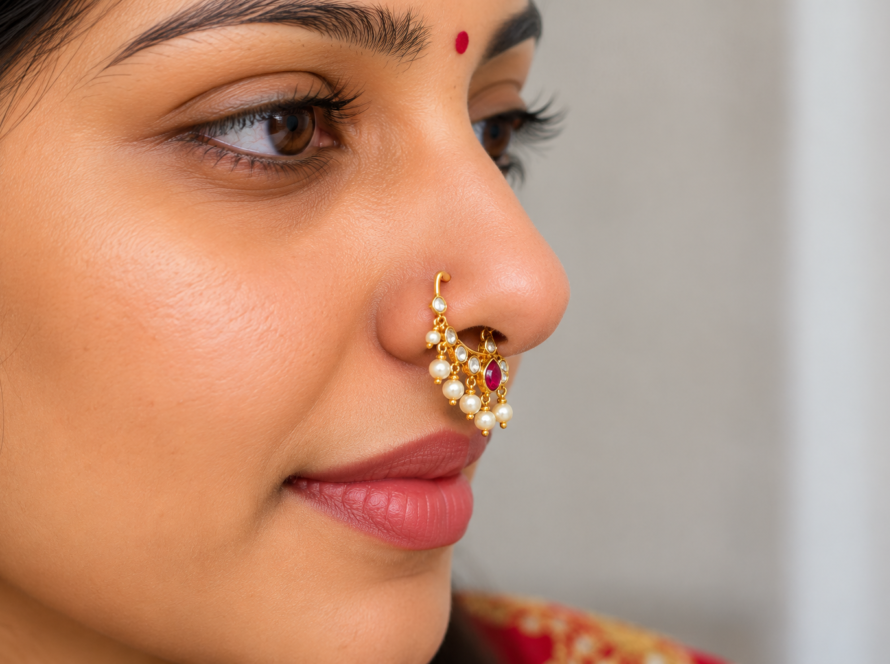
For working professionals, taking time away from work can be one of the biggest considerations when planning rhinoplasty. A two-week Diwali break may provide a practical recovery window for some people, particularly those with desk-based or trading jobs, but it is important to understand what those 14 days can and cannot accommodate.
The phrase rhinoplasty recovery time off work does not mean that the nose is completely healed when you return to your desk. Early swelling and bruising usually improve considerably during the first couple of weeks, while deeper healing continues for months. Medical guidance notes that many patients can return to work within one to two weeks, but strenuous activity and heavy lifting generally require additional restrictions.
For professionals planning nose surgery during Diwali holidays, the timing of the operation, first postoperative review, splint removal, work requirements and festive activities should all be considered together.
Rhinoplasty Recovery Time Off Work: Is Two Weeks Enough?
For many people with desk-based or trading jobs, approximately 10 to 14 days away from work can be a reasonable planning period after primary rhinoplasty if recovery is uncomplicated and the surgeon approves the return.
The first week is usually the most visible part of recovery. Swelling, nasal stuffiness, bruising and tenderness can occur, and an external splint or dressing may be used to protect the nose. Splints are commonly removed around 7 to 10 days, although the exact timing depends on the operation and surgeon.
By the second week, bruising often becomes less noticeable and many patients can resume light daily routines. However, swelling can continue for several weeks, and the final nasal contour may take many months to refine.
So, how many days off after rhinoplasty you need depends on your occupation, the type of rhinoplasty performed and your individual recovery.
For a detailed recovery overview, see rhinoplasty recovery week by week.
What Happens During Each Day of a Two-Week Break?
A 14-day plan can help a professional understand what may realistically fit into the Diwali holiday. It should be treated as a planning framework rather than a guaranteed schedule.
| Day | Splint or tape | Visible bruising | Allowed activities | Avoid |
|---|---|---|---|---|
| Day 1 | Splint/tape in place | Usually noticeable | Rest and short gentle walking | Work, bending, exercise |
| Day 2 | Splint/tape in place | Often prominent | Rest and light movement | Crowds, smoke, exertion |
| Day 3 | Splint/tape in place | Usually visible | Gentle activity at home | Heavy lifting and bending |
| Day 4 | Splint/tape in place | Beginning to improve | Short gentle walks | Exercise and pressure on nose |
| Day 5 | Splint/tape in place | Improving | Light home routine | Crowded festive events |
| Day 6 | Splint/tape in place | Variable | Gentle daily activity | Strenuous activity |
| Day 7 | Usually reviewed | Still possible | Postoperative appointment | Pressure or impact |
| Day 8 | Usually no external splint | Fading | Light routine if cleared | Heavy exercise |
| Day 9 | Usually no splint | Improving | Light activities | Smoke and crowds |
| Day 10 | Usually no splint | Often substantially improved | Short outing if cleared | Nose pressure |
| Day 11 | No routine splint | Mild/residual | Light work if comfortable | Strenuous activity |
| Day 12 | No routine splint | Usually fading | Desk work if cleared | Heavy lifting |
| Day 13 | No routine splint | Often subtle | Normal light activities | Impact/contact |
| Day 14 | No routine splint | Usually much improved | Desk/trading work if cleared | High-impact activities |
The exact splint-removal date and activity restrictions should come from the operating surgeon. Medical sources commonly describe splint removal around the first week and continued swelling beyond that point.
How Many Days Off After Rhinoplasty Do Different Jobs Need?
The required time away from work depends on what the job involves.
A professional who spends most of the day at a computer may have fewer physical demands than someone who repeatedly bends, works around dust or performs heavy lifting.
Return-to-work planning by job type
| Job type | Approximate planning window |
|---|---|
| Desk/computer work | 10–14 days |
| Trading work | 10–14 days |
| Light professional work | 10–14 days |
| Work involving frequent bending | 3–4 weeks |
| Dusty work | 3–4 weeks |
| Physically demanding work | 3–4 weeks or longer |
| Heavy lifting | Around 4–6 weeks |
| Contact/high-impact work | Around 6 weeks |
These are planning ranges, not automatic medical clearance. Cleveland Clinic notes that many patients can return to work or school within one to two weeks, while heavy lifting may need to be avoided for four to six weeks.
Nose Surgery In Varachha Surat: Planning a Two-Week Break
If you are considering nose surgery in Varachha Surat, the best approach is to plan the entire recovery period instead of looking only at the operation date.
Before booking, discuss:
- Your exact Diwali leave dates
- The planned surgery date
- Your first postoperative appointment
- Expected splint-removal timing
- Your return-to-work date
- Whether you need to bend at work
- Whether your workplace is dusty
- When heavy lifting can resume
- When exercise can restart
- Whether travel is appropriate
- Which festive activities should be avoided
A two-week break may work well for someone with a desk-based job, but the same period may be insufficient for physically demanding work.
Why Should the Surgery Date Be Booked in October?
If you are planning nose surgery during Diwali holidays, arranging the consultation and surgery date in October gives you more time to coordinate your work leave and postoperative appointments.
The first postoperative review is particularly important. Depending on the technique and surgeon’s protocol, the splint may be removed or the nose assessed during the first week.
Booking earlier also allows time to discuss your medical history, surgical plan, expected recovery, travel arrangements and festive commitments.
The clinic’s own planning observation can be expressed as:
“In our practice, October booking demand tends to increase as patients begin planning their Diwali leave.”
This statement should be understood as clinic audit data, not as a population-wide statistic.
For additional preparation information, read how painful nose surgery is and anaesthesia for nose surgery.
Can You Attend Diwali Functions After Rhinoplasty?
A small family gathering is different from a crowded festive event.
During the first week, swelling and bruising may still be noticeable and the splint may still be present. Even after the splint has been removed, the healing nose should be protected from accidental contact.
If your surgeon clears you to attend a function, choose a controlled environment where you can avoid crowds, smoke and situations in which someone could accidentally bump your nose.
Festive risks to consider
- Firecracker smoke
- Crowded celebrations
- Accidental contact with the nose
- Children accidentally bumping the face
- Contact sports
- Heavy lifting
- Repeated bending
- Dusty environments
- Strenuous exercise
- Pressure from spectacles if restricted by your surgeon
Avoiding impact is particularly important because the nasal structures remain delicate while they heal.
Is Bursting Firecrackers Risky After Nose Surgery?
Firecrackers can expose a recovering patient to smoke, heat, sudden movement and possible accidental injury.
The concern is therefore not only the smoke. Handling fireworks or standing in a crowded area where fireworks are being used can increase the possibility of an unexpected bump or fall.
During early recovery, it is safer to avoid handling fireworks and follow the specific restrictions given by the operating surgeon.
Will the Bruising Show in Diwali Photos?
It can, particularly if photographs are taken during the first week.
Bruising around the nose and eyes can occur after rhinoplasty and commonly improves during the first one to two weeks. However, recovery varies, and some swelling can remain for considerably longer.
If photographs are important to you, scheduling surgery early enough in the holiday period may provide more time for visible bruising to settle before major functions.
Even when bruising has faded, the nose may still look swollen and will not yet represent the final surgical result.
Can I Travel to My Native Place After Rhinoplasty?
Travel should be planned around postoperative care rather than simply around the number of days in your holiday.
If your surgeon wants to review your nose or remove the splint during the first week, you should make sure you can attend that appointment.
Before travelling, ask your surgeon about the timing of the journey, access to follow-up care and any restrictions that apply to your specific operation.
Do not assume that a two-week holiday automatically means you can spend the entire period away from your surgical team.
Which Jobs Need Longer Than Two Weeks?
Some jobs require considerably more recovery time than desk work.
Frequent bending, dusty surroundings, physical exertion and the possibility of accidental facial contact can all affect when it is appropriate to return.
For example, a desk or trading professional may plan around 10 to 14 days. Work involving bending or dust may require approximately 3 to 4 weeks, while heavy lifting and contact activities can require around 4 to 6 weeks or longer.
The key distinction is that returning to work is not the same as complete nasal healing.
When Can I Bend Over a Diamond Polishing Wheel Again?
Diamond polishing work needs specific planning because it may involve bending, dust and prolonged physical positioning.
Returning to a diamond polishing wheel after only two weeks may not be appropriate. A planning period of approximately 3 to 4 weeks may be more suitable for bending or dusty work, while heavier physical exertion may require longer.
Your surgeon should assess your actual work duties before giving clearance.
Do not use the two-week desk-work timeline as permission to resume physically demanding diamond-polishing work.
What About Spectacles After Rhinoplasty?
Pressure from spectacles can be relevant during nasal healing, particularly when the frames rest directly on the bridge.
Ask your surgeon how long you should avoid pressure from spectacles or sunglasses. Cleveland Clinic specifically advises caution about putting excessive pressure on the nasal bridge during recovery.
Returning to desk work after two weeks does not automatically mean that every type of spectacle use is unrestricted.
Can Septoplasty Be Done During the Same Break?
Septoplasty may be performed with rhinoplasty when medically indicated, but the recovery period depends on the procedures involved.
Combining procedures does not guarantee that everything will fit comfortably into a 14-day holiday. Nasal congestion, swelling and activity restrictions can continue beyond the time needed to return to a desk job.
If you are considering septoplasty at the same time, ask the surgeon how the combined procedure changes your expected recovery and return-to-work schedule.
A Practical 14-Day Diwali Plan
A professional with a two-week break can use the following general framework:
Days 1–3: Rest, take prescribed medicines as directed and walk gently. Avoid work, bending, exercise, smoke and crowds.
Days 4–7: Continue protecting the nose. Bruising and swelling may remain visible. Attend the scheduled postoperative review.
Days 8–10: If recovery is progressing normally and your surgeon permits it, gradually resume light daily activities. Continue avoiding strenuous exercise, smoke and crowded environments.
Days 11–14: Desk-based or trading work may be possible for many patients when recovery is uncomplicated and the surgeon has cleared the return. Continue avoiding heavy lifting and activities that could result in nasal impact.
After day 14: Continue following postoperative restrictions. The end of your leave does not mean the end of nasal healing.
For appointment planning, see book a slot before Diwali.
Frequently Asked Questions
For many desk-based or trading professionals, returning after approximately two weeks may be possible when recovery is uncomplicated and the surgeon approves it. Jobs involving dust, bending, heavy lifting or physical contact may require longer.
A desk-based professional may plan approximately 10 to 14 days. Bending or dusty work may require around 3 to 4 weeks, while heavy lifting and contact activity can require approximately 4 to 6 weeks or longer.
Crowded places can increase the risk of accidental contact with the healing nose. During the early recovery period, it is sensible to avoid crowded events and follow the surgeon’s individual instructions before returning to large gatherings.
Two weeks may be enough for some patients to return to desk-based work, but it does not represent complete healing. Swelling can continue for weeks or months, and the final nasal shape can take much longer to settle.
Firecrackers can expose you to smoke and increase the risk of accidental impact. Avoid handling fireworks during early recovery and follow your surgeon’s restrictions.
Travel should be coordinated with your postoperative appointments. If you need a review or splint removal during the first week, make sure you can attend the appointment before travelling.
Bending and dusty work may require approximately 3 to 4 weeks or longer. Heavy physical activity may require additional time. Your surgeon should provide individual clearance.
It can, particularly during the first week. Bruising commonly improves during the first one to two weeks, but individual recovery varies and swelling can remain.
Septoplasty can sometimes be combined with rhinoplasty when medically appropriate. The recovery period depends on the procedures performed, so a two-week break should not automatically be assumed to be sufficient.
For a patient having primary rhinoplasty and working in a desk-based or trading role, two weeks can be a practical period away from work when recovery is uncomplicated. Physically demanding work can require substantially longer.
What Should Varachha Professionals Arrange Before Surgery?
Before booking, plan these points together:
- Your available Diwali leave.
- The proposed operation date.
- The first postoperative appointment.
- Expected splint-removal timing.
- Your return-to-work date.
- Whether your work involves bending.
- Whether you work around dust.
- When heavy lifting can resume.
- When exercise can restart.
- Whether you need to travel.
- Whether important Diwali functions fall within the first week.
- Whether spectacles need special planning.
The goal is not simply to fit surgery into 14 calendar days. It is to make sure your work, follow-up appointments and festive plans do not conflict with the restrictions needed during early healing.
Final Planning Point
A two-week Diwali break can provide a useful recovery window for some professionals undergoing primary rhinoplasty, particularly those with desk or trading jobs. Medical sources support the idea that many patients can return to work within one to two weeks, while heavier activity requires additional restrictions.
The splint is commonly removed around the first week, bruising often improves substantially during the first one to two weeks, and swelling continues to settle after that. Full nasal healing takes much longer than the initial return-to-work period.
For professionals considering rhinoplasty Varachha Surat, October is a useful time to organize the consultation, surgery date, leave and postoperative appointments before the Diwali schedule becomes crowded.
The final return-to-work and activity timeline should always be determined by the operating surgeon according to the procedure performed and the patient’s individual recovery.