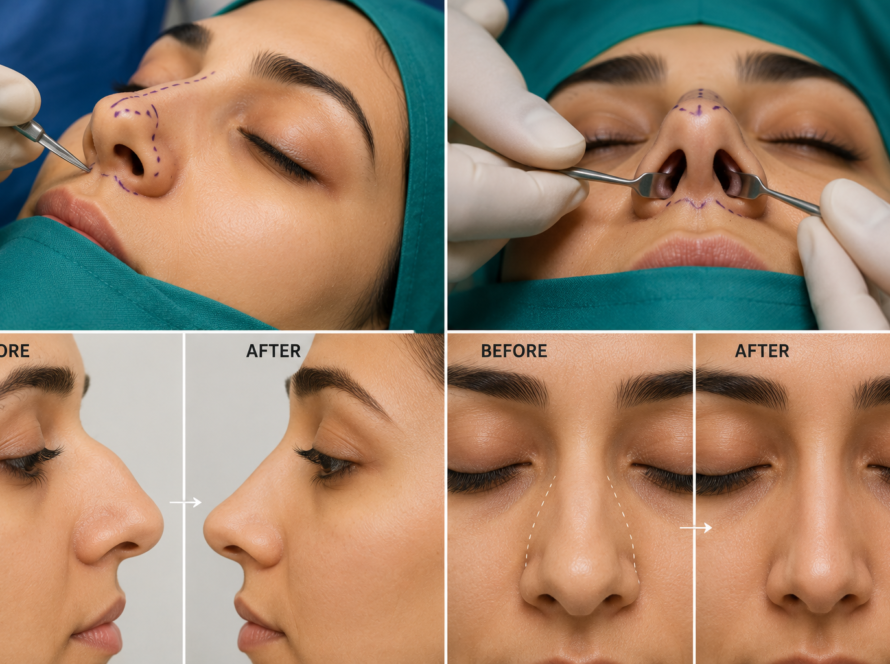
When a nose is broken after an accident, one of the first questions is ent or plastic surgeon for nose surgery. The answer depends on the injury. A simple nasal bone fracture may be assessed and treated by an ENT surgeon, while a displaced septal fracture, open injury, missed injury or established deformity may require a surgeon experienced in nasal reconstruction.
Timing also matters. After swelling settles, selected nasal fractures can be reduced while the bones are still mobile. A commonly used window is around 10 to 14 days, although the exact timing varies with the injury and the patient. Once the fractured bones begin to consolidate in the wrong position, a simple closed reduction can become more difficult and reconstructive treatment may be required.
The first priority after an accident is therefore a proper examination, not simply deciding which specialist has the better title.
What happens at a casualty or district hospital in the first 24 hours?
The first assessment after a broken nose should look at both the outside and inside of the nose.
The doctor may ask how the accident happened, when it occurred, whether there was bleeding, whether the nose changed shape and whether breathing became difficult. The examination should assess the nasal bones, nasal airway, septum and surrounding facial structures.
One of the most important things to rule out is a septal haematoma. This is a collection of blood between the nasal septum and its surrounding tissue. If it is missed and remains untreated, the blood supply to the septal cartilage can be compromised, potentially causing cartilage destruction and a permanent saddle-shaped deformity. A suspected septal haematoma needs urgent treatment rather than waiting for routine fracture management.
The doctor should also look for open wounds, significant facial injury, problems with eye movement, changes in the bite, clear fluid from the nose after major trauma or other signs suggesting associated injuries.
A simple isolated nasal fracture does not automatically require a CT scan. Diagnosis is often based on the history and physical examination. CT is more appropriate when other facial or associated injuries are suspected.
Why is the ten to fourteen day window important for closed reduction?
The closed reduction time limit matters because fractured nasal bones can begin to fix in the position created by the injury.
Closed reduction means moving the displaced nasal bones back toward a more appropriate position without performing a larger open reconstructive operation. It is often easier to assess the injury after the initial swelling starts to settle. Some references describe reduction around 5 to 7 days, while others describe a broader period of up to about 10 to 14 days. The important point is that the bones become progressively less mobile as healing begins.
This does not mean every broken nose must be operated on within exactly 10 or 14 days. Some fractures do not need reduction at all, particularly when there is no significant deformity or functional problem.
However, if a fracture is displaced and needs correction, delaying assessment can reduce the options for simple closed reduction.
Practical timing after a nasal injury
| Time after injury | What may happen |
|---|---|
| First 24 hours | Assess the injury, bleeding, airway and septum; rule out septal haematoma |
| First few days | Swelling may make examination difficult; reassessment may be needed |
| Around 5 to 7 days | Some fractures are suitable for closed reduction once swelling settles |
| Up to about 10 to 14 days | Many displaced fractures remain within the practical early reduction window |
| After the early window | Bones may begin to consolidate, making simple reduction more difficult |
| Months later | Persistent deformity may require planned reconstructive correction |
The actual treatment date should be decided by the examining specialist.
Which injuries are managed well by ENT and which need reconstructive input?
The question of who treats a broken nose depends on what has actually been injured.
An ENT surgeon is commonly involved in assessing nasal fractures, septal injuries, nasal obstruction and other problems involving the nose and airway. A straightforward fracture may be suitable for ENT assessment and closed reduction when treatment is required.
Reconstructive input becomes more important when the injury involves multiple structures or when the original injury has already healed incorrectly.
Examples include:
- Displaced nasal bones
- Significant septal displacement
- Persistent nasal obstruction
- Open nasal wounds
- Combined bone and cartilage injury
- Major external deformity
- A fracture missed during the early treatment period
- A nose that has healed crooked after an accident
- Persistent functional or structural problems after previous treatment
A plastic surgeon is not automatically required for every complicated fracture. An ENT surgeon with appropriate reconstructive nasal experience may also manage complex injuries. The important issue is whether the specialist has experience with the particular bone, cartilage, septal and functional problems involved.
This is the key point in a nasal bone fracture referral: refer according to the injury and the specialist’s relevant experience.
How does a missed septal haematoma change the outcome?
A missed septal haematoma can turn a relatively straightforward injury into a more serious structural problem.
Blood collecting inside the septum can separate the cartilage from its blood supply. Without treatment, the cartilage can undergo necrosis and the nose may develop a permanent saddle deformity. Infection and other complications can also occur.
For this reason, a person with a recent nose injury should not assume that a crooked-looking nose is the only issue that needs attention.
Internal examination is important even when the external injury does not look severe.
Urgent assessment is particularly important when there is:
- Increasing nasal blockage
- Significant swelling inside the nose
- Persistent or difficult-to-control bleeding
- A new major change in nasal shape
- Severe breathing difficulty
- A significant open wound
- Clear watery nasal drainage after substantial facial trauma
- Other symptoms suggesting a head or facial injury
A septal haematoma should be treated promptly when identified.
What does a delayed or badly healed fracture need instead?
A nose that was broken several weeks or months ago is a different problem from a fresh fracture.
When the bones have already healed in a displaced position, simply moving them back with a closed reduction may no longer be possible. The surgeon must assess the healed nasal bones, septum, cartilage, airway and external appearance.
A delayed injury may therefore require a planned reconstructive procedure rather than an acute fracture reduction. Depending on the anatomy, treatment may involve correction of the nasal bones, septum or other supporting structures.
This is where when to see a plastic surgeon for a nose injury becomes particularly relevant. A plastic surgeon with reconstructive nasal experience may be appropriate for a persistent post-traumatic deformity. An ENT surgeon with suitable reconstructive expertise may also be appropriate.
The goal is not simply to make the nose look straighter. If trauma has affected breathing, the treatment plan should consider both function and structure.
Clinical literature notes that persistent nasal deformity or obstruction after an inadequately corrected fracture may require a later reconstructive procedure, sometimes after allowing the injured tissues time to heal.
How do you take a second opinion without losing time?
A second opinion can be useful after a nasal fracture, but it should not unnecessarily delay urgent treatment.
If the injury is recent, get an initial assessment promptly. If the doctor recommends waiting for swelling to settle, ask when the nose should be reviewed and whether the fracture is still within the expected reduction window.
When taking a second opinion, carry:
- Casualty or district hospital records
- Referral notes
- X-ray or CT reports, if imaging was performed
- The actual imaging files, if available
- Photographs of the nose before the accident, if available
- Photographs taken after the injury
- Details of treatment already provided
- Information about current breathing difficulty
- Details of any previous nose injury or surgery
- The date and approximate time of the accident
A good second opinion should clarify whether the injury is suitable for observation, closed reduction or reconstructive treatment without losing an important treatment window.
Referral Decision Table
| Injury pattern | First-line specialist | Time window for intervention | What to do if the window has passed |
|---|---|---|---|
| Simple displaced nasal bone fracture | ENT or appropriately trained nasal surgeon | Early assessment, with reduction commonly considered after swelling settles and within about 10 to 14 days when appropriate | Reassess whether reconstructive correction is needed |
| Minor fracture without significant deformity | ENT or emergency assessment | Observation may be appropriate | Review if deformity or breathing problems develop |
| Displaced septal fracture | ENT or surgeon experienced in nasal reconstruction | Early specialist assessment | Consider structural septal or nasal reconstruction |
| Septal haematoma | Urgent ENT or appropriate specialist | Immediate treatment | Delayed treatment can cause cartilage damage and deformity |
| Open nasal injury | Specialist assessment | Prompt assessment and treatment | Reconstruction may be required depending on damage |
| Missed fracture with deformity | ENT or reconstructive nasal surgeon | Early closed reduction window has passed | Planned corrective surgery may be required |
| Old badly healed fracture | Reconstructive ENT or plastic surgeon with nasal expertise | Planned assessment | Treatment depends on the healed bone, cartilage, septum and airway |
The table is a general referral guide. The appropriate specialist and treatment depend on examination findings.
FAQs
Yes. An old fracture can sometimes be corrected, but it may require reconstructive treatment rather than simple closed reduction.
No. Simple isolated fractures are often assessed clinically. CT is generally considered when associated facial injuries are suspected.
An ENT surgeon may manage the septal injury. Complex external deformity may also require a reconstructive nasal surgeon.
Coverage depends on the policy, diagnosis and proposed treatment. Ask the insurer for written confirmation.
Carry hospital records, referral notes, imaging, photographs and details of previous treatment.
A displaced fracture needing reduction is generally assessed after swelling settles and treated during the early healing period. The exact timing depends on the injury.