Written By: Dr. Ashutosh Shah, M.Ch., DNB (Plastic Surgery)
Specialty: Plastic, Reconstructive & Cosmetic Surgery
Experience: 22+ Years
Position: Founder & Director, Elegance Clinic, Surat
Dr. Ashutosh Shah is a board-certified Plastic, Reconstructive and Cosmetic Surgeon with more than 22 years of experience. His rhinoplasty practice includes open and closed rhinoplasty, nasal tip refinement, revision surgery and reconstructive procedures. His approach considers facial proportions and individual nasal anatomy rather than applying one standard nose shape to every patient.
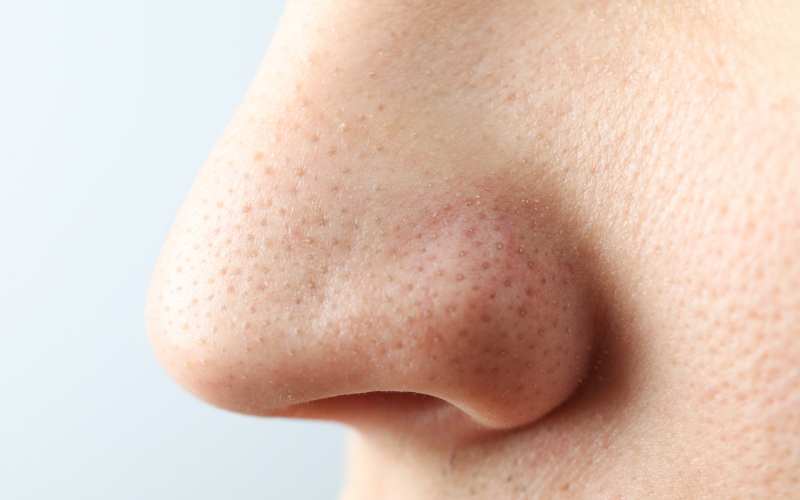
A nose tip that appears unusually round, broad or heavy is commonly described as a bulbous nose. For some people, the shape is subtle. For others, the tip can dominate the nose from the front and make the entire nose appear wider.
This often raises an important question: Can a bulbous nose be corrected naturally?
Bulbous nose correction is possible, but the appropriate approach depends on what is creating the rounded appearance. Wider nasal cartilage, thick skin, soft tissue and natural anatomy can all contribute.
Exercises, massage and home remedies cannot reliably reshape structural nasal cartilage. When meaningful structural refinement is required, tip plasty or rhinoplasty may be considered.
At Elegance Clinic, treatment planning focuses on creating a nose that remains proportionate to the patient’s face rather than simply making the tip as small or sharp as possible.
Key Takeaways
- A bulbous nose usually refers to a broad, rounded or poorly defined nasal tip.
- Wider tip cartilage and thick nasal skin can contribute to the appearance.
- Genetics and natural anatomy commonly influence nose-tip shape.
- Exercises cannot permanently narrow nasal cartilage.
- Tip plasty may be enough when the concern is mainly limited to the nasal tip.
- Full rhinoplasty may be more appropriate when other parts of the nose also need correction.
- Thick skin can influence how much tip definition becomes visible.
- Excessive cartilage reduction can create an unnatural appearance.
- Natural-looking correction should improve proportion while maintaining structural support.
What Is a Bulbous Nose?
A bulbous nose generally describes a nasal tip that appears unusually round, broad, enlarged or less defined than the rest of the nose.
The appearance can be particularly noticeable from the front or three-quarter view.
The underlying reason is not identical in every patient. Elegance Clinic’s bulbous-nose service notes that thick skin, soft tissue and wider nasal cartilage can all contribute to a rounded or enlarged tip.
This distinction matters because treatment should address the underlying anatomy rather than simply trying to make the visible tip smaller.
What Can Make a Nose Tip Look Bulbous?
| Bulbous Nose Feature | Possible Structural Reason | Possible Correction Approach |
|---|---|---|
| Broad, rounded tip | Wide or prominent tip cartilage | Cartilage refinement may be considered |
| Poor tip definition | Thick skin or soft tissue | Conservative structural refinement with realistic expectations |
| Wide lower nose | Tip and/or nostril-base anatomy | Individual assessment of the lower nose |
| Uneven bulbous tip | Cartilage asymmetry | Asymmetrical structures may require targeted correction |
| Heavy-looking tip | Combination of skin and cartilage | Structural tip planning |
| Bulbous and drooping tip | Tip width plus altered support/rotation | Tip refinement with support adjustment |
| Bulbous tip with bridge concern | Multiple nasal structures involved | Full rhinoplasty may be more appropriate |
The correct procedure depends on examination of the nose, skin and cartilage rather than the label “bulbous nose” alone.
Why Does My Nose Look Round From Every Angle?
A rounded appearance can come from the underlying shape of the nasal tip cartilage.
The skin covering that cartilage also influences how clearly the tip structure is visible.
With relatively thick skin, subtle cartilage contours may not show through strongly. This can make the tip look softer and less defined.
The clinic’s dedicated bulbous nose correction information identifies genetic structure, thick skin, larger cartilage, soft tissue and previous injury among possible contributors.
This is why two people with similarly wide cartilage can have very different-looking noses.
Is a Bulbous Nose Genetic?
Often, natural anatomy and genetics play an important role.
People inherit characteristics involving nasal size, cartilage shape, skin thickness and overall facial proportions.
Having a bulbous nose does not mean anything is medically wrong.
Treatment is usually considered because a person wants a different aesthetic proportion or because the tip appears out of balance with other nasal features.
A good consultation should therefore focus on what the patient wants to change rather than presenting a naturally rounded nose as a medical problem.
Can Nose Exercises Fix a Bulbous Nose?
No reliable evidence shows that nose exercises can permanently reshape broad nasal cartilage or significantly narrow a structurally bulbous tip.
The adult nasal framework cannot generally be remodelled through repeated squeezing, massage or facial exercises.
Temporary pressure can change how soft tissue looks for a short period, but that should not be confused with permanent structural correction.
If the main cause is cartilage shape, meaningful long-term change generally requires altering that structure.
Can Massage Make a Bulbous Nose Smaller?
Massage cannot reliably make broad nasal cartilage permanently narrower.
After rhinoplasty, surgeons may sometimes give specific postoperative instructions involving taping or other care. Those instructions are related to healing and swelling and should not be confused with a home method for reshaping an untreated nose.
Aggressive self-massage is not a substitute for proper assessment.
If the nose appears suddenly swollen or has changed after trauma, that should also be evaluated rather than assumed to be a naturally bulbous tip.
Can Weight Loss Make a Bulbous Nose Smaller?
Weight loss generally does not produce the same type of change in the nose as it can in areas with substantial body fat.
The visible shape of the nasal tip is strongly influenced by cartilage, skin and soft-tissue anatomy.
Changes in overall facial fullness may alter how prominent the nose appears relative to the cheeks, but they do not predictably reshape the nasal cartilage.
Can Botox Correct a Bulbous Nose?
Botox cannot physically narrow broad nasal cartilage.
Botulinum toxin works by temporarily reducing selected muscle activity. It may have limited uses for certain dynamic nasal concerns, but it does not reshape the structural framework responsible for most bulbous tips.
If the nose appears broad even when the face is completely relaxed, a muscle-relaxing injection is unlikely to solve the underlying structural problem.
Can Filler Make a Bulbous Nose Smaller?
Filler cannot physically make a large or bulbous nose smaller because filler adds volume rather than removing it.
Injectable filler may sometimes camouflage selected nasal contour irregularities, but this is different from narrowing a broad tip.
Adding volume to an already broad nose can also be counterproductive in some cases.
Nasal filler additionally carries important vascular risks because of the blood-vessel anatomy of the nose. It should not be treated as a universally safer substitute for rhinoplasty.
What Is Tip Plasty for a Bulbous Nose?
Tip plasty is surgery focused primarily on reshaping the nasal tip.
At Elegance Clinic, tip plasty and nasal-tip refinement may involve cartilage reshaping, suture techniques, projection adjustment or limited cartilage reduction according to the individual anatomy.
This can be useful when the patient’s main concern is concentrated at the tip and the remainder of the nose is already proportionate.
The objective is not simply to remove cartilage.
Modern tip refinement often depends on controlled reshaping and preservation of enough support to maintain a stable, natural-looking nose.
Is Tip Plasty Different From Full Rhinoplasty?
Yes.
Tip plasty focuses primarily on the lower nasal tip, whereas full rhinoplasty can address the bridge, bone, cartilage and broader nasal structure.
Elegance Clinic describes tip plasty as a more focused procedure for concerns such as a bulbous, drooping, wide or poorly defined tip.
If the tip is bulbous but the bridge is also crooked, excessively prominent or otherwise disproportionate, treating the tip alone may not produce the best overall balance.
In those cases, complete rhinoplasty and nose reshaping may be discussed instead.
How Is Bulbous Nose Cartilage Corrected?
The exact surgical technique varies according to cartilage shape and strength.
Possible approaches can include reshaping cartilage, modifying its position and using sutures to improve definition. Selected patients may require limited cartilage reduction or additional structural support.
The important principle is controlled refinement rather than aggressive removal.
Removing too much cartilage can weaken the nasal tip and create unwanted contour problems.
This is one reason the same operation should not be used for every bulbous nose.
Does Thick Skin Affect Bulbous Nose Correction?
Yes.
Skin thickness is an important consideration because the skin sits over the newly shaped cartilage framework.
Thin skin can reveal small structural details clearly.
Thicker skin may soften those details and can limit how sharply defined the final tip appears.
Elegance Clinic’s nose-tip guidance specifically notes that skin thickness affects how visible structural refinement may become.
This does not mean patients with thick skin cannot have improvement. It means expectations and surgical planning should reflect their anatomy.
Can a Very Wide Bulbous Nose Become Extremely Sharp?
Trying to create an extremely sharp tip is not always appropriate.
A very narrow or sharply pointed nose can look unnatural when the patient’s facial structure, skin thickness and nasal bridge do not support that shape.
Over-reduction is also associated with an “operated” appearance. Elegance Clinic’s natural-rhinoplasty guidance emphasizes conservative changes that fit the patient’s facial proportions.
The aim should therefore be better definition and proportion, not maximum narrowing.
Can Bulbous Nose Correction Improve Facial Balance?
It can in appropriately selected patients.
The nose occupies the centre of the face, so changing the tip can alter how the bridge, lips, cheeks and chin are visually perceived.
But a technically smaller tip does not automatically mean a more attractive result.
The surgeon needs to consider:
- facial width,
- bridge shape,
- tip projection,
- nostril width,
- chin projection,
- skin thickness,
- and overall facial proportions.
A natural result should look appropriate from the front, profile and three-quarter views.
Can a Bulbous Nose Also Be Droopy?
Yes.
Width and rotation are separate characteristics.
A nasal tip can be both broad and downward-pointing.
In such a case, simply narrowing the tip may not address the complete concern.
The surgical plan may need to consider cartilage shape, tip support, projection and rotation together.
This is why patients benefit from describing what they dislike about their nose rather than choosing a procedure name before assessment.
What If Only One Side of the Tip Looks Bulbous?
Asymmetrical cartilage can make one side appear wider or more prominent.
Previous trauma or surgery may also contribute.
Perfect symmetry is uncommon in natural faces, so the objective should not necessarily be mathematical equality.
More noticeable asymmetry may sometimes be improved by addressing the underlying cartilage while maintaining a natural contour.
Is Open or Closed Rhinoplasty Better for a Bulbous Nose?
Neither approach is automatically better for every patient.
Open rhinoplasty provides broad exposure of the nasal framework and can be useful when detailed structural tip work is needed. Elegance Clinic notes that an open approach may be selected for bulbous or drooping tips and other cases requiring detailed correction.
Closed rhinoplasty may be suitable when the required changes can be performed adequately through internal incisions.
The technique should be selected according to anatomy and surgical goals rather than because one approach sounds more advanced.
What Is Recovery Like After Bulbous Nose Correction?
Swelling is expected after tip surgery.
The nasal tip can remain swollen and firm for longer than patients initially expect. Early swelling may temporarily hide some of the definition created during surgery.
Elegance Clinic notes that recovery varies between individuals and that refinement develops gradually as swelling settles.
Patients should therefore avoid judging the final tip shape during the early healing period.
When Will the Nose Tip Look More Defined?
Definition develops gradually.
Some early changes become visible as initial swelling decreases, but the nasal tip can continue refining over several months.
Skin thickness, the amount of surgery and individual healing all influence this process.
This is particularly relevant in bulbous-tip surgery because patients often expect the nose to look sharply defined immediately after the splint is removed.
The early postoperative nose is not the final nose.
Can a Bulbous Nose Come Back After Surgery?
The cartilage does not simply return to its original shape after properly healed structural surgery, but the final appearance can be influenced by healing, scar tissue, skin characteristics and postoperative changes.
No surgeon can guarantee perfect or permanent visual symmetry.
Following postoperative instructions and allowing adequate healing time are important before deciding whether a residual concern remains.
Can Bulbous Nose Correction Look Unnatural?
Yes, particularly if refinement is excessive or poorly matched to the rest of the face.
An over-narrowed tip may appear pinched. Excessive cartilage removal can also compromise support.
A nose can be technically smaller while looking less harmonious.
For this reason, the goal should be to create a refined version of the patient’s own nose, rather than copying another person’s nose or pursuing the smallest possible tip.
How Do You Know If You Need Tip Plasty or Rhinoplasty?
The answer depends on how much of the nose contributes to the concern.
If the bridge, nasal bones and other structures are already balanced and only the tip needs correction, tip plasty may be considered.
If several parts of the nose need modification, full rhinoplasty may provide a more comprehensive approach.
During consultation, the surgeon can evaluate the nose from multiple angles and determine whether an isolated tip procedure would maintain overall proportion.
Conclusion
A bulbous nose can be corrected, but natural-looking improvement begins with understanding why the tip appears broad or rounded.
Wide cartilage, thick skin, soft tissue and individual anatomy can all contribute.
Exercises and massage cannot reliably reshape structural nasal cartilage, while Botox and fillers have limited roles and cannot simply make a broad tip physically smaller.
For selected patients, tip plasty can refine the nasal tip. Others may require full rhinoplasty when the bridge or additional structures also affect facial balance.
The aim should not be an extremely narrow or artificial nose. Successful bulbous nose correction should create better definition, stable support and a tip that remains proportionate to the patient’s own face.
Individualised Bulbous Nose Correction at Elegance Clinic
At Elegance Clinic, bulbous nose treatment is planned according to nasal anatomy and facial proportions. Patients whose main concern is a broad or rounded tip can review the clinic’s dedicated bulbous nose correction service, while patients requiring broader structural changes can explore rhinoplasty and complete nose reshaping.
Dr. Ashutosh Shah, M.Ch., DNB (Plastic Surgery), is the Founder and Director of Elegance Clinic. He has more than 22 years of experience in plastic, reconstructive and cosmetic surgery and performs tip refinement as well as broader aesthetic, functional and reconstructive rhinoplasty procedures.
Patients researching treatment can also learn more about Elegance Clinic’s natural rhinoplasty approach, which focuses on facial analysis, conservative structural change and avoiding an over-reduced appearance.
Refine the Tip Without Losing the Character of Your Face
If your nose tip looks broad, rounded or poorly defined, the first step is identifying whether cartilage, skin thickness or another structural feature is responsible. You can contact Elegance Clinic for a personalised nose assessment to discuss whether tip plasty, rhinoplasty or no surgical treatment is appropriate.
Frequently Asked Questions
Yes, selected bulbous nasal tips can be surgically refined by modifying the underlying tip structures. The degree of achievable change depends on cartilage, skin thickness and overall anatomy.
No reliable evidence shows that exercises can permanently narrow or reshape adult nasal cartilage.
It may be when the concern is mainly limited to the nasal tip. If other nasal structures also require correction, broader rhinoplasty may be considered.
Botox cannot physically narrow broad nasal cartilage. Its role is limited to selected muscle-related nasal concerns.
Filler adds volume and cannot physically make a broad tip smaller. It may camouflage selected contour issues but is not a substitute for structural reduction.
Yes. Thick skin can reduce how sharply underlying cartilage refinement becomes visible, so realistic expectations are important.
