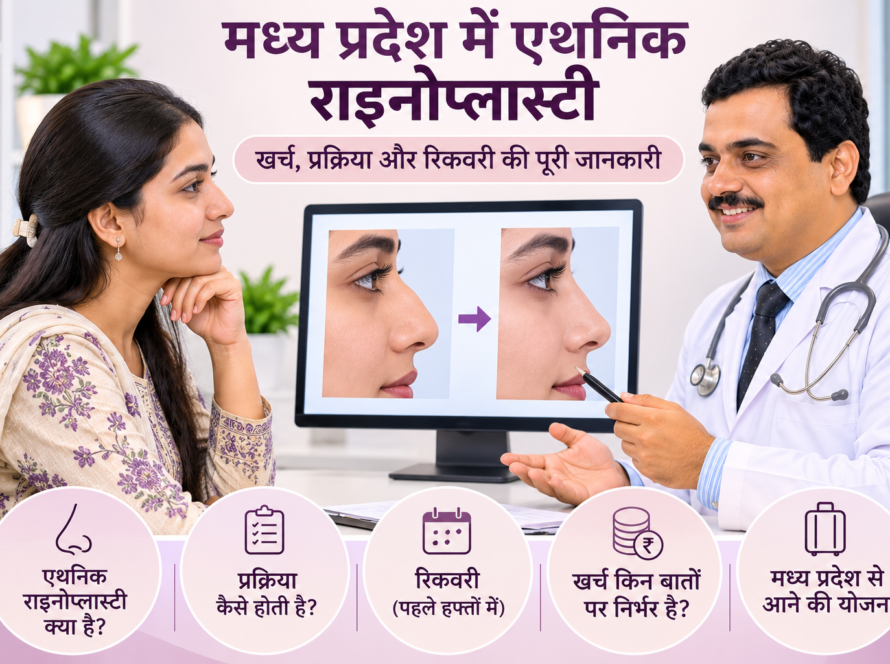
Planning rhinoplasty in Athwa, Surat involves more than choosing a surgery date. Patients also need to understand what nose reshaping can achieve, how the operation works, what recovery involves, and which factors influence the overall cost.
Rhinoplasty is a surgical procedure that changes the shape or structure of the nose. Depending on individual needs, it may address cosmetic concerns, functional problems, or both.
However, not everyone needs surgery. A detailed consultation helps the surgeon assess nasal anatomy, breathing, medical history, and expectations before recommending treatment.
Patients travelling from Athwa can begin by discussing their concerns, completing the necessary evaluation, and planning surgery and follow-up visits.
Quick answer: Rhinoplasty involves a personalised surgical plan, anaesthesia, recovery, and postoperative reviews. Initial swelling and bruising generally improve over the first few weeks, while the final nasal contour may take many months to become clear. The exact timeline depends on the procedure and individual healing.
Rhinoplasty Quick Facts
| Detail | What to expect |
|---|---|
| Procedure duration | [Surgeon to confirm typical duration] |
| Anaesthesia | Usually general anaesthesia; confirm individual plan |
| Hospital stay | Day care or overnight observation, depending on the case |
| Back to work | Often around 1–2 weeks for desk work; individual advice required |
| Follow-up visits | [Surgeon to confirm schedule] |
| Initial recovery | Swelling and bruising commonly improve over the first few weeks |
| Final result | Refinement can continue for 12 months or longer |
Medical review required: Dr. Ashutosh Shah should confirm the clinic-specific details before publication.
What Is Rhinoplasty and Who Is It For?
Rhinoplasty is an operation that reshapes the nose by modifying its bone, cartilage, or supporting structures.
The procedure may help patients who want to address a nasal hump, an asymmetrical appearance, an overly prominent nasal tip, or concerns about nasal proportions.
In selected cases, surgery may also address structural problems affecting breathing. However, cosmetic rhinoplasty and functional nasal surgery are not identical, and treatment depends on the underlying problem.
Who may be a suitable candidate?
A suitable candidate generally has realistic expectations, is medically fit for surgery, and understands the possible benefits and limitations.
The surgeon also considers whether facial growth is complete, whether the patient has undergone previous nasal surgery, and whether breathing problems require additional assessment.
What can rhinoplasty change?
Surgery may change the nasal bridge, tip, width, projection, or overall proportions.
However, the final result must respect the patient’s existing anatomy and skin characteristics. Perfect symmetry cannot be guaranteed.
For more information, read what rhinoplasty can change.
Planning Rhinoplasty in Athwa Surat: Consultation and Assessment
The first step is a consultation rather than an immediate commitment to surgery.
Patients from Athwa can discuss their concerns and ask whether an initial online consultation is available. Nevertheless, a physical examination is necessary before final surgical planning.
Medical history and nasal examination
The surgeon reviews previous operations, injuries, medications, allergies, and relevant health conditions.
Next, the nose is examined externally and, when necessary, internally to assess breathing and structural support.
Photographs and treatment planning
Clinical photographs may help the surgeon explain possible changes and limitations.
Although digital simulations can support discussion, they should not be interpreted as guaranteed surgical results.
Preoperative preparation
Depending on the patient’s health and proposed operation, the surgeon may recommend investigations, medication adjustments, and anaesthesia assessment.
Patients should also arrange transportation and support during the initial recovery period.
How the Rhinoplasty Procedure Is Done, Step by Step
Rhinoplasty is individualised. Therefore, the exact technique differs according to the patient’s anatomy and surgical goals.
Step 1: Final surgical discussion
Before surgery, the surgeon reviews the planned changes, expected limitations, consent, and postoperative care.
Patients should use this opportunity to clarify any remaining questions.
Step 2: Anaesthesia
Most rhinoplasty operations take place under general anaesthesia.
The anaesthesia team monitors the patient throughout the procedure.
Step 3: Surgical access
The surgeon may use an open or closed approach.
In closed rhinoplasty, incisions are made inside the nostrils. In open rhinoplasty, an additional small incision is typically placed across the columella, the tissue between the nostrils.
The appropriate technique depends on the surgical requirements.
Step 4: Reshaping and structural support
The surgeon carefully adjusts bone and cartilage to achieve the planned changes.
Some operations require cartilage grafts to support or reshape nasal structures.
If breathing problems are part of the treatment plan, additional functional procedures may be performed.
Step 5: Closure and nasal support
After completing the structural changes, the surgeon closes the incisions.
A nasal splint or other support may be applied to protect the healing structures.
Step 6: Recovery monitoring
Following surgery, the clinical team monitors the patient before discharge.
The surgeon then provides instructions about medications, nasal care, sleeping position, activity restrictions, and follow-up visits.
Recovery: What the First Weeks Look Like
Recovery takes place in stages. Although many patients resume lighter activities relatively early, the nose continues healing long after the initial swelling improves.
First 24-48 hours
Patients may experience nasal congestion, swelling, discomfort, and a small amount of blood-stained drainage.
Rest is important. Additionally, keeping the head elevated may help manage swelling if the surgeon recommends it.
Avoid blowing the nose unless the surgeon specifically allows it.
Days 3-7
Bruising and swelling around the nose and eyes may remain noticeable.
The surgeon may schedule a review to assess healing and remove external support when appropriate.
However, patients should never remove splints or dressings themselves.
Weeks 2-4
Many patients begin returning to desk work and gentle daily activities as discomfort and visible bruising improve.
Nevertheless, strenuous exercise, contact sports, and activities that risk injury to the nose may remain restricted.
Following months
Residual swelling gradually decreases. The nasal tip can take longer to refine than other areas.
Consequently, early photographs may not reflect the final result.
Some patients require a year or longer before the final contour becomes apparent.
Which Factors Change the Cost of Rhinoplasty?
There is no single reliable price for every rhinoplasty operation.
The overall cost depends on the complexity of the procedure and the resources required for safe treatment.
Surgical complexity
A relatively straightforward reshaping procedure may differ substantially from an operation requiring extensive structural reconstruction.
Primary versus revision surgery
Revision rhinoplasty may involve scar tissue, altered anatomy, or additional grafting.
As a result, planning and surgical requirements can be more complex.
Read about revision rhinoplasty to understand these differences.
Anaesthesia and hospital facilities
Anaesthesia services, operating theatre resources, and postoperative monitoring contribute to the overall cost.
Tests and additional procedures
Preoperative investigations or additional functional nasal procedures may affect the treatment plan.
Follow-up and aftercare
Patients should clarify whether the quoted fee includes consultations, hospital charges, medications, splints, and postoperative reviews.
Reaching the Clinic from Athwa
Patients from Athwa should plan the consultation and postoperative visits before choosing a surgery date.
Before the appointment
Contact the clinic to confirm its exact address, appointment availability, and whether photographs or medical reports should be shared beforehand.
On the surgery day
Arrange for a responsible adult to accompany you home if the anaesthesia team requires it.
You should not drive yourself after general anaesthesia.
Planning your return
If the surgeon recommends observation or an early postoperative review, arrange accommodation and transportation accordingly.
Do not assume that feeling comfortable means all travel restrictions have ended.
Follow-up planning
Ask which visits require a physical examination and whether any later reviews can be conducted online.
For appointment details, visit the clinic contact page.
Risks and Warning Signs After Rhinoplasty
Like any operation, rhinoplasty has potential complications.
These include bleeding, infection, anaesthesia-related problems, scarring, persistent swelling, changes in sensation, breathing difficulties, asymmetry, and dissatisfaction with the result.
Occasionally, further surgery may be necessary.
When should you seek medical help?
Contact your surgical team promptly if you develop increasing pain, fever, worsening redness, or concerning discharge.
Seek urgent medical attention for heavy bleeding, significant breathing difficulty, chest pain, or other severe symptoms.
For general patient information, see the American Society of Plastic Surgeons’ rhinoplasty recovery guidance.
Questions to Ask Before You Decide
Before agreeing to surgery, discuss your goals and concerns with the surgeon.
Useful questions include:
- Which changes are realistic for my nasal anatomy?
- Will the procedure affect my breathing?
- Would open or closed rhinoplasty be more appropriate?
- What are the main risks in my case?
- How long should I plan to take off work?
- When can I resume exercise and travel?
- What is included in the total treatment cost?
- How will complications and follow-up visits be managed?
Patients comparing treatment arrangements can also read this rhinoplasty treatment-planning comparison.
Frequently Asked Questions (FAQs)
The time depends on the surgical technique, complexity, anaesthesia preparation, and postoperative observation. Patients should allow additional time beyond the operation itself.
The number of visits depends on healing and the surgical plan. Patients considering rhinoplasty in athwa surat should confirm their first postoperative review, splint-removal appointment, and longer-term assessments before scheduling treatment.
An initial online discussion may be possible if the clinic offers this service. However, a physical examination is required before finalising the surgical plan.
Travel depends on the type of surgery, anaesthesia, early healing, and the surgeon’s recommendations. Patients should confirm when they can safely return and whether an early in-person review is necessary.
The nose changes gradually as swelling settles. Although visible improvements occur during the first weeks and months, final refinement can take 12 months or longer, particularly around the nasal tip.
Conclusion
Rhinoplasty requires careful planning, realistic expectations, and appropriate postoperative care.
For patients from Athwa, the most useful first step is a consultation that explains the proposed procedure, recovery, potential risks, total cost, and follow-up requirements.
Rather than choosing surgery based on price alone, prioritise the surgeon’s assessment, patient safety, and a clear treatment plan.
To discuss your concerns, contact the rhinoplasty clinic.