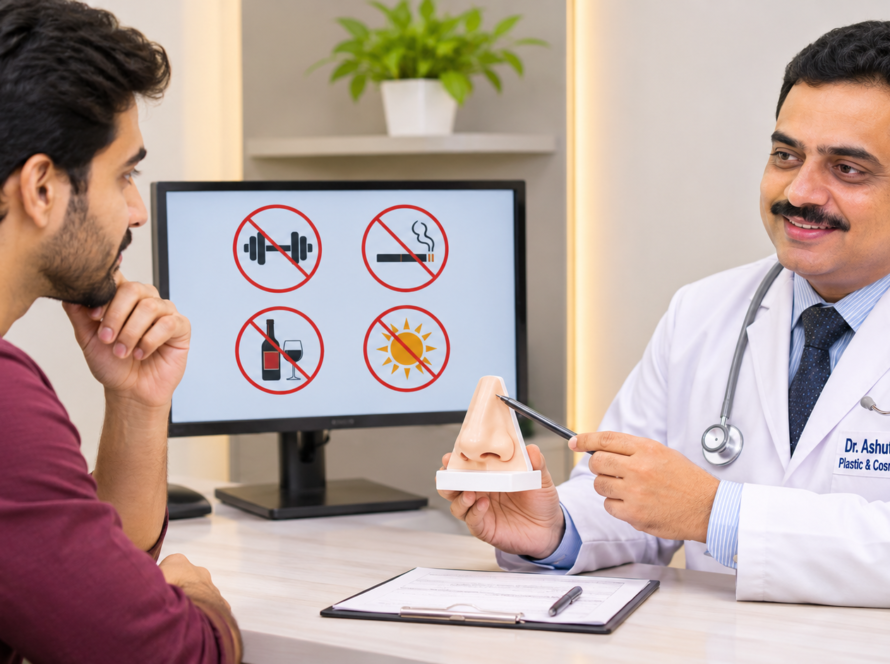
Nasal fracture repair helps restore nasal structure after an injury. Treatment may involve repositioning displaced nasal bones, assessing breathing problems or planning reconstructive surgery. Patients should seek prompt evaluation rather than waiting for a convenient surgical date. The treatment approach, recovery period and follow-up requirements depend on the severity and timing of the injury.
What Is Nasal Fracture Repair and Who Is It For?
A nasal fracture occurs when an injury breaks one or more bones of the nose. Common causes include falls, road accidents, sports injuries and accidental impacts.
For treatment details, see nasal bone fracture treatment in Surat.
Some fractures cause only mild swelling and tenderness. However, other injuries can change the nasal shape or affect breathing.
Nasal fracture repair aims to address these structural problems when treatment is clinically necessary.
Common symptoms of a broken nose
A nasal fracture may cause:
- Pain or tenderness around the nose.
- Swelling over the nasal bridge.
- Bruising around the nose or eyes.
- Nosebleeds following an injury.
- A visibly crooked or flattened nasal bridge.
- Difficulty breathing through one or both nostrils.
However, swelling can temporarily hide the true nasal shape. Therefore, a medical examination is important even when the deformity is not immediately obvious.
Who may need nasal fracture repair?
Treatment may be appropriate when a fracture causes significant displacement, persistent deformity or breathing obstruction.
For example, a patient may notice that the nasal bridge has shifted after an accident.
Another patient may experience persistent nasal blockage because the injury affected the septum.
Nevertheless, not every fracture requires surgery. Some uncomplicated fractures heal without repositioning.
When is urgent medical care necessary?
A recent nasal injury needs prompt assessment, especially when breathing becomes difficult or bleeding continues.
Seek urgent medical care for:
- Heavy bleeding that does not stop.
- Clear fluid draining from the nose after head trauma.
- Severe headache, confusion or loss of consciousness.
- New vision problems or significant eye injury.
- Marked breathing difficulty.
- A painful swelling inside the nose that may indicate a septal haematoma.
A septal haematoma requires urgent treatment because delayed care can damage nasal cartilage.
Patients should not attempt to straighten a broken nose themselves.
For information about another type of nasal reconstruction, see nose wing repair.
How the Procedure Is Done, Step by Step
The nasal fracture repair procedure steps depend on the injury, the position of the bones and the patient’s breathing concerns.
In addition, the time since the injury influences the available treatment options.
Step 1: Initial consultation
The surgeon begins by discussing how the injury happened and when it occurred.
Next, the doctor examines the external nose and internal nasal passages.
The assessment may include:
- Nasal alignment.
- Swelling and tenderness.
- Breathing through each nostril.
- Septal position.
- Signs of internal injury.
- Previous nasal fractures or surgery.
The surgeon also checks for associated facial injuries.
Step 2: Medical investigations
A clinical examination is often sufficient to diagnose an uncomplicated nasal fracture.
However, a CT scan may be necessary when the doctor suspects complex facial injuries or other complications.
Routine imaging is not always required.
The surgeon may also recommend additional investigations before a planned operation, depending on the patient’s medical condition.
Step 3: Selecting the treatment
There are several possible treatment approaches.
Conservative management: Some fractures without significant displacement may need observation, symptom management and follow-up.
Closed reduction: The clinician repositions displaced nasal bones without making external surgical incisions. This is generally considered within a limited period after the injury, before the bones become fixed in their new position.
Reconstructive surgery: Complex injuries, established deformities or persistent structural problems may require a more extensive operation.
The surgeon selects the approach according to clinical findings.
Step 4: Anaesthesia and treatment
Anaesthesia depends on the procedure, patient factors and clinical setting.
Some nasal reductions can be performed under local anaesthesia. Others require general anaesthesia.
The surgical team explains the proposed technique, possible risks and expected recovery before obtaining consent.
Step 5: Postoperative support
After treatment, the clinician may apply an external nasal splint or internal support when appropriate.
Patients receive instructions about nasal care, medicines, sleeping position and activity restrictions.
The team also explains when to return for assessment.
Step 6: Follow-up examination
Follow-up helps the surgeon assess nasal alignment, breathing and healing.
However, the number of appointments varies according to the injury and treatment.
For more information about reconstructive options, visit nose surgery repair treatment.
Recovery: What the First Weeks Look Like
Recovery after nasal fracture repair varies considerably.
A straightforward closed reduction may involve a shorter recovery than complex reconstructive surgery.
Therefore, patients should follow the specific instructions provided by their treating surgeon.
First 24-48 hours
Swelling, tenderness and mild discomfort are common after nasal injury or treatment.
Patients may also experience temporary nasal blockage.
During this period:
- Rest as instructed.
- Keep the head elevated when advised.
- Take prescribed medicines correctly.
- Avoid pressure on the nose.
- Follow the surgeon’s instructions about cold compresses.
Do not place ice directly on the skin or apply pressure to an unstable nasal injury.
Days 3-7
Swelling may begin to improve gradually.
However, bruising and nasal congestion can remain noticeable.
If the surgeon applies a splint, keep it in place until the clinical team advises removal.
Additionally, avoid nose blowing unless the surgeon permits it.
Weeks 2-3
Many patients notice further improvement in bruising and swelling.
Nevertheless, the nasal bones and surrounding tissues continue healing.
Patients should avoid strenuous exercise and activities that increase the risk of facial impact until medically cleared.
Weeks 4-6 and beyond
Healing continues over several weeks.
Some patients return to normal daily activities earlier, while others require a longer recovery.
Complex reconstruction may involve more prolonged swelling and additional follow-up.
When should patients contact the clinic?
Contact the treating team if you develop worsening pain, fever, increasing redness, persistent bleeding or unexpected breathing problems.
Sudden visual symptoms, severe breathing difficulty or other serious symptoms require emergency assessment.
Will the nose look normal immediately?
Not necessarily.
Swelling can temporarily affect nasal appearance.
Furthermore, the final result depends on the original injury, the treatment method and individual healing.
The surgeon should explain realistic expectations before treatment.
Patients interested in structural nasal treatment can also read nose bone repair without pain. However, no surgical procedure can be guaranteed completely painless.
Which Factors Change the Cost?
The cost of nasal fracture repair depends on the injury, required investigations and treatment complexity.
Consequently, a reliable estimate usually requires a clinical examination.
Severity of the injury
A simple displaced fracture may require a different treatment approach from a complex injury involving several nasal structures.
More extensive reconstruction can increase operating time and treatment costs.
Type of procedure
Closed reduction and reconstructive nasal surgery involve different clinical resources.
Therefore, their costs may differ.
Anaesthesia
The anaesthesia plan influences the overall treatment estimate.
For example, general anaesthesia may involve additional facilities and monitoring compared with a suitable procedure under local anaesthesia.
Hospital facilities
Charges may include operating theatre facilities, nursing care, equipment and recovery-room services.
However, the exact inclusions depend on the treatment package.
Investigations and medicines
Some patients require blood tests, imaging or additional medical assessments.
Postoperative medicines and dressings may also affect the total cost.
Follow-up appointments
Patients should ask whether postoperative visits are included in the initial estimate.
In addition, clarify whether additional treatment would involve separate charges.
Questions to ask about the estimate
Before confirming treatment, request a written explanation of:
- Surgeon and anaesthesia charges.
- Hospital and operating theatre charges.
- Investigations.
- Medicines and dressings.
- Follow-up appointments.
- Possible additional expenses.
A consultation helps establish the appropriate procedure and its expected cost.
How Patients from Navsari Plan the Visit
Patients considering nasal fracture repair in navsari should prioritise timely medical assessment, especially after a recent injury.
A broken nose should not be left untreated simply because travelling for a consultation requires planning.
Start with an appropriate medical assessment
If the injury is recent, visit a nearby emergency department or qualified clinician promptly.
The doctor can assess bleeding, breathing problems and possible complications.
This first assessment is particularly important when swelling is severe or the patient has other facial injuries.
Arrange a specialist consultation
Once urgent concerns have been addressed, patients may contact a reconstructive or plastic surgeon for further assessment.
For non-urgent planning, ask whether an initial remote discussion is available.
However, photographs and video calls cannot replace the physical examination needed to assess nasal bones, the septum and internal injuries.
Carry previous medical records
Bring any relevant:
- Emergency consultation notes.
- Imaging reports, if obtained.
- Prescription records.
- Previous nasal surgery details.
- Current medication list.
- Allergy information.
These records help the specialist understand the injury and previous treatment.
Plan the treatment date carefully
The timing of nasal fracture treatment matters.
For example, closed reduction is generally considered within a relatively short period after injury.
Therefore, patients should not delay assessment while waiting for a preferred appointment date.
The surgeon will explain whether immediate treatment, observation or later reconstruction is appropriate.
Arrange accommodation if necessary
Ask the clinic whether treatment requires observation or an overnight stay.
If the procedure involves anaesthesia, arrange a responsible adult to accompany you.
Also, confirm whether the surgeon recommends staying nearby before travelling home.
Plan postoperative follow-ups
Follow-up arrangements depend on the procedure and the patient’s recovery.
Some appointments may require an in-person examination.
Consequently, discuss the expected schedule before finalising travel plans.
To request an appointment, visit contact nose surgeon in surat.
Questions to Ask Before You Decide
Choosing nasal fracture treatment requires a clear understanding of the diagnosis, available options and possible outcomes.
A specialist consultation should help patients make an informed decision.
Is surgery necessary?
Ask whether the fracture is displaced and whether it affects breathing.
Some fractures heal without surgical repositioning.
However, significant deformity or obstruction may require intervention.
Which procedure is appropriate?
Discuss the difference between observation, closed reduction and reconstructive surgery.
The surgeon should explain why a particular approach is recommended.
What are the possible risks?
Potential complications can include bleeding, infection, persistent nasal obstruction, residual deformity and dissatisfaction with the result.
In some cases, further treatment may become necessary.
What outcome should I expect?
Ask how much improvement is realistically possible.
A successful repair aims to improve the problems caused by the injury, but perfect symmetry cannot be guaranteed.
How will recovery affect my routine?
Discuss work, exercise, sleeping position, nasal care and travel restrictions.
Additionally, ask when you can safely resume activities that carry a risk of facial injury.
What happens if treatment is delayed?
Timing can influence whether a fracture can be repositioned using a simpler approach.
Therefore, ask the surgeon how the time since injury affects your options.
Quick Facts About Nasal Fracture Repair
| Factor | What patients should know |
|---|---|
| Procedure duration | Depends on the injury and treatment method |
| Anaesthesia | Local or general, depending on clinical requirements |
| Hospital stay | Same-day discharge may be possible; complex cases may need observation |
| Back to work | Depends on recovery, occupation and surgeon clearance |
| Follow-up visits | Individualised according to treatment and healing |
| Treatment timing | Prompt assessment is important after a recent fracture |
| Final results | Assessed after swelling settles and healing progresses |
These are general expectations, not a confirmed clinic-specific treatment schedule.
Conclusion
Nasal fracture repair requires timely assessment, careful treatment planning and appropriate follow-up.
Patients should seek medical attention promptly after an injury, particularly when the nose appears displaced or breathing becomes difficult.
The treatment may involve observation, closed reduction or reconstructive surgery.
Moreover, recovery time and cost depend on the severity of the injury and the selected procedure.
Before proceeding, discuss the treatment plan, risks, expenses and follow-up arrangements with a qualified surgeon.
FAQs
The duration depends on the severity of the injury and the selected procedure. A straightforward closed reduction generally requires less operating time than complex reconstruction. However, patients also need time for admission, anaesthesia preparation and observation. Your surgeon can explain the expected schedule after examining the fracture.
The number of nasal fracture repair follow up visits depends on the treatment method, healing progress and whether a splint requires removal. Your surgeon may schedule an early review to assess nasal alignment and breathing. Additional appointments may be necessary if swelling, obstruction or other concerns persist during recovery.
An initial online discussion may help patients explain their injury and share previous medical records, if the clinic offers this service. However, nasal fractures usually require an in-person examination to assess alignment and internal injury. Recent fractures should receive prompt medical attention rather than waiting for a remote appointment.
Travel arrangements depend on the procedure, anaesthesia and early recovery. Patients considering nasal fracture repair in navsari should confirm when travelling is safe and whether an accompanying adult is necessary. Avoid long journeys immediately after anaesthesia unless the treating team approves them. Follow-up requirements may also influence travel plans.
Swelling can temporarily affect nasal appearance after fracture repair. Initial improvements may become visible as bruising and swelling decrease, but complete healing takes longer. The final result depends on injury severity, treatment method and individual recovery. Your surgeon will assess alignment and breathing during follow-up appointments.