Introduction
Septorhinoplasty combines surgery to improve nasal breathing with surgery to change the external shape of the nose when both are appropriate. It may address a deviated septum alongside selected structural or cosmetic concerns. The right approach depends on the cause of nasal obstruction, the condition of the nasal framework and the patient’s goals. Not every breathing problem requires rhinoplasty, and not every cosmetic procedure requires septal surgery.
What is septorhinoplasty?
Septorhinoplasty combines two procedures that address different parts of the nose.
- Septoplasty: Corrects a deviated nasal septum when the deviation contributes to breathing difficulties.
- Rhinoplasty: Reshapes the external nose, potentially changing the bridge, tip, alignment or other features.
The nasal septum is the wall of cartilage and bone separating the two nasal passages. When it is significantly deviated, it may reduce the space available for airflow on one or both sides.
Rhinoplasty addresses the external structure and, when indicated, supporting structures that influence nasal function. When internal and external structural problems occur together, a combined procedure may allow the surgeon to plan both aspects of treatment.
However, the two operations are not automatically required together. The recommendation depends on the examination, symptoms and desired changes.
Can breathing problems and cosmetic concerns be corrected together?
Yes. Septorhinoplasty may be suitable when a patient has a structural cause of nasal obstruction and also wants to address the external appearance of the nose.
For example, a patient may have a deviated septum and a visibly crooked nose. Another patient may have nasal valve narrowing and a structural deformity that affects both airflow and appearance.
A combined surgical plan can address these issues while considering how the internal framework supports the external shape. The surgeon must preserve adequate cartilage and structural support to avoid creating new breathing problems.
The expected benefits depend on the cause of the obstruction. Allergies, swollen turbinates, nasal polyps and other conditions may need separate medical treatment. Surgery should not be recommended solely because a patient experiences nasal congestion.
What problems can septorhinoplasty address?
Depending on the clinical findings, septorhinoplasty may be considered for:
- A deviated septum contributing to persistent nasal obstruction
- A crooked nose associated with structural deviation
- Selected nasal valve problems
- External deformity following a nasal injury
- Nasal structural problems that affect both airflow and appearance
- Certain revision cases involving internal and external support
A consultation should establish which structures are contributing to symptoms. Some people have more than one cause of obstruction, and correcting only one may not resolve every symptom.
The surgeon should explain which problems the planned operation is expected to improve and which may need medication, another procedure or continued monitoring.
How is the cause of nasal obstruction assessed?
A thorough assessment helps distinguish a structural problem from inflammation or another nasal condition.
Medical history
The clinician may ask about persistent blockage, mouth breathing, sleep disturbance, allergies, previous injuries, earlier nasal surgery and the duration of symptoms.
External examination
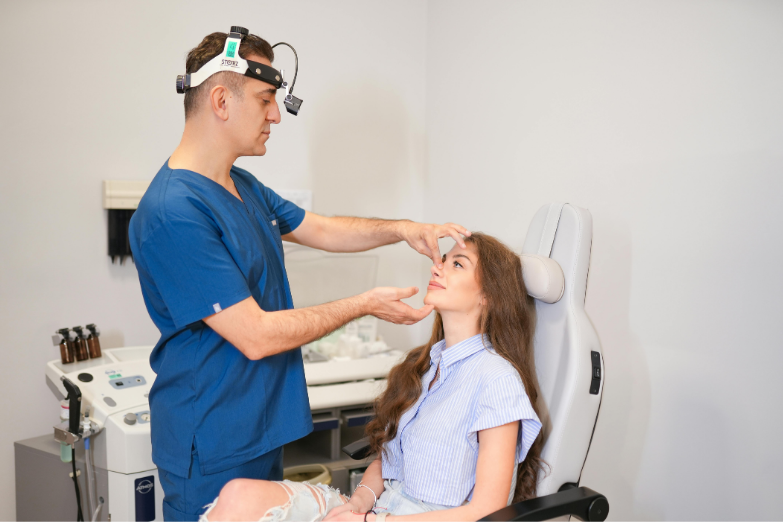
The surgeon examines the bridge, tip, alignment and overall nasal framework. This helps identify visible deformities and assess whether external support may need correction.
Internal nasal examination
The septum, turbinates and other visible structures are examined. Depending on the symptoms, nasal endoscopy may be useful to assess areas that cannot be adequately evaluated during a routine examination.
Additional investigations
Imaging is considered when clinically indicated. A CT scan is not automatically necessary for every patient undergoing septorhinoplasty. Testing should be guided by the examination and suspected diagnosis.
The findings help determine whether septoplasty alone, septorhinoplasty, medical treatment or another approach is most appropriate.
What happens during septorhinoplasty?
The procedure varies according to the patient’s anatomy and surgical goals. It is generally performed under an appropriate anaesthetic selected by the surgical team.
The surgeon accesses the nasal framework and corrects the structures contributing to the problem. Septal correction may involve repositioning or reshaping deviated cartilage and bone while preserving enough support for the nose.
The rhinoplasty component may involve adjustments to the bridge, tip, alignment or other structures. Grafts may be used when additional support is required, including in selected cases involving nasal valve function.
Some operations can be performed through incisions inside the nostrils. Other cases require an additional small incision across the columella, the tissue between the nostrils.
The surgeon should explain the proposed technique, expected changes, limitations and possible effects on breathing before surgery.
Does correcting the septum automatically improve breathing?
No. Correcting a deviated septum can improve airflow when the deviation is a significant cause of obstruction, but other problems may remain.
Nasal breathing can also be affected by:
- Allergic rhinitis
- Enlarged turbinates
- Nasal valve narrowing or collapse
- Nasal polyps
- Chronic inflammation
- Other structural abnormalities
A patient may need medication or additional treatment for conditions that septoplasty does not correct. The expected benefit therefore depends on an accurate diagnosis and an appropriate treatment plan.
No operation can guarantee perfect breathing. The surgeon should discuss the likely improvement, possible persistent symptoms and any additional treatment that may be required.
What are the risks of septorhinoplasty?
Septorhinoplasty is surgery, so complications are possible. Risks vary with the extent of the procedure, the patient’s medical history and the condition of the nasal structures.
Potential risks include:
- Bleeding or infection
- Anaesthesia-related complications
- Persistent or recurrent nasal obstruction
- Septal perforation, which is a hole in the septum
- Internal scar tissue or adhesions
- Temporary or persistent changes in smell
- Swelling, bruising or numbness
- Asymmetry or dissatisfaction with the cosmetic result
- Changes in nasal support or contour
- The possible need for revision surgery
Ask the surgeon which risks are particularly relevant to your case and how complications would be managed. A clear discussion of alternatives and limitations is an important part of informed consent.
What is recovery like after septorhinoplasty?
Recovery depends on the extent of surgery and individual healing. Swelling, bruising, congestion and mild discomfort are common in the early period. A nasal splint may be used, and internal splints or dressings may be required in selected cases.
During recovery:
- Follow the surgeon’s wound-care instructions.
- Avoid blowing the nose until you are advised that it is safe.
- Avoid strenuous exercise and contact sports for the recommended period.
- Take medicines only as directed.
- Attend all scheduled follow-up visits.
- Contact the surgical team if symptoms worsen or healing appears abnormal.
Breathing may feel temporarily restricted because of swelling and internal healing. The external shape also changes as swelling gradually settles. Tip swelling can persist for months, and the final appearance may take a year or longer to become clear.
Heavy bleeding, significant breathing difficulty, visual changes or rapidly worsening symptoms require urgent medical assessment.
Is septorhinoplasty different from septoplasty alone?
Yes. Septoplasty primarily addresses the nasal septum to improve function when a deviation contributes to symptoms. It is not generally intended to reshape the external nose.
Septorhinoplasty combines septal correction with external nasal reshaping when both are appropriate. Someone with obstruction caused by a deviated septum but no cosmetic concern may need only a functional assessment and possibly septoplasty.
Conversely, a person seeking cosmetic reshaping without a relevant septal problem may not need septal surgery. The operation should be based on clinical findings rather than routinely combining procedures.
How should patients prepare for surgery?
Preparation begins with a consultation and review of medical history, current medicines, allergies, previous operations and expectations.
Before surgery, patients should:
- Discuss all medicines and supplements with the surgical team.
- Follow instructions about eating, drinking and prescribed medicines.
- Avoid smoking or nicotine according to the clinician’s advice.
- Arrange transport and help during the initial recovery period.
- Understand the planned functional and cosmetic changes.
- Ask about time away from work, exercise restrictions and follow-up.
Do not stop prescribed medicines without medical advice. The surgical team will provide instructions tailored to the planned procedure and personal health needs.
Frequently asked questions
Yes. Septorhinoplasty may correct a deviated septum or another selected structural cause of obstruction while reshaping the external nose. The surgeon first identifies the cause of the breathing problem and assesses whether combined surgery is appropriate. The plan should protect nasal support and set realistic expectations.
No. Septoplasty corrects the nasal septum to improve function when the deviation contributes to symptoms. Septorhinoplasty combines septal correction with external nasal reshaping when both are appropriate. The recommended procedure depends on the patient’s symptoms, anatomy and goals.
Septoplasty is generally intended to correct the internal septum rather than change the external appearance. However, internal support structures can influence nasal shape, so changes are possible in some circumstances. The surgeon should explain any anticipated effect on appearance before surgery.
It can if important supporting structures or the nasal valve are compromised. A carefully planned procedure aims to preserve or improve nasal function, but outcomes cannot be guaranteed. Tell the surgeon about existing breathing problems and ask how the proposed technique will protect the nasal airway.
Initial recovery usually takes weeks, while swelling and changes in nasal shape may continue for months. The timeline depends on the extent of surgery and individual healing. Follow the surgeon’s instructions and attend follow-up appointments rather than judging the result during early swelling.
Not everyone needs a CT scan. The clinician decides whether imaging or nasal endoscopy is useful based on symptoms, examination and the suspected cause. Tests should answer a clinical question rather than be ordered automatically for every patient.
It may be considered when an injury has caused persistent obstruction or structural deformity. Timing and technique depend on the injury, healing and condition of the nasal framework. A specialist should assess breathing and structure before discussing the possible benefits and risks of surgery.
Conclusion
Septorhinoplasty can address breathing problems and external nasal shape during one operation when both concerns have an appropriate structural cause. Careful assessment is essential because obstruction may involve the septum, turbinates, nasal valves or other conditions. A personalised plan should explain expected functional benefits, cosmetic changes, risks and recovery.