Nonsurgical vs Surgical Nose Correction by Dr. Ashutosh Shah
Dr. Ashutosh Shah, M.Ch., DNB (Plastic Surgery)
Specialty: Plastic, Reconstructive & Cosmetic Surgery
Experience: 22+ Years
Position: Founder & Director, Elegance Clinic, Surat
With more than 22 years of surgical experience, Dr. Ashutosh Shah works in plastic, reconstructive and cosmetic surgery, including aesthetic and functional rhinoplasty. When evaluating a bent nose, the important question is whether the visible deviation comes from bone, cartilage, the septum, previous trauma or a dynamic muscular effect.
Last Updated: August 2026
Introduction
A slightly bent or crooked nose can affect facial symmetry and, in some people, nasal breathing. Because Botox is widely used for facial aesthetic concerns, patients sometimes ask: Can Botox fix a bent nose without surgery?
The short answer is: Botox cannot physically straighten bent nasal bones or cartilage.
Botox temporarily reduces the activity of selected muscles. It may have a limited role when muscle movement contributes to a particular dynamic nasal concern, but it cannot reposition a structurally crooked nose.
At Elegance Clinic, evaluation of a crooked nose considers both its external appearance and internal nasal structure before deciding whether nonsurgical treatment or structural correction is appropriate.
Key Takeaways
- Botox cannot straighten bent nasal bones.
- Botox cannot permanently reshape crooked nasal cartilage.
- It may have a limited role when muscle activity contributes to a dynamic nasal concern.
- A crooked nose may result from genetics, trauma, septal deviation or previous surgery.
- Filler can sometimes camouflage selected irregularities but does not actually straighten the nasal framework.
- A bent nose associated with breathing difficulty needs functional assessment.
- Structural rhinoplasty may be considered when bones or cartilage require correction.
- The right treatment depends on the cause of the deviation rather than how crooked the nose appears in one photograph.
What Does a Bent Nose Actually Mean?
A bent nose generally means that part of the nasal framework deviates from the facial midline or appears asymmetrical.
The deviation may involve the upper bony portion, the cartilage in the middle or lower nose, the nasal tip, the septum or several structures together.
Some people naturally have mild nasal asymmetry.
Others develop a crooked appearance following an injury. Previous nasal surgery can also result in irregularity or persistent deviation.
Understanding which structure is responsible is essential because Botox affects muscles, not bone or cartilage.
Why Does a Nose Become Crooked?
A bent nose can have several possible causes.
Some people are born with a naturally deviated nasal framework. In others, the nose gradually develops an asymmetrical appearance as facial structures mature.
Trauma is another common reason.
A sports injury, fall, accident or previous nasal fracture can shift bones or cartilage. Even an old injury that was never formally treated may affect nasal shape years later.
The internal septum can also be deviated.
In some cases, several of these factors exist together, which is why treating only the visible surface may not address the actual problem.
What Does Botox Actually Do?
Botox temporarily reduces activity in selected muscles by interfering with nerve signals that cause muscle contraction.
This is why it is commonly used for movement-related facial lines and selected muscular aesthetic concerns.
It does not dissolve cartilage.
It does not move nasal bones.
It does not straighten a deviated septum.
Therefore, when a nose looks bent because its structural framework is crooked, Botox cannot physically move that framework into a straight position.
This distinction is particularly important when patients are looking for a nonsurgical alternative to rhinoplasty.
When Could Botox Have a Role Around the Nose?
Botox may have a limited role when a nasal concern is influenced by muscle movement rather than fixed structural deviation.
For example, selected patients may notice that the nasal tip moves downward more prominently during smiling or facial expression. If muscular activity contributes to that movement, a clinician may discuss whether botulinum toxin has a role.
This is very different from treating a nose that remains visibly crooked when the face is completely relaxed.
If the deviation is present at rest because the bones or cartilage are bent, relaxing a muscle will not straighten them.
Can Botox Straighten a Crooked Nose?
No. Botox cannot structurally straighten a crooked nose.
If the nasal bones are deviated, they remain in the same physical position after Botox.
The same applies to bent cartilage.
This means patients should be cautious about claims that injections can permanently “straighten” every crooked nose without surgery.
The appearance of selected dynamic features may change after Botox, but that should not be confused with structural correction.
Can Botox Fix a Deviated Septum?
No.
The nasal septum is an internal structure made of cartilage and bone that separates the two nasal passages.
Botox cannot straighten this structure.
If a significant septal deviation is contributing to nasal obstruction, the patient needs an assessment of the internal nasal anatomy.
Treatment should then focus on the structure responsible for impaired airflow rather than using cosmetic injections around the outside of the nose.
Can Filler Make a Bent Nose Look Straighter?
Filler may camouflage selected contour irregularities, but it does not actually straighten the underlying nasal framework.
This distinction matters.
If one side of the nose has a depression, carefully placed filler may sometimes make the external contour appear more even.
However, filler works by adding volume.
It does not move crooked bones into alignment or correct a deviated septum.
This also means filler may be unsuitable when adding volume would make an already prominent nose look larger.
Additionally, nasal filler is considered an anatomically sensitive procedure because of the nose’s blood-vessel anatomy and the potential for serious vascular complications.
Is a Nonsurgical Nose Job the Same as Rhinoplasty?
No.
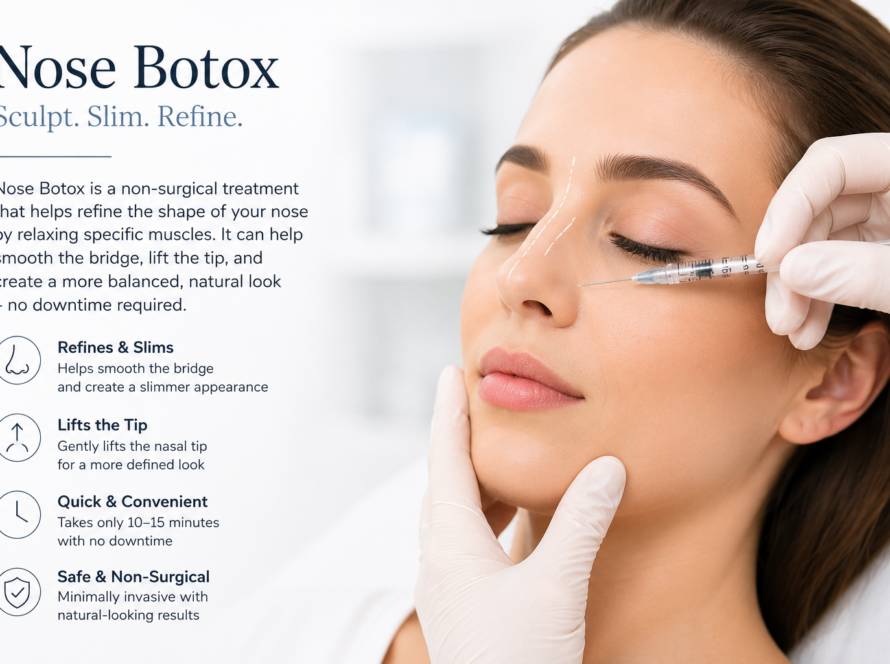
The term “nonsurgical nose job” commonly refers to injectable contouring.
It can sometimes camouflage limited shape concerns but cannot perform many of the structural changes possible with surgery.
Rhinoplasty can reshape or reposition cartilage and bone when appropriate.
It may also be combined with functional correction when internal structural problems contribute to breathing difficulty.
Patients considering structural correction can explore rhinoplasty and nose reshaping at Elegance Clinic to understand how treatment is planned according to nasal anatomy.
When Does a Bent Nose Need Surgery?
Not every crooked nose requires surgery.
If the asymmetry is mild and does not bother the patient aesthetically or functionally, no treatment may be necessary.
Surgery may be considered when the patient wants meaningful structural correction or when the deviation contributes to functional problems.
The procedure required depends on which structures are involved.
A bony deviation may require a different surgical approach from an isolated tip asymmetry or septal problem.
This is why the term “crooked nose surgery” does not describe one identical operation for every patient.
Can Rhinoplasty Straighten a Bent Nose?
Rhinoplasty can improve a structurally crooked nose in appropriately selected patients by addressing the bones, cartilage and supporting structures responsible for the deviation.
The surgeon may need to reposition or reshape selected nasal structures while preserving adequate support.
However, perfect mathematical symmetry cannot be guaranteed.
Human faces naturally have some asymmetry, and a nose should be evaluated in relation to the entire face rather than against a perfectly vertical digital line.
The goal is meaningful improvement while maintaining natural proportions and structural stability.
What If the Bent Nose Was Caused by an Accident?
Previous trauma can make correction more complex.
A nasal injury may affect bones, cartilage, the septum and soft tissues simultaneously.
Some patients have an obvious external deviation, while others primarily notice difficulty breathing.
When both appearance and function have changed after an injury, reconstruction may need to address both.
Elegance Clinic provides information on post-traumatic nose reconstruction for patients whose nasal structure has changed following an injury.
Can a Crooked Nose Cause Breathing Problems?
Yes, depending on the internal anatomy.
A visibly bent nose does not always mean airflow is restricted, and a relatively straight-looking nose can still contain significant internal obstruction.
Symptoms such as persistent one-sided blockage, difficulty breathing through the nose or problems following a previous injury should therefore be mentioned during consultation.
Cosmetic correction should not ignore functional symptoms.
Likewise, improving breathing does not necessarily require dramatic cosmetic changes if the patient does not want them.
Can Botox Make a Bent Nose Worse?
Botox does not physically bend nasal bones, but inappropriate treatment around the nose could create unwanted changes in muscle function or facial expression.
Every injection site requires anatomical knowledge and an appropriate indication.
Using Botox simply because the nose looks crooked, without determining why, is not a sound treatment strategy.
The first step should always be identifying whether the concern is dynamic or structural.
How Do You Know Whether Botox or Rhinoplasty Is Better?
The answer depends on what is causing the problem.
If muscle movement is producing a limited dynamic concern, Botox may sometimes have a role.
If the nose is structurally bent because of cartilage or bone, Botox cannot correct the underlying problem.
If a small contour irregularity is suitable for camouflage, filler may sometimes be discussed, with careful consideration of risks.
If meaningful structural correction is required, rhinoplasty may be the more relevant option.
The procedure should follow the diagnosis, not the other way around.
What Should Be Checked Before Treating a Bent Nose?
A useful assessment considers:
- whether the nose is crooked at rest,
- whether the deviation changes with facial expression,
- previous nasal injuries,
- previous rhinoplasty,
- nasal breathing,
- septal deviation,
- cartilage asymmetry,
- bony deviation,
- tip position,
- and overall facial asymmetry.
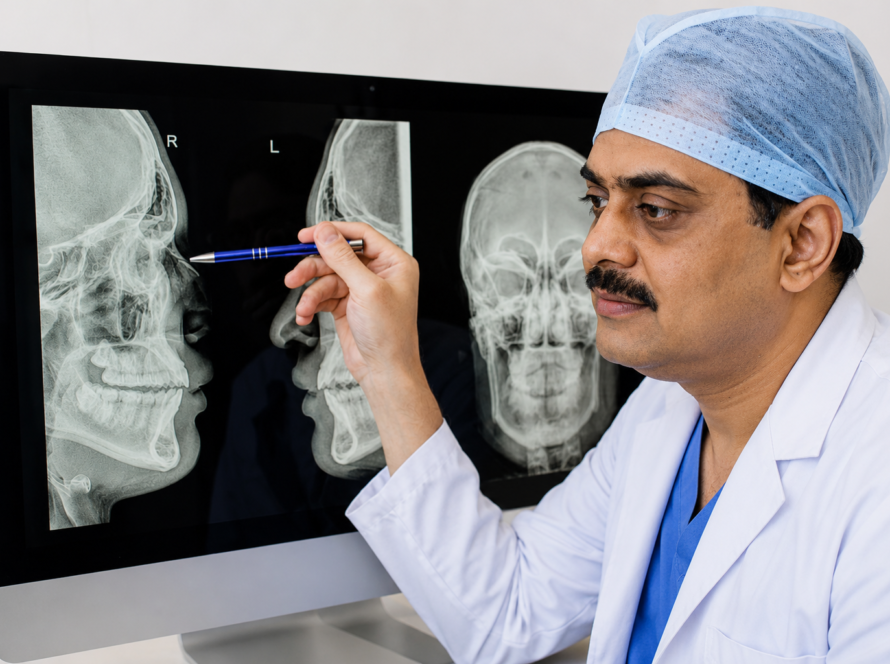
Photographs from several angles can help document the external shape, but physical examination remains important when structural treatment is being considered.
Will a Straightened Nose Look Natural?
A natural result should remain proportionate to the patient’s face.
The objective is not always to create an absolutely straight, narrow nose.
Overcorrection can create new asymmetry or an appearance that does not suit the surrounding facial features.
Structural support is equally important.
A nose that looks straighter immediately but has been excessively weakened may develop problems later.
Conservative, anatomy-based planning is therefore important for long-term stability.
Conclusion
So, can Botox fix a bent nose?
For a structurally crooked nose, the answer is no. Botox cannot straighten nasal bones, reshape cartilage or correct a deviated septum.
Its role is limited to selected concerns influenced by muscle movement.
Filler may camouflage certain contour irregularities but also does not straighten the underlying framework.
When meaningful structural correction is required, rhinoplasty may be considered after evaluating the bones, cartilage, septum and breathing function.
The most suitable treatment begins by identifying why the nose looks bent, rather than automatically choosing the least invasive procedure.
Bent Nose Assessment at Elegance Clinic
At Elegance Clinic, crooked-nose assessment can consider both aesthetic asymmetry and nasal function. Patients can review the clinic’s rhinoplasty and structural nose correction options when the concern involves cartilage, bone or overall nasal shape.
Dr. Ashutosh Shah, M.Ch., DNB (Plastic Surgery), is the Founder and Director of Elegance Clinic and has more than 22 years of surgical experience in plastic, reconstructive and cosmetic surgery, including aesthetic and functional nasal procedures.
Patients considering correction can also learn more about Elegance Clinic’s approach to rhinoplasty before deciding whether their concern is suitable for a nonsurgical approach or requires structural treatment.
Find Out What Is Actually Making the Nose Look Bent
If your nose looks crooked in photographs or has changed after an old injury, the most useful first step is identifying whether bone, cartilage, septum or muscle movement is responsible. You can contact Elegance Clinic for a personalised nose assessment to discuss suitable options.
Frequently Asked Questions
No. Botox cannot physically straighten bent nasal bones or cartilage. It only affects selected muscle activity.
It may have a limited role for selected concerns influenced by muscle movement, such as certain dynamic tip movements.
No. A deviated septum is a structural problem involving cartilage and bone and cannot be straightened with Botox.
Filler can sometimes camouflage selected contour differences but does not straighten the underlying nasal framework.
They are different procedures with different risks and indications. Nasal filler also carries potentially serious vascular risks and is not automatically a safer substitute for surgery.
Selected post-traumatic nasal deviations can be improved surgically. Treatment depends on which bones, cartilage and internal structures were affected.