Written by Dr. Ashutosh Shah, M.Ch., DNB (Plastic Surgery)
Director, Elegance Clinic, Surat
Dr. Ashutosh Shah is a Board-Certified Plastic, Cosmetic & Reconstructive Surgeon with more than 22 years of surgical experience, with expertise in rhinoplasty, facial aesthetics, cosmetic surgery, reconstructive procedures, and hair restoration.
The shape of the nose can often be improved when a person is concerned about a crooked appearance, broad bridge, uneven nostrils, bulky tip, visible hump, excessive projection, or a nose that looks out of proportion with the rest of the face. Nose shape correction may involve observation, non-surgical contouring in selected cases, or rhinoplasty when the underlying bone and cartilage need to be reshaped. The appropriate choice depends on what is creating the unwanted appearance and how much change is desired.
A nose does not need to be perfectly symmetrical to look balanced. Small differences between the two sides are normal, and trying to make every feature identical may not produce the most natural result. In contrast, noticeable asymmetry caused by the nasal bones, cartilage, septum, previous trauma, or another structural problem may be suitable for correction. Rhinoplasty can address several concerns, including nasal width, profile irregularities, tip shape, nostril size, projection, and asymmetry.
The first step is therefore not deciding whether surgery is needed. It is understanding which part of the nose is creating the problem. A carefully planned treatment can improve facial balance while preserving the structure and, where relevant, the breathing function of the nose.
What Can Make the Shape of the Nose Look Uneven?
An uneven-looking nose can come from the nasal bones, cartilage, septum, nostrils, soft tissue, previous injury, or the way the nose relates to the rest of the face. Identifying the specific source of the imbalance is important because correcting only one feature may not produce the intended result.
A crooked nasal bridge
The upper part of the nose can appear shifted or angled to one side. This may be related to natural development, trauma, or differences in the underlying bone and cartilage.
A broad bridge
A broad upper or middle nose can make the entire face appear different in proportion. In appropriate cases, structural rhinoplasty can narrow selected parts of the nasal framework.
A large or rounded tip
The nasal tip may appear broad, bulbous, projected, drooping, or poorly defined. Tip cartilage and the surrounding soft tissue both influence this appearance.
Uneven nostrils
The nostrils may differ in size, shape, height, or orientation. Sometimes this is a natural variation; sometimes it is related to the underlying nasal framework.
A hump or depression
A visible bump along the bridge can draw attention to the profile. A depression can also interrupt the smooth line of the nose.
Excessive or limited projection
A nose that projects too far forward can appear prominent, while a nose with limited projection may appear flatter. Projection needs to be evaluated in relation to the lips, chin, and overall facial proportions.
Facial asymmetry
Sometimes the nose itself is not the only reason it looks uneven. Differences in the cheeks, jaw, chin, or other facial structures can influence how the nose is perceived.
Nasal asymmetry: A difference in the shape, position, or proportions of one side of the nose compared with the other.
Which Parts of the Nose Can Be Changed?
The nose has several interconnected structures, so a change in one area can affect the appearance of another. A tailored treatment may focus on a single feature or combine several changes to create a more balanced result.
The bridge
The bridge can be reshaped when it appears broad, has a hump, or contains a depression.
The nasal tip
Tip surgery can address a rounded, bulky, drooping, hooked, or poorly defined appearance. The aim is to refine the tip while keeping adequate support.
The nostrils
The size or position of the nostril openings and the nasal base can sometimes be modified when they contribute significantly to an unbalanced appearance.
The nasal projection
The relationship between the tip and the rest of the face can be adjusted in selected rhinoplasty procedures.
The septum
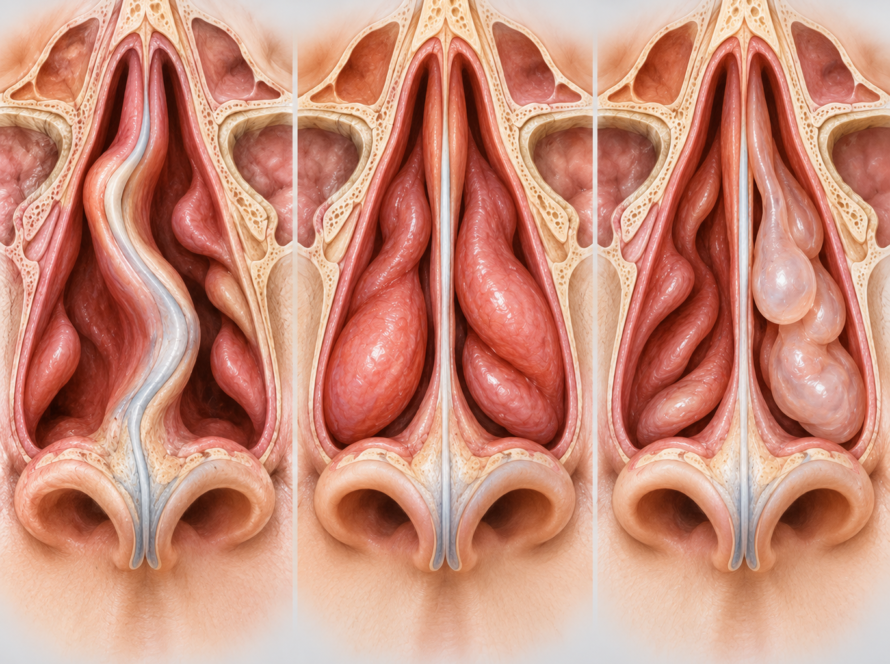
The septum is the internal structure separating the two nasal passages. When it is deviated, it may contribute to both breathing problems and a crooked external appearance. In such cases, functional correction may be combined with cosmetic reshaping.
The important point is that not every nose needs every type of correction.
Can the Nose Shape Be Fixed Without Surgery?
Some subtle contour concerns may be improved without traditional surgery, but non-surgical treatment has important limitations. Injectable fillers can sometimes camouflage selected depressions or contour irregularities, but they add volume rather than removing bone or cartilage, so they cannot truly make a large or wide nose smaller.
A non-surgical approach may therefore be considered when the concern is relatively minor and the goal is a temporary visual improvement. It is not a substitute for structural rhinoplasty when the patient wants significant reduction, narrowing, correction of major asymmetry, or substantial tip reshaping.
There is also an important safety consideration with filler injections around the nose. The blood supply in this region is complex, and accidental injection into a blood vessel can rarely cause tissue injury, visual complications, or stroke.
For this reason, a non-surgical treatment should not be chosen simply because it sounds quicker or easier.
When Is Rhinoplasty the Better Choice?
Rhinoplasty is generally considered when the desired improvement requires structural change to the nasal bone, cartilage, tip, nostrils, or overall framework. It can address concerns involving size, width, profile, tip shape, projection, nostril appearance, and selected forms of asymmetry.
Rhinoplasty may be discussed when a patient wants to:
- Straighten a noticeably crooked nose
- Reduce a broad or prominent nose
- Refine a bulky nasal tip
- Modify a visible bridge hump
- Adjust nostril shape or width
- Change nasal projection
- Improve facial balance
- Address cosmetic and functional concerns together
The procedure can involve reshaping bone and cartilage, and selected patients may require cartilage grafts to provide or preserve support.
The decision should be based on the desired change rather than on a standard surgical formula.
[INTERNAL LINK: Rhinoplasty Surgery → https://www.eleganceclinic.in/our-services/rhinoplasty-surgery/]
How Is the Right Nose Shape Planned?
The ideal nose shape is not determined by one measurement or one popular aesthetic style. A good plan considers the nose as part of the entire face.
During consultation, the surgeon may assess the nose from the:
- Front
- Side
- Three-quarter view
- Base or underside
The evaluation may also consider the forehead, cheeks, lips, chin, facial width, skin characteristics, and nasal airway.
This matters because a nose that looks large from the side may need a different approach from one that looks wide from the front. Similarly, a tip that appears droopy may need different correction from a tip that is simply broad.
Rhinoplasty consultation normally includes discussion of the patient’s appearance and breathing goals, medical history, previous procedures, treatment options, expected outcomes, and risks.
What makes a nose look natural?
A natural result usually involves proportion rather than perfection.
The corrected nose should fit the patient’s facial structure without appearing excessively small, overly narrow, or disconnected from the rest of the face.
It is also important to remember that complete symmetry is rarely realistic because the face itself is naturally asymmetrical.
What Happens During Nose Reshaping Surgery?
Rhinoplasty techniques vary considerably according to the patient’s anatomy and the changes required. The surgeon works with the underlying nasal framework rather than treating all noses in the same way.
Surgery may involve:
- Reshaping selected bone
- Repositioning or refining cartilage
- Modifying the nasal tip
- Adjusting the nostril base
- Correcting a deviated septum
- Adding structural cartilage when support is needed
The approach may be open or closed depending on the surgical plan. The final technique is determined by the structures that need to be changed.
A useful way to think about rhinoplasty is that it is not simply “removing excess nose.” It is reshaping the framework while maintaining appropriate support and function.
How Long Does Nose Shape Correction Take to Heal?
Rhinoplasty requires considerably more healing time than a temporary non-surgical contour treatment. Swelling, bruising, tenderness, congestion, and temporary changes in sensation can occur during the early recovery period.
A splint is commonly used during the initial healing stage. Early swelling usually reduces over the first few weeks, but the final nasal contour develops much more slowly. Some swelling can persist for several months, particularly around the tip.
A practical way to understand recovery is:
Early period: The nose may look swollen and feel congested or tender.
First few weeks: Bruising and significant swelling gradually improve.
Following months: The shape becomes more refined as residual swelling settles.
Later healing: Subtle changes can continue as the tissues mature.
This is why early postoperative appearance should not be considered the final result.
What Are the Risks of Changing the Nose Shape?
Both surgical and non-surgical treatments have potential complications. The risks depend on the technique, the patient’s anatomy, previous surgery, healing response, and the experience of the practitioner.
Potential rhinoplasty complications include:
- Bleeding
- Infection
- Persistent swelling
- Changes in skin sensation
- Breathing difficulty
- Scarring or poor wound healing
- Nasal asymmetry
- Unsatisfactory appearance
- Rare septal perforation
- Possible revision surgery
These risks are recognised complications of rhinoplasty and should be discussed during informed consent.
Non-surgical filler treatment has a different risk profile. Common reactions can include swelling, bruising, redness, pain, and tenderness, while uncommon vascular complications can be serious.
The safest treatment is therefore not automatically the least invasive one. It is the treatment that is appropriate for the patient’s specific problem and performed using appropriate technique.
How Do You Know Which Treatment Is Right?
The most suitable treatment depends on what needs to be changed, how significant the concern is, and whether the nose also has a functional problem.
| Main Concern | Possible Approach | Main Goal |
|---|---|---|
| Mild contour irregularity | Selected non-surgical option | Temporary visual refinement |
| Broad bridge | Rhinoplasty | Structural narrowing |
| Bulky tip | Tip refinement | Improve definition |
| Wide nostrils | Selected rhinoplasty technique | Improve nasal-base proportion |
| Crooked nose | Structural rhinoplasty | Improve alignment |
| Deviated septum with breathing symptoms | Septal correction with appropriate nasal surgery | Improve airflow and structure |
| Major cosmetic change | Customized rhinoplasty | Reshape the overall nasal framework |
The right approach should be decided after assessing the actual anatomy rather than choosing a procedure from an online image.
For information about Dr. Ashutosh Shah and his experience, visit Dr. Ashutosh Shah, Plastic Surgeon in Surat.
Can a Nose Shape Be Corrected Completely?
A noticeable improvement may often be achieved, but no surgeon can promise perfect symmetry or an identical result to another person’s nose. Healing also varies, and soft tissue can influence the final appearance.
A successful result should therefore be judged by:
- Better overall balance
- Improvement of the specific concern
- Appropriate nasal proportions
- Preservation or improvement of function when relevant
- A result that looks suitable for the patient’s face
Trying to achieve absolute symmetry can sometimes lead to excessive correction. A carefully planned improvement is usually more realistic than mathematical perfection.
What Should You Ask Before Nose Shape Correction?
Before deciding on treatment, patients can ask:
- What specifically makes my nose look unbalanced?
- Is the issue related to bone, cartilage, the septum, or soft tissue?
- Would a non-surgical approach actually address my concern?
- Would rhinoplasty be more appropriate?
- Could the treatment affect breathing?
- What degree of improvement is realistic?
- What risks apply particularly to my anatomy?
- How long will the final result take to develop?
- Could additional surgery ever be necessary?
These questions can make the consultation more useful and help patients understand both the possibilities and limitations of treatment.
Dr. Ashutosh Shah, M.Ch., DNB (Plastic Surgery) is a Board-Certified Plastic, Cosmetic & Reconstructive Surgeon and Director of Elegance Clinic, Surat. He has more than 22 years of surgical experience and has completed advanced training in microvascular surgery and cosmetic surgery. His practice includes facial aesthetics, cosmetic surgery, reconstructive procedures, and hair restoration.
Elegance Clinic was established in Surat in 2014 and provides cosmetic surgery, plastic surgery, dermatology, hair restoration, laser treatments, and reconstructive procedures. The clinic has centres in Adajan and Vesu and focuses on personalised treatment planning and natural-looking outcomes.
For general information about the clinic, visit Elegance Clinic Surat.
Fixing the shape of the nose is not simply about making it smaller or straighter. The right approach depends on whether the concern involves the bridge, tip, nostrils, projection, asymmetry, septum, or the overall relationship between the nose and the rest of the face.
Subtle contour concerns may sometimes be addressed without traditional surgery, but non-surgical treatments have important limitations. Fillers add volume and therefore cannot physically reduce a large or broad nasal framework. When the problem is structural, rhinoplasty may provide a more appropriate way to reshape the bone and cartilage and improve facial balance.
A natural result should improve the feature that bothers the patient while maintaining appropriate support and, when relevant, nasal function. The aim is not perfect symmetry but a balanced nose that fits the individual face.
If you are considering nose shape correction, an assessment with Dr. Ashutosh Shah at Elegance Clinic, Surat, can help determine the cause of the concern and the most appropriate treatment approach.
Book a Consultation at Elegance Clinic Surat
Frequently Asked Questions
A: Yes. Rhinoplasty can reshape the bridge, tip, nostrils, and other nasal structures.
A: Yes, suitable surgical techniques can improve a crooked or asymmetrical nose.
A: Rhinoplasty can reduce selected areas of nasal width when appropriate.
A: Fillers can camouflage minor irregularities but cannot physically reduce the nose.
A: Surgical changes are intended to be long-lasting, although the nose naturally changes with ageing.