Advanced post-traumatic nose correction is reconstructive surgery for noses that did not heal well after injury — including saddle nose collapse, old untreated fractures, and failed prior surgery. It typically uses CT-based planning and structural cartilage grafting rather than simple bone-setting, and it is meant for complex cases that basic fracture repair cannot fully resolve.
Not every nasal injury heals into a straightforward bump or slight bend. When trauma damages the septum’s support structure or when an old fracture was never treated, the nose can lose its internal framework — collapsing, twisting, or blocking the airway years later. This is where advanced post-traumatic nose correction differs from routine fracture repair: it rebuilds the nose’s structure, not just its surface shape, using techniques borrowed from complex reconstructive rhinoplasty.
What Is Advanced Post-Traumatic Nose Correction?
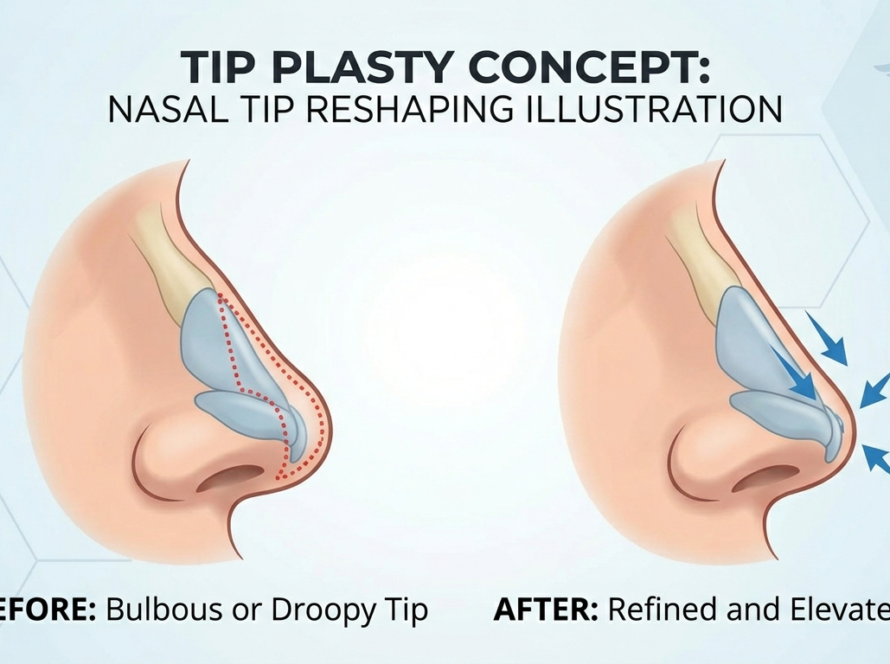
Advanced post-traumatic nose correction is a structural reconstruction approach used when trauma has caused significant loss of septal or dorsal support, not just a simple crooked appearance. It goes beyond repositioning bone fragments and instead rebuilds the nose’s internal cartilage framework using grafts, so the nose regains both shape and long-term stability.
This differs from standard post-traumatic nose treatment, which usually addresses recent fractures and mild bends. Advanced correction is reserved for cases where the damage runs deeper — a collapsed bridge, a badly healed old injury, or a nose that has already undergone one unsuccessful repair.
Which Nose Injuries Need Advanced Correction?
Advanced post-traumatic nose correction is typically needed when trauma has caused one of the following, rather than a simple external deformity:
- Saddle nose deformity — a collapsed, sunken bridge caused by loss of septal cartilage support after injury
- Post-traumatic septal collapse — internal cartilage framework damage that affects both shape and breathing
- Old, untreated fractures — injuries that healed years ago in a crooked or asymmetric position
- Failed previous surgery — a prior fracture repair or rhinoplasty that did not restore adequate structure
- Combined functional and aesthetic damage — cases with both a visible deformity and significant airway obstruction
If your nose still looks or feels wrong months or years after an accident, standard nasal bone fracture surgery may no longer be enough, and a structural reconstruction assessment becomes the more accurate next step.
How Is Advanced Post-Traumatic Nose Correction Planned?
Planning for advanced correction starts with detailed imaging, because the surgeon needs to see the internal cartilage and bone framework, not just the external shape. The process generally follows these steps:
- Facial and nasal examination: The surgeon assesses external shape, skin quality, and breathing function.
- CT imaging: A CT scan maps the bone and cartilage damage, including hidden septal collapse that isn’t visible externally.
- Graft source planning: The surgeon decides whether septal, ear (conchal), or rib (costal) cartilage will be needed to rebuild support.
- Surgical approach selection: Most advanced cases use an open structural approach for full visibility of the framework.
- Framework reconstruction: Cartilage grafts are shaped and placed to restore the septal, dorsal, and tip support.
What Techniques Are Used in Advanced Post-Traumatic Nose Correction?
Several structural grafting techniques are used depending on how much of the nose’s support has been lost. The right combination is chosen case by case.
| Technique | Best For | Typical Graft Source |
|---|---|---|
| Septal / Columellar Strut Grafting | Mild to moderate septal collapse | Remaining septal cartilage |
| Diced Cartilage-Fascia Technique | Saddle nose with dorsal depression | Septal or conchal cartilage wrapped in fascia |
| Three-Component Costal Cartilage Framework | Severe post-traumatic septal collapse or revision cases | Rib (costal) cartilage |
Once the internal framework is rebuilt, septoplasty techniques restore airflow, while structural rhinoplasty refines the outer shape so the nose looks balanced with the rest of the face.
What Does Research Say About Outcomes?
Published reconstructive surgery literature supports structural grafting for post-traumatic cartilage collapse. An Indian case series on three-component costal cartilage framework reconstruction for post-traumatic nasal septal collapse reported that all patients were satisfied with their outcome at six-month follow-up, with improved dorsal definition and relief of airway obstruction where present (Indian Journal of Plastic Surgery). Separate work on the diced cartilage-fascia technique for saddle nose deformity likewise reported high patient satisfaction with low complication rates in a prospective series. These findings reinforce why structural, graft-based correction — rather than surface repair alone — is the recommended approach for advanced or old post-traumatic nasal deformities.
What Does Recovery Involve After Advanced Nose Reconstruction?
Recovery after advanced post-traumatic nose correction is longer than after a simple fracture repair, since cartilage grafts need time to integrate and settle. Patients can generally expect:
- Week 1: Splinting, swelling, and bruising, similar to open structural rhinoplasty
- Weeks 2–3: Splint removal and gradual reduction of visible swelling
- Weeks 4–8: Continued softening of swelling as the grafted framework settles into position
- Months 6–12: Final shape and breathing function become fully apparent as tissues mature around the graft
Because grafted cartilage needs protection while it heals, patients are advised to avoid contact sports, heavy lifting, and any risk of a fresh knock to the nose for a longer period than after routine trauma repair.
How Much Does Advanced Post-Traumatic Nose Correction Cost in Surat?
Cost depends heavily on the complexity of reconstruction — whether septal cartilage alone is sufficient or whether rib cartilage grafting and an open structural approach are required. Because every case involves a different combination of grafting technique, anaesthesia time, and follow-up care, an accurate cost estimate for advanced post-traumatic nose correction is only possible after in-person imaging and assessment.
Advanced Post-Traumatic Nose Correction at Elegance Clinic, Surat
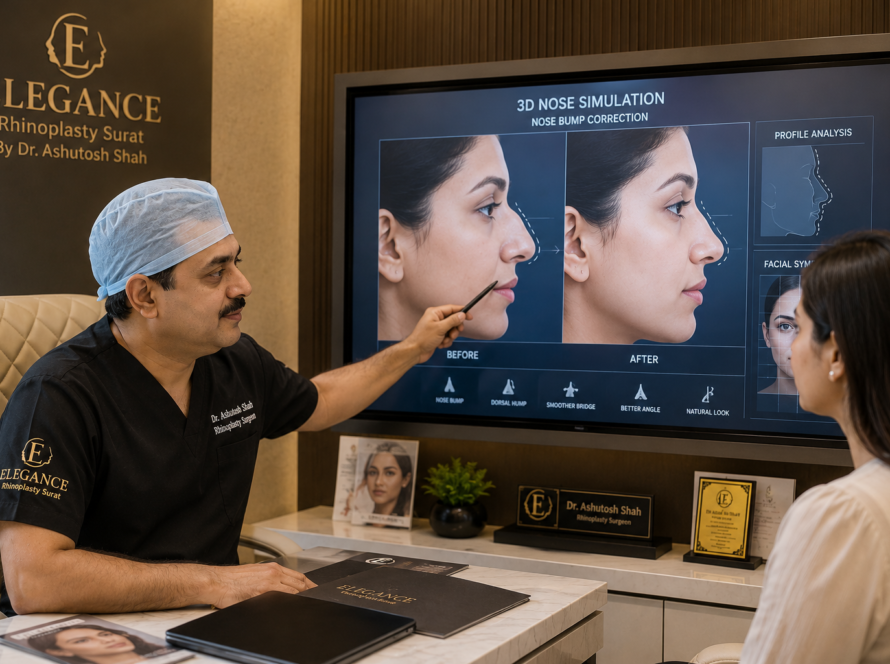
At Elegance Clinic, advanced post-traumatic nose correction is performed by Dr. Ashutosh Shah, a board-certified plastic and reconstructive surgeon with more than two decades of experience treating complex nasal trauma in Surat, Gujarat and across India. As an expert doctor in both functional and aesthetic nasal reconstruction, Dr. Shah evaluates each case individually with CT-based planning before recommending a structural grafting approach, ensuring the treatment plan matches the true extent of the injury rather than only its visible surface.
Book a Consultation for Advanced Nose Correction
If your nose never fully recovered after an old injury, or a previous surgery did not restore its structure, a detailed reconstructive assessment can clarify what advanced post-traumatic nose correction can realistically achieve for you. Book a consultation with Elegance Clinic in Surat, or reach out directly on WhatsApp to discuss your case with the team.
Disclaimer: This article is for general educational purposes only and is not a substitute for professional medical advice. Please consult Dr. Ashutosh Shah or a qualified reconstructive surgeon for an individual assessment of your nasal injury.
Basic treatment repositions fractured bone soon after an injury, while advanced correction rebuilds lost cartilage structure using grafts. Advanced correction is needed for saddle nose deformity, old untreated fractures, or cases where a first surgery did not fully restore the nose.
Yes, cartilage and bone can often be reconstructed years after the original injury using structural grafting techniques. The main difference is that long-standing damage may need more extensive grafting than a fresh injury would.
Surgeons typically use the patient’s own septal, ear (conchal), or rib (costal) cartilage, chosen based on how much structural support the nose has lost. Rib cartilage is generally reserved for more severe or revision cases needing a larger graft.
In most cases, yes, since post-traumatic septal collapse often affects both shape and airflow. The reconstruction plan usually addresses the internal airway alongside the external appearance, though the surgeon confirms this after examining your specific injury.
Discomfort is generally similar to open structural rhinoplasty and is manageable with prescribed medication. Most patients report tightness and pressure in the first week rather than sharp pain, easing as swelling reduces.
Look for an expert doctor with specific experience in structural and reconstructive rhinoplasty, not only routine cosmetic cases. Dr. Ashutosh Shah at Elegance Clinic, Surat, evaluates complex post-traumatic cases using CT imaging before recommending a treatment plan.