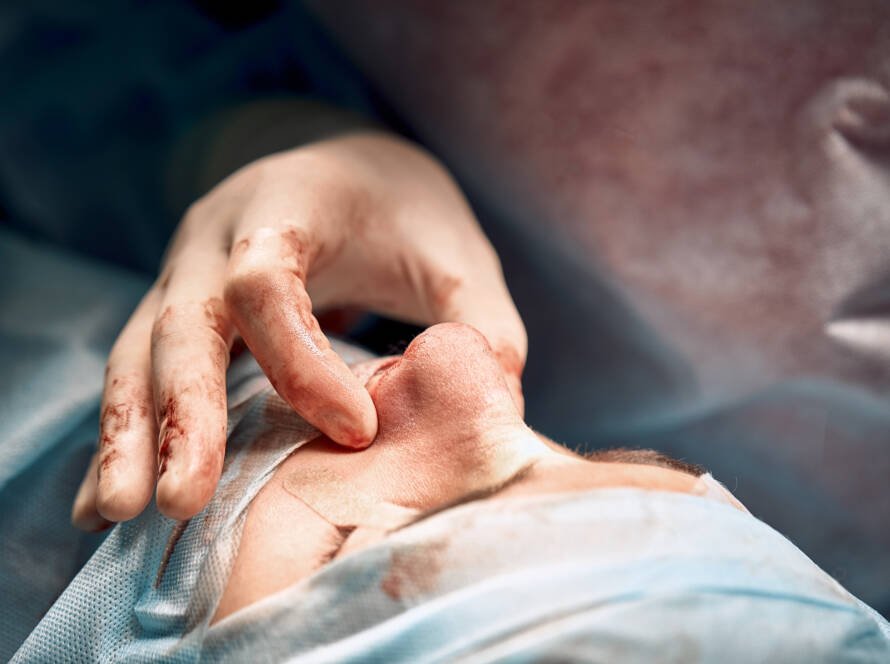
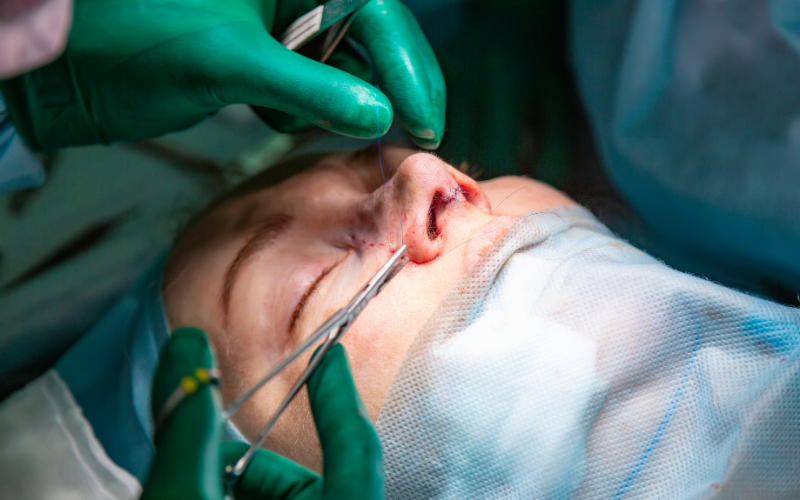
Crooked nose correction straightens a nose that leans to one side, whether from birth, an old injury, or a healed fracture. Patients often ask me if this always means major surgery. In many cases, a qualified surgeon can restore better shape and easier breathing through rhinoplasty, septoplasty, or a combination of both, based on the cause. I am Dr. Ashutosh Shah, and I have treated crooked noses in Surat for more than twenty two years. This guide explains why noses turn crooked, what correction involves, and how you can plan your next step safely.
Key Takeaways
- Crooked nose correction can improve both facial appearance and nasal breathing when planned well.
- Common causes include birth differences, sports injuries, accidents, and a deviated septum.
- Treatment ranges from septoplasty alone to full rhinoplasty, depending on how the nose is affected.
- Recovery differs for every patient, so timelines are never fixed in advance.
- An in person consultation with a board certified surgeon remains the only reliable way to plan treatment.
- Non surgical options exist for very mild cases, though they do not correct structural or breathing problems.
Table of Contents
- What Is Crooked Nose Correction Surgery?
- What Causes a Crooked Nose?
- Signs You May Need Crooked Nose Correction
- How Is a Crooked Nose Corrected Without Surgery?
- What Happens During Crooked Nose Correction Recovery?
- Choosing the Right Surgeon in Surat
- Frequently Asked Questions
What Is Crooked Nose Correction Surgery?
Crooked nose correction surgery is a procedure that straightens a nose which curves, twists, or leans away from the centre of the face. Surgeons often combine rhinoplasty with septal work to fix both the outer shape and the inner airway. The exact technique always depends on your unique nose structure.
During assessment, a surgeon looks at the bone, cartilage, and skin together, since a crooked nose rarely involves just one layer. For instance, the bridge may lean one way while the tip points another. Because of this, treatment is planned around the whole nose rather than a single feature. Many patients considering rhinoplasty surgery in Surat also have some element of crookedness, which is why surgeons assess the septum and outer frame at the same visit.
What Causes a Crooked Nose?
A crooked nose usually develops from one of three sources: a birth difference in bone or cartilage, an old injury that healed unevenly, or a deviated septum that pushes the nose off centre. Sometimes more than one factor is present at once.
Growth patterns during childhood can also play a role, since one side of the nasal skeleton may grow slightly faster than the other. Meanwhile, a broken nose that was never treated properly can heal in a twisted position over time. In several cases, the outer curve is linked directly to internal deviation, which is why we often discuss septoplasty surgery alongside outer reshaping. Understanding the exact cause matters, because it decides whether correction needs bone work, cartilage grafting, or both.
Birth and Growth Related Causes
Some people are simply born with a nose that is not perfectly symmetrical. As the face matures during teenage years, this asymmetry can become more visible.
Injury Related Causes
Falls, sports accidents, and road injuries are common reasons for a crooked nose in India. If a fracture is not set correctly soon after the injury, the bone can heal in a shifted position.
Signs You May Need Crooked Nose Correction
Not every slight curve needs treatment. However, certain signs suggest it is worth discussing crooked nose correction with a surgeon.
- The bridge visibly leans to one side in photographs or mirrors.
- One nostril feels more blocked than the other, especially at night.
- There is a history of nasal injury, even if it happened years ago.
- You notice the nose has changed shape gradually over time.
- Breathing difficulty affects sleep, exercise, or daily comfort.
If any of these apply, it helps to review your specific case through the crooked nose treatment page, where the assessment process is explained in more detail. From there, a proper examination will clarify whether the issue is cosmetic, functional, or both.
How Is a Crooked Nose Corrected Without Surgery?
Non surgical options, such as certain fillers, can sometimes camouflage a mild external curve by balancing light and shadow along the bridge. However, they do not change the underlying bone or cartilage, and they cannot fix breathing problems caused by a deviated septum.
Because of this limitation, most patients with a genuinely crooked nose eventually consider surgical correction for a lasting result. Rhinoplasty reshapes the outer structure, while septoplasty addresses the internal wall that separates the nostrils. In many cases, surgeons perform both together, since a twisted septum often pulls the outer nose along with it. Anyone exploring deviated nose treatment should understand that surgical planning accounts for both appearance and airflow, not one without the other. Ultimately, only a hands on examination can confirm whether a non surgical or surgical route suits your nose.
Why Combined Approaches Are Common
Since the septum sits at the centre of the nose, correcting it often naturally straightens the visible bridge as well. That said, every plan should still be based on your own anatomy.
What Happens During Crooked Nose Correction Recovery?
Recovery after crooked nose correction generally involves swelling, mild bruising, and some nasal congestion in the early days. Your surgeon will guide you on rest, activity limits, and follow up visits. Exact timelines vary from person to person, so it is best discussed during your consultation rather than assumed in advance.
Most patients are advised to avoid strenuous activity for a period decided by their surgeon. Additionally, sleeping with the head slightly raised can help reduce swelling in the early phase. Since every nose responds differently, your surgeon will track healing at scheduled visits and adjust advice as needed. It also helps to avoid sun exposure and contact sports until you are cleared, as this protects the healing structures underneath.
Choosing the Right Surgeon in Surat
Choosing a surgeon for crooked nose correction is one of the most important decisions in this process. Look for board certification, focused experience in nasal surgery, and a clear willingness to examine your nose in person before suggesting any plan.
Ask how the surgeon evaluates both the outer shape and the internal airway, since a thorough crooked nose assessment considers both. Furthermore, ask to see how previous cases with similar concerns were approached. You can explore the full range of nose reshaping surgery in Surat to understand how consultations, imaging, and planning typically proceed at a dedicated centre. Above all, trust a surgeon who explains your options honestly rather than promising a specific outcome before examining you.
Frequently Asked Questions
What is crooked nose correction and who needs it?
Crooked nose correction is a surgical approach to straighten a nose that leans or twists away from centre. It suits people with visible asymmetry, breathing trouble, or both, following an injury, birth difference, or untreated deviated septum.
Can crooked nose correction be done without breaking the nose?
Some techniques avoid breaking the bone entirely, while others require controlled bone adjustment depending on the deformity. Your surgeon decides the approach after examining your nasal structure, since every case is different and needs individual planning.
Is crooked nose correction painful?
Discomfort levels vary between patients and are usually manageable with guidance from your surgical team. Most people describe pressure or mild soreness rather than sharp pain. Your surgeon will discuss what to expect based on your specific procedure.
How long does swelling last after crooked nose correction?
Swelling duration depends on the individual, the extent of correction, and how the body heals. It generally reduces gradually over the following weeks and months. Your surgeon will monitor progress and advise you at each follow up visit.
Will crooked nose correction change how I breathe?
When a deviated septum contributes to the crookedness, correcting it can often improve airflow alongside the external shape. However, results depend on your anatomy, so this should be assessed and explained during an in person consultation.
Can a crooked nose return after correction surgery?
Long term results depend on healing, technique, and how well post surgical advice is followed. While correction aims for a lasting outcome, no surgeon can guarantee permanence, so realistic expectations should be discussed beforehand.
What is the difference between crooked nose correction and septoplasty?
Septoplasty focuses only on straightening the internal septum to improve breathing, while crooked nose correction can also reshape the outer bridge and tip. Many patients need elements of both, depending on their individual nasal structure.
How do I know if I am a good candidate for crooked nose correction?
Good candidacy depends on your nasal anatomy, overall health, and goals, which only a qualified surgeon can properly assess. A detailed in person examination remains the most reliable way to determine your suitability.
If a crooked nose is affecting your confidence or your breathing, please do not wait to seek guidance. Book a consultation to discuss your options safely. Call +91 8320500350 or +91 9624107602, email info@eleganceclinic.in, or reach us through the contact page for nose surgery in Surat.
About Dr. Ashutosh Shah and Elegance Clinic
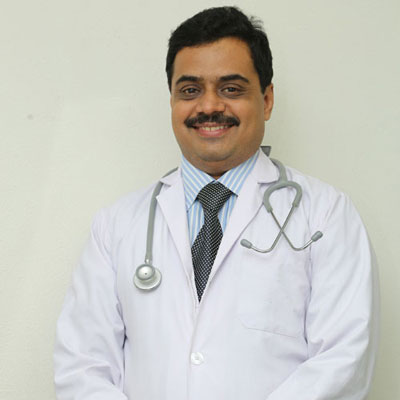
Dr. Ashutosh Shah is a board certified Plastic, Reconstructive and Cosmetic Surgeon with more than twenty two years of experience. He is the founder and director of Elegance Clinic, with centres in Adajan and Vesu, Surat. Through his practice, he focuses on personalised nasal assessment for patients seeking crooked nose correction and related treatments.